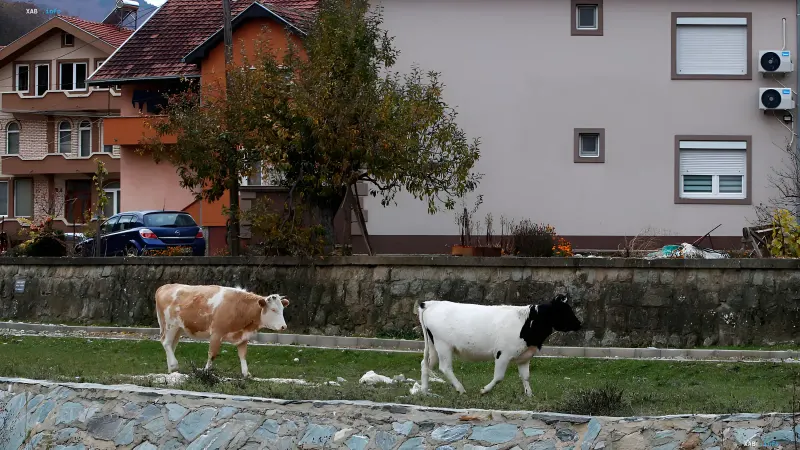
Under the cover of night, hungry animals descend from the surrounding hills to feast on fresh grass and flowers in city parks and gardens. This is the daily reality of Kriva Palanka, a North Macedonian town with a population of about 19,000, which has been struggling for years to cope with a stray herd of cattle. By now, according to local authorities, it has grown to over a thousand head and, as residents estimate, poses a direct threat to property and the livelihoods of citizens.
A herd that doesn't fit in the city
Cows wandering the streets and outskirts eat crops, damage fences, compromise the cleanliness of the urban water supply and sidewalks, and create obstacles for motorists. Kriva Palanka Mayor Sashko Mitovski, in conversation with journalists, pointed to telling dynamics: "The number of cattle has grown from 400 to over 1,000 in four years." For a city of this size, it means that for every resident there are now not just one, but several dozen roaming animals, making the problem not local, but systemic.
Damage measured in tons and thousands of euros
The burden of the herd is felt most keenly by local farmers. One of them recounted that last year, the animals destroyed over twenty tons of his cabbage, causing approximately 15,000 euros in damage. This is only one of many cases: according to residents, cows regularly ruin crops, break down fences, and pollute public spaces, turning farming in urban conditions into a pursuit with unpredictable risks.
Bureaucratic deadlock: the 2024 decision remains unimplemented
Local residents point to the country's bureaucratic labyrinths as the key knot in the problem. According to them, it is precisely because of these that the 2024 decision by the Food and Veterinary Agency, which ordered the confiscation of the herd from its three owners, failed to be executed. Formally, a legal basis for seizing the animals exists; however, in practice, the mechanism did not work, and the cows continue to move freely through the city and its surroundings.
30-day state of emergency and resident protests
According to the mayor, the situation has become unbearable, and he has appealed to the government to declare a state of emergency for a period of 30 days. The mayor explained that such a measure is necessary because local authorities lack sufficient funds and capabilities to capture the animals and house them subsequently. He also added that residents are tired of years of inaction and are organizing protests to encourage authorities to take concrete steps. Thus, the issue of stray cattle in Kriva Palanka has turned from a domestic problem into a political one that requires resolution at the central government level.