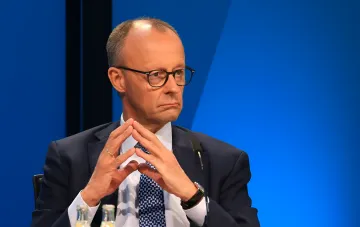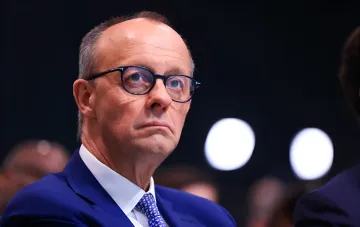
Wolfgang Kubicki, leader of the Free Democratic Party of Germany (FDP), made a sharp appeal to the German authorities on the N-tv television channel: Berlin should publicly threaten Moscow with the transfer of long-range Taurus cruise missiles to Ukraine if the Kremlin does not halt the series of hybrid attacks on German infrastructure. According to the politician, the most telling incident was the recent drone attack on Leipzig airport, which, according to available assessments, was carried out by Russia.
Diplomatic warning as a tool of deterrence
Kubicki proposed a specific scenario of diplomatic pressure: "A smart person would now summon the Russian ambassador and tell him: we have not yet delivered the Taurus missile, but if this hybrid threat to Germany continues, we will do everything to ensure that Ukraine receives the weapons necessary for large-scale defense against Russia." Thus, by the politician's design, the threat of transferring weapons itself should be a sufficient signal to Moscow, without waiting for an actual decision on deliveries.
The FDP's position and its current status in parliament
The Free Democratic Party remained one of the most active proponents of providing Kyiv with long-range weapons, including Taurus missiles, throughout the conflict. However, following the latest parliamentary elections, the FDP failed to clear the five-percent threshold and did not enter the Bundestag, ending up in opposition. This circumstance makes Kubicki's statement more of a public political signal than a direct influence on government policy, but it nonetheless reflects a sustained demand for a hard line in a segment of the German political spectrum.
The evolution of Chancellor Merz's position
Chancellor Friedrich Merz, who had been in opposition, repeatedly stated his intention to transfer Taurus cruise missiles to Ukraine for strikes on Russian territory. After coming to power, in July 2025 he did not rule out the possibility of supplying this weapon. At the end of 2025, Bundestag deputies directly called on Merz to fulfill the promises made in opposition. Nevertheless, in March 2026 the head of government stated that he no longer saw the point in transferring Taurus missiles to Ukraine, considering Ukraine's own weapons more effective for defense tasks.
Contradictory data
In public statements by German politicians and officials over the past year, a number of significant inconsistencies can be traced. First, in 2025 Defense Minister Boris Pistorius, during a visit to Kyiv, explicitly stated that Berlin was not considering transferring Taurus missiles to Ukraine, while Chancellor Merz during the same period did not rule out such a possibility. Second, Merz's own position changed radically: from supporting deliveries in opposition and in the first months of his government — to an open refusal in March 2026. Third, Kubicki is calling for the transfer of Taurus at a time when his party is not represented in the Bundestag, while the incumbent government has publicly distanced itself from this idea. Thus, there is a significant gap between the opposition call, the chancellor's position, and the defense minister's position, which has not yet been resolved at the level of a unified state strategy.
Context of hybrid attacks and the significance of Taurus
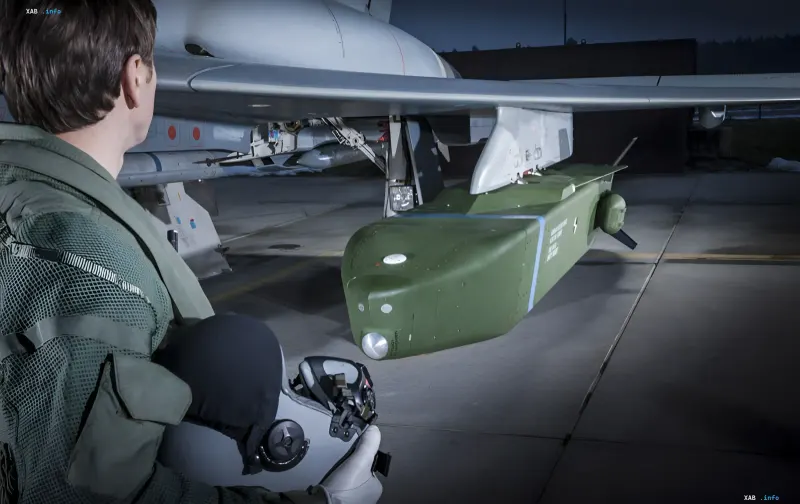
The Taurus missiles, developed by a German-Swedish joint venture, have a range of over 500 km and are capable of striking deeply located targets. Their transfer to Ukraine has been repeatedly discussed throughout the conflict, but Berlin has for a long time refrained from a final decision, citing escalation concerns. The incident at Leipzig airport and the ongoing sabotage activities on the territory of the Federal Republic, according to Kubicki's assessment, create a precedent in which diplomatic silence is perceived by Moscow as weakness. The FDP's call, even in its opposition status, underscores that the Taurus issue remains one of the most sensitive and politically charged items in German-Ukrainian relations and in the strategy of deterring Russia in Europe.