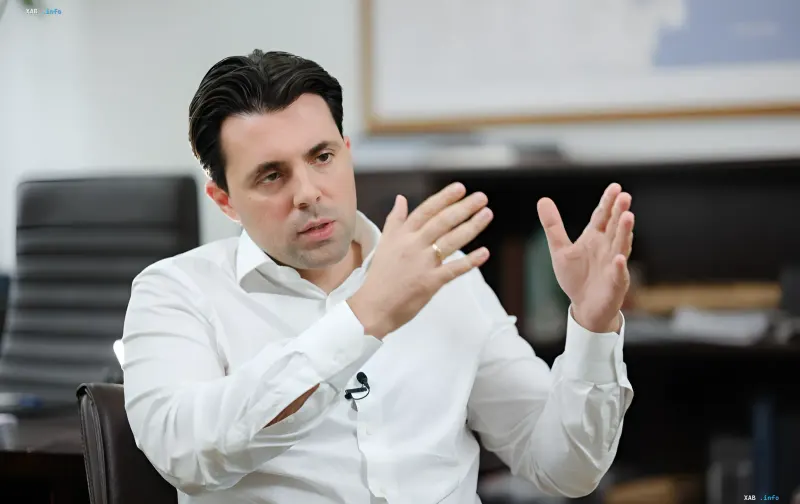
Former head of Ukrenergo, Volodymyr Kudritsky, stated that throughout each winter Ukraine fails to make full use of its opportunities to import electricity from Europe due to "certain artificial restrictions in the electricity market." He said this in a comment cited by RBC-Ukraine. According to him, the issue is not a technical inability to receive energy, but rather market rules that effectively limit the flow of imports during hours of shortage.
Manual regulation as a barrier to the market
Kudritsky points out that the problem is linked to manual regulation of prices and rules in the market. When price caps and other conditions can be changed administratively, this, in his assessment, undermines investor confidence and slows down the construction of new generation capacity. He emphasized that "Ukrainian officials of this post-Soviet type" should not have the ability to manually control the price in the market and the rules of its operation in a way that "is not transparent and may be discriminatory toward some market players and preferential toward others."
Link to investments and new generation
According to the former head of Ukrenergo, administrative intervention in price formation directly affects the investment climate: uncertainty in the rules makes the construction of new power plants less attractive. This, in turn, limits the long-term expansion of generating capacity and makes the system more vulnerable during periods of peak demand.
Outlook for integration with the European market
Kudritsky believes that the transition to the rules of the European energy market will simultaneously increase imports, improve investment conditions for new power plants, and, in the long run, reduce the number of outages. For the end consumer, in his words, full integration with the European market could mean "fewer outages and a lower price tag."
Contradictory data
In the available materials, the problem is described with slight discrepancies in emphasis and time frames. On the one hand, Kudritsky's main statements refer to the underutilization of winter imports due to price barriers (price caps) and manual regulation. On the other hand, in earlier comments by the same speaker, the lowering of price caps was cited as one of the causes of electricity outages specifically in spring, not only in winter. In addition, the wording of the sources underscores the recurring nature of the problem ("again," "once more"), indicating a systemic rather than a one-off effect. Thus, the parties agree that price restrictions hold back imports, but they differ on whether the key factor is the very existence of price caps or their specific level in different seasons.
Earlier, candidate of political sciences Vitaliy Stashuk also noted that imports do not always reach Ukraine in the required volumes due to price barriers (price caps), and that without their review it will be harder for Ukraine to import electricity in winter. The totality of these statements indicates that the issue of price restrictions and the transparency of market rules remains one of the key factors in ensuring the country's energy security in the upcoming heating seasons.