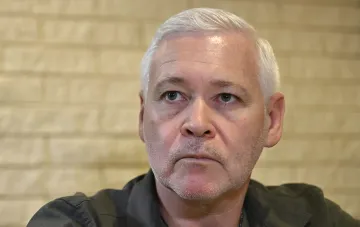
Ukraine's Minister of Economy and Environment, Oleksandr Kravchenko, stated that the Cabinet of Ministers is considering the possibility of raising the value-added tax (VAT) rate as one of the tools for funding a new insurance fund designed to compensate Ukrainian businesses for losses incurred as a result of Russian attacks. According to the minister, launching the compensation mechanism requires a substantial initial capital — by his estimate, no less than $2–3 billion. This is reported by RBC-Ukraine, citing Kravchenko's direct statements.
The insurance fund mechanism and funding sources
According to the minister, the compensation fund is planned to be formed from several sources: state budget funds, aid from international donors, and — as one of the most realistic options at the current stage — through a VAT increase. The Cabinet of Ministers has already discussed possible funding options with the Ministry of Finance, international financial organizations, and the relevant committees of the Verkhovna Rada. Kravchenko explained that three key criteria were taken into account when choosing a funding source: the scale of the mobilizable resource, the specifics of administration, and the speed of filling the fund.
Why VAT: arguments and caveats
"Today, this is the only solution that allows us to quickly mobilize the minimum necessary funds so that Ukrainian businesses can withstand the enemy's intense shelling this winter," Kravchenko stated. The minister emphasized that the VAT increase is being considered precisely from the standpoint of the ability to swiftly obtain a significant volume of funds. At the same time, the Cabinet of Ministers stresses that no final decision on raising the VAT rate had been made at the time of the minister's statement. This is one of the options still under discussion. Thus, the phrase "the only solution" in the context of Kravchenko's remarks refers to the speed of mobilizing funds, not to a final political choice.
The scale of losses: $10 billion in 2026
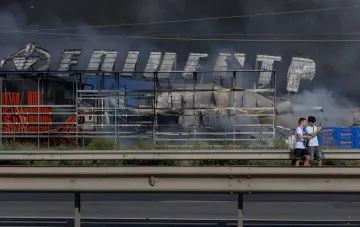
Previously, Oleksandr Kravchenko stated that the cumulative losses of Ukrainian businesses due to Russian attacks in 2026 could reach $10 billion. It is precisely this scale of losses that determines the need to create a specialized insurance mechanism. The Cabinet of Ministers plans to expand existing programs supporting entrepreneurs and to develop a mechanism for insuring against military risks, which will allow businesses to receive compensation for destroyed infrastructure, lost equipment, and disrupted supply chains amid ongoing shelling.
Contradictory data
The provided sources contain a number of inconsistencies worth noting. First, the headline of the RBC-Ukraine publication contains a grammatical error: "aid to businesses attacking the RF" instead of the correct "attacked by the RF," which formally changes the meaning of the headline, even though the article's text clearly refers to the attacking side — Russia. Second, there is a gap between the stated need for the fund's initial capital ($2–3 billion) and the estimate of annual business losses (up to $10 billion). The minister did not clarify how exactly the fund would cover the difference between the initial capital and the actual losses, nor did he specify whether the VAT rate would be reviewed after the fund's initial funding. Third, Kravchenko calls the VAT increase "the only solution" for quickly mobilizing funds, while simultaneously acknowledging that no final decision has been made and that alternative sources are being discussed — which creates an internal contradiction in his wording.
What next: prospects and timelines
At this point, the VAT increase remains at the stage of consideration in the Cabinet of Ministers. To reach a final decision, coordination with the Ministry of Finance, international financial organizations, and the relevant committees of the Verkhovna Rada is required. Given that Kravchenko emphasizes the winter period as critical for business survival under shelling, the discussion is likely to be accelerated in the coming weeks. However, as of the time of publication, none of the parties — neither the Cabinet, nor the Ministry of Finance, nor the parliamentary committees — has confirmed specific timelines for submitting the relevant bill or resolution.