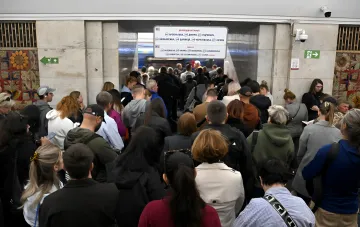
CNN Travel has published a ranking of the 18 best metro systems in the world, which includes the Kyiv underground. According to Wave (RБК-Україна), the Ukrainian capital took 14th place on the list, while the London Underground was recognized as the leader. When compiling the ranking, the authors took into account engineering solutions, transport system features, and their role in the daily lives of citizens.
Rating Leader: The London Underground
First place went to London—a city where metro history began back in January 1863, when trains operated on steam power. Today, the London system has 11 lines and 272 stations, with a total network length of about 400 km. The metro serves not only the capital of Great Britain but also connects it with settlements outside the city. In second place, according to the source, is one of the world's largest systems: the network covers 27 lines and about 490 stations, its length exceeds 900 km, and part of the lines is fully automated, allowing trains to run without drivers.
Copenhagen, Paris, and Tokyo at the Top of the List
Third place went to Copenhagen: its metro started operating in 2002 and features automated train operation, allowing the system to work around the clock without days off. The underground is integrated into the Danish capital's transport infrastructure, simplifying transfers to buses and commuter trains and combining trips with bicycle routes. Fourth place went to Paris—one of the oldest systems, opened in July 1900 on the eve of the World's Fair; it is distinguished by a ramified network and station architecture with Art Nouveau entrances designed by Hector Guimard. At the same time, old carriages with manually opened doors can still be found in the Paris metro. The ranking also included Tokyo's transport system, combining the Tokyo Metro and Toei Subway networks with railway services, station numbering, color-coded lines, and multilingual navigation.
Kyiv in 14th Place: Between Shanghai and Chicago
In addition to those already mentioned, the top ten of the ranking included the metro systems of Seoul, New York, Mexico City, Singapore, and Berlin. The Kyiv underground ended up in 14th position—between the Shanghai metro and Chicago's "L" system. Further down in the ranking are the metro systems of Delhi, Hong Kong, and Budapest. Special attention in the ranking is drawn to the Kyiv system, which combines a transport function with the city's architectural heritage: the first passengers used it on November 6, 1960, when the first section of the Sviatoshynsko-Brovarska line with five stations was opened.
Depth, Architecture, and Role in Wartime
The Kyiv metro is known for the deep underground location of certain stations: in particular, Arsenalna is located at a depth of about 105.5 meters and is considered the deepest metro station in the world. The stations feature architectural design—from monumental interiors with marble and mosaics to modern minimalist spaces. After the start of Russia's full-scale invasion, the metro acquired additional significance, becoming a shelter during air raids: underground stations welcomed people in the first days of the invasion and continue to be used to protect the population, making the Kyiv underground not only a transport artery but also a vital part of urban infrastructure in wartime.