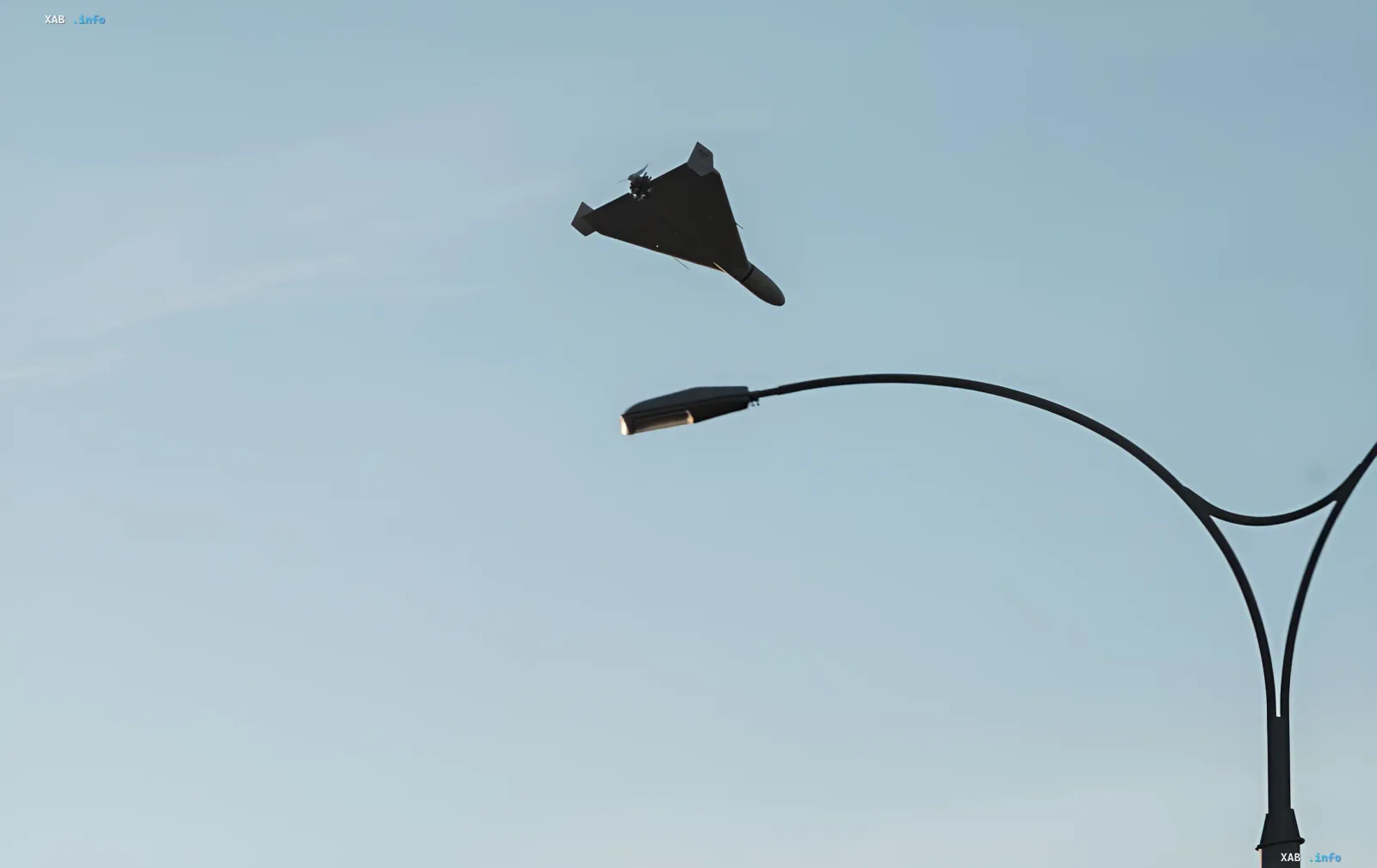
On the morning of August 27, 2026, the air defense system was activated over Kyiv. As reported by RBC-Ukraine, citing the Kyiv City State Administration (KCMA) and the Air Force of the Ukrainian Armed Forces, jet-powered unmanned aerial vehicles were detected heading toward the capital, and air defense systems are actively engaged over the city. This is already the second wave of strikes within the past 24 hours: Kyiv was also hit during the night of August 27, with the aftermath recorded in several districts of the city.
Course of the morning attack
According to the Air Force of the Ukrainian Armed Forces, enemy strike drones continue to make "erratic movements" in the airspace over the capital. It is precisely this chaotic flight trajectory of the aircraft that, in the military's assessment, makes interception more difficult and increases the load on air defense units. Explosions are being heard throughout the city at this moment — the result of air defense operations and the fall of debris from downed targets. The situation remains dynamic, and the military is urging residents not to leave their shelters until the air raid alert is officially lifted.
Authorities' response and recommendations to the public
In its address to residents, the KCMA is explicitly asking people to remain in shelters until the air raid alert is officially lifted. The administration reminds the public of the need to follow safety rules during an air raid alert: stay in protected premises, do not approach windows, and do not panic at the sound of explosions. The Air Force of the Ukrainian Armed Forces, for its part, confirmed the threat and warned of the ongoing movement of strike drones over the capital, indicating that the attack had not yet ended at the time of publication.
Night wave of strikes on Kyiv and Odesa
It is worth emphasizing that the morning air defense engagement is not the only event of the day. During the night of August 27, Russia had already struck Kyiv: debris from downed targets fell in the Podilskyi and Shevchenkivskyi districts of the capital. Odesa was also hit that same night, where, according to available data, a school, a residential building, and elements of the city's infrastructure were damaged. Thus, August 27 is passing under conditions of a combined attack affecting several regions of Ukraine at once.
Contradictory data
There are discrepancies between sources in describing the nature and scale of the strikes. RBC-Ukraine and glavred.info consistently speak of jet-powered/strike drones and air defense operations, which is consistent with the statements of the KCMA and the Air Force of the Ukrainian Armed Forces. At the same time, a number of other media outlets (in particular, a publication on news.mail.ru) describe the situation as a "rain of missiles," which substantially broadens the nature of the attack beyond the confirmed data on UAVs and is not supported by the primary statements of Ukrainian authorities. Moreover, some materials that could be used for context (for example, a note on the downing of Ukrainian UAVs over Russian regions) are dated August 24 and relate to a different topic, and therefore cannot be considered confirmation of the morning attack on August 27. Until an official report on the aftermath is issued, the exact number of downed aircraft and the nature of the damage in Kyiv remain unconfirmed.
Context and further developments
The morning attack on August 27 fits into a series of combined strikes that, according to media reports, are accompanied by the targeting of energy facilities and warehouse infrastructure in various regions of Ukraine. Details on the aftermath of the night and morning waves of attacks are published in separate materials. At the time this note was prepared, the air raid alert in Kyiv was still in effect and air defense systems continued to operate; final data on losses and damage will be known after the alert is lifted and on-site assessments are made.