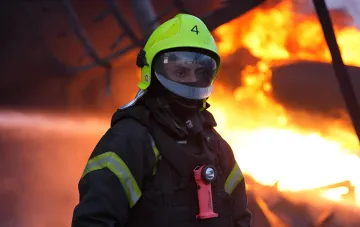
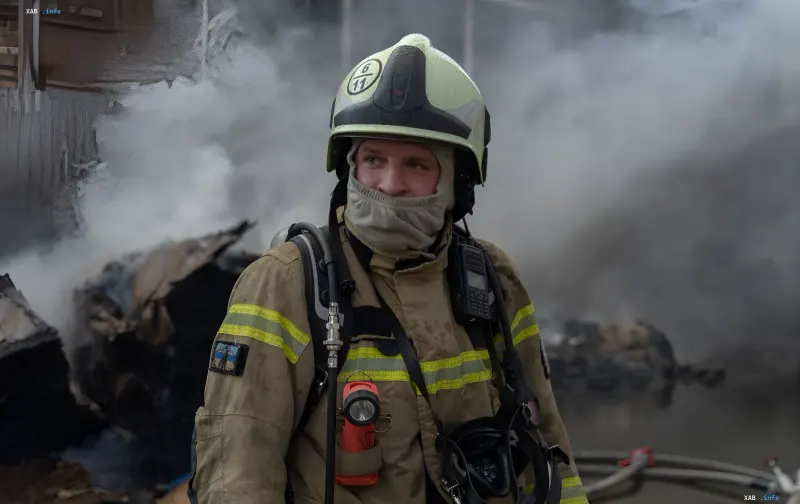
From the evening of 7 September 2026, Russia carried out one of the largest night attacks on Kyiv Oblast and the capital of Ukraine in recent times. According to Tymur Tkachenko, head of the Kyiv Regional Military Administration, the assault involved jet-powered unmanned aerial vehicles, ballistic missiles, and cruise missiles. Peaceful settlements and civilian infrastructure were again hit. By the morning of 8 September, the situation remained tense: rescuers and emergency services were working on site, documenting damage and clearing up the aftermath of the attack.
Aftermath of the Night Strike on Kyiv Oblast
Damage from the 7 September attack was recorded in several districts of the region. In Bila Tserkva, a man sustained shrapnel injuries — medical personnel provided him with the necessary care. In Broyar district, three private houses and one car were damaged. In Boryspil district, a warehouse, an enterprise, and seven trucks were affected. In Fastiv district, three private houses were destroyed, and in Obukhiv district — one private house. The most serious damage was in Bila Tserkva district: here a production facility and a warehouse, two apartment buildings, and one private house were hit. Local social media pages, in particular, reported burning warehouses of the ATB chain, indicating that logistics infrastructure facilities were struck.
Ballistic Attack on Kyiv on 8 September
In the morning of 8 September, the situation escalated sharply. Ukraine's Air Force warned of fast-moving targets over the capital's territory. Explosions were heard in Kyiv, linked to a ballistic missile attack. Missile debris fell on residential buildings in two districts of the city, and casualties among civilians were recorded within the first hours. According to the State Emergency Service (SES), damage and fires were recorded in at least five districts of Kyiv. Among the consequences was damage to a 26-storey residential building, as well as cases in which people were trapped in their apartments and evacuated by rescuers.
Contradictory Data
The number of casualties and fatalities during the attack changed as information arrived from various sources. Initially, according to RBC-Ukraine, one injured person was recorded in Kyiv Oblast. Later, UNN reported one killed and two wounded. TSN, citing data on the drone attack, mentioned one injured woman. However, according to updated data from the Kyiv City Military Administration (KCMA), announced by 8 September, the number of injured rose to seven, and the number of killed to two. Thus, the discrepancy in figures is explained by chronology: early reports reflected only the first hours of the attack, while the final data account for the full scale of the consequences, including damage in the capital itself. It is worth noting separately that the TSN source indicates that Russia has been attacking Kyiv Oblast with drones for six consecutive days, underscoring the systematic nature of the shelling of the region.
Context and Assessment of the Situation
The 7–8 September attack became a continuation of a multi-day campaign of strikes on the Kyiv region. The use of ballistic missiles alongside drones and cruise missiles indicates an attempt by the adversary to simultaneously suppress air defence systems and inflict maximum damage on civilian infrastructure. The striking of residential apartment buildings, warehouse and production facilities, as well as vehicles, points to the absence of a clear military objective and to an attack directed at the population. Emergency services continue to work at the sites of destruction, and the final scale of the damage had not been fully established at the time of preparing this publication.