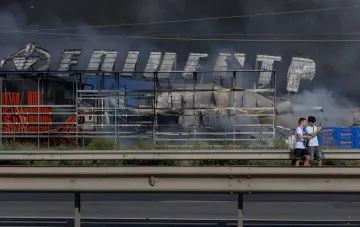
Ukrainian authorities are developing a mechanism that will allow the capital to function under conditions of continuous aerial attacks without a total paralysis of the economy. This was reported by People's Deputy Olha Vasylievska-Smahliuk in her Telegram channel, citing the words of Prime Minister Serhiy Horenko, which were delivered at a meeting of the parliamentary faction. According to her, the Cabinet of Ministers is preparing a separate plan defining the operating mode of establishments during declared alerts. The key goal of the initiative is to ensure the continuation of the city's life-sustaining functions and economic activity even amid regular strikes on infrastructure.
Two-Tier System: "Yellow" and "Red" Alerts
The essence of the proposal lies in dividing air alerts into two levels depending on the nature of the threat. A "yellow" alert will be declared during periods of drone attacks. At this time, the management of each specific establishment will have the right to decide independently whether to continue operations or suspend them. Thus, in the face of a threat from unmanned aerial vehicles, cafes, shops, offices, and other facilities will be able to remain open if their owners deem it safe and reasonable.
A "red" alert, by contrast, will be introduced in the event of a missile threat. In this case, all establishments without exception will be required to cease operations and ensure the evacuation of visitors to shelters. This differentiation, as intended by its authors, will help avoid excessive restrictions: today, when an air alert in Kyiv can be declared more than ten times a day, a full shutdown mode paralyzes the city's economy and deprives residents of access to basic services.
Transport, Fares, and Related Measures
In addition to the division of alerts, the package under discussion includes other adjustments. In particular, it is proposed to limit taxi fares during alert periods to prevent speculative price increases against the backdrop of heightened demand for rides to shelters. The plan also includes measures to unblock bridges and maintain ground-level connectivity, which is critically important for logistics and the movement of residents between districts of the capital. Earlier, Kyiv authorities had already proposed allowing the "green" metro line to operate without restrictions and adjusting curfew rules — the new initiatives fit logically into this line of adapting the city to the conditions of war.
Context: Why the Issue Has Become Acute
The relevance of the proposal is directly linked to the nature of Russian strikes on the Ukrainian capital. According to data cited in the source, in recent times Russia has been continuously attacking Kyiv with cruise strike drones. Since Ukraine currently lacks sufficient means to effectively intercept such unmanned vehicles, a significant portion of them reach the city. As a result, Kyiv residents are forced to repeatedly interrupt their work and daily activities during the day, descending into shelters. Each such episode means downtime for businesses, loss of income, and rising social tension, which makes the question of adapting urban infrastructure to the alert regime both economically and socially significant.
Status of Adoption and Timelines
Vasylievska-Smahliuk emphasized that, as of her statement, the new regulations have not yet been adopted. According to Horenko, the issue is planned to be resolved within the coming days. This means that the two-tier alert system is still at the stage of preparation and discussion, rather than coming into force. Until the official approval of the document, the current procedure — a uniform mode of ceasing operations of all establishments during any alert — remains unchanged.