Ukraine's air raid alert system has undergone a structural overhaul against the backdrop of regular, protracted attacks by the Russian Federation. On 4 September 2026, the Cabinet of Ministers adopted Resolution No. 1092, “On certain issues of optimizing the protection of the population and responding to threats from aerial attack means,” which introduces a key innovation — differentiated alerting about aerial threats. The “Air Raid Alert” signal in the nationwide automated centralized alert system (according to the Air Force of the Armed Forces of Ukraine) is now classified by levels of threat from aerial attack means, rather than sounding as a single, undifferentiated signal. This means that citizens and businesses receive more precise information about the nature of the threat and can make decisions taking its actual level into account.
The “yellow” level and the logic of message replacement
In the new scheme, the “yellow” threat level corresponds to a drone hazard — for example, a situation in which the movement of individual strike or reconnaissance drones has been detected. The press service of the Kyiv City State Administration (KMA) explained that residents will from now on receive different messages depending on the level of danger, with each new message reflecting the threat that is current at that moment. If the type of threat changes, the new message automatically replaces the previous one: a separate “all clear” between different types of threats is not issued. Thus, if a “Drone hazard” message is followed by a “Missile threat” message, it means that the missile threat has become the current one. A full “all clear” means that, at that moment, none of the listed aerial threats has been detected for the city.
How this works in practice in Kyiv
For Kyiv and the region, the new logic is especially relevant: air raid alerts are declared regularly here — there can be more than ten a day, since the Russian Federation launches jet-powered strike drones at the capital region, the speed of which in the new wave can reach 320 km/h. Under such conditions, a single “alert/all clear” would create constant noise and unnecessary disruptions to the city's operations. Differentiation allows the alert system to more accurately reflect the real dynamics of threats, and allows citizens to understand exactly what they are dealing with at a given moment. According to the KMA, it is precisely this approach to messaging that will be applied in the capital when transitioning to the new alert mode.
What has changed for businesses and enterprises
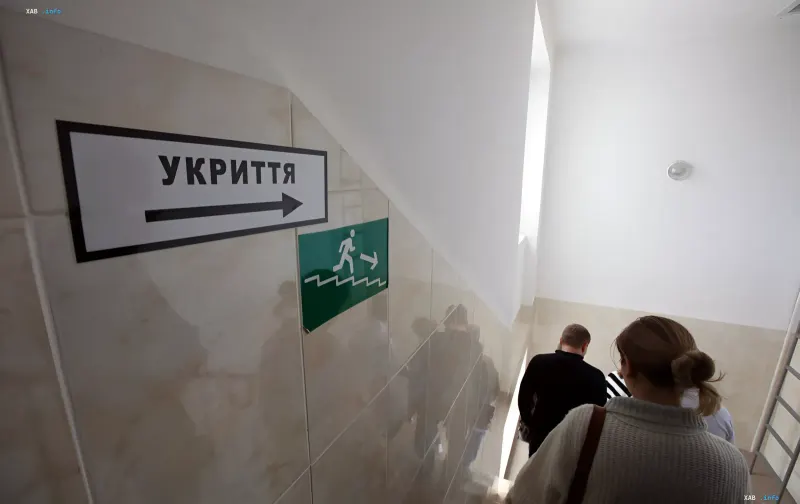
The resolution also introduces economically significant changes for economic entities — regardless of the form of ownership. Halting the operation of enterprises during every air raid alert caused significant losses for both the private sector and the state. Now, when a “yellow” threat level is established, enterprises, institutions, and establishments may continue their operations provided that temporary or permanent shelters are available in the premises, buildings, structures, or on the territories. If no shelter is available, work during a “yellow” alert may continue in the manner provided for in the document, while the specifics of the activities of certain economic entities are determined by a separate decision of the Cabinet of Ministers. At the same time, the presence of visitors in the premises or on the territories of operating establishments is at their own discretion: responsibility for the decision to consciously remain during a drone threat in a store, café, or other establishment rests with the customer themselves.
Contradictory data
The sources contain discrepancies in the chronology of when the changes take effect. The primary material indicates that the Cabinet adopted the resolution on 4 September 2026, whereas Kyiv-based outlets (in particular, TSN) date the start of the new alert mode in the capital from 10 September 2026. These dates do not necessarily contradict each other — one records the moment the regulatory act was adopted, the other is presumably the date of the practical launch of differentiated alerting in Kyiv — however, no single publicly established transition schedule for all regions is provided in the sources, and the exact timelines for implementation in other oblasts remain unclear. In addition, some Kyiv specialists and parents (according to Telegraf) publicly criticize the new rules, primarily with regard to kindergartens, pointing to “risks to life” and demanding that the authorities review the norms — that is, in practice the provisions of the resolution are already encountering a demand for clarification in the most vulnerable categories of institutions.
Economic context and related measures
The transition to differentiated alerting is part of a broader package of measures aimed at reducing the economic costs of the war for business. It was previously reported that entrepreneurs in Ukraine would be helped to quickly relocate warehouses to safe locations, and it was also explained how shopping and entertainment centers in Kyiv operate under continuous alerts. Permission to continue operations at the “yellow” threat level directly reduces downtime and revenue losses, but at the same time shifts part of the risk onto visitors, making transparency and public awareness a key condition for the new system to work. Taken together, the changes form a more flexible model: the state retains the right to a strict regime under high threat, but allows the economy to function under conditions of limited, drone-based danger.