Start of the school year amid ongoing war
August 13, 2026, is a key date for the Ukrainian education system. On this day, despite ongoing Russian aggression, Kyiv schools are preparing to open their doors to students. However, the traditional September 1 start this year will differ from the usual scenario. Valentyn Mondryevsky, Deputy Head of the Kyiv City State Administration (Kyiv City Council), officially confirmed that not all educational institutions will be able to accept children in full capacity due to unfinished restoration work.
The situation in the capital remains tense: since the start of the full-scale invasion, 314 educational institutions in Kyiv have been damaged. In 2026 alone, 107 facilities were hit. Restoration work is ongoing in 47 schools and 41 kindergartens, but unfortunately, repairs will not be completed by the first bell in five institutions. This forces the authorities to make a compromise that could set a precedent for future school seasons.
Hybrid format: an inevitable measure
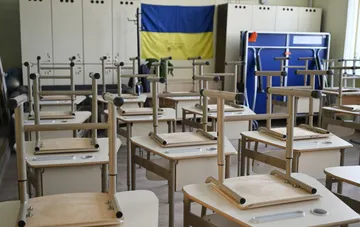
For the five schools where repair work is delayed, a hybrid learning format will be applied. This means that some lessons will take place in the classroom, while others will be conducted remotely, until construction workers complete the building restoration. This approach will allow the educational process to continue without interruption, ensuring children's safety while continuing infrastructure restoration work in parallel with classes.
It is important to note that the final operating format of each school will be determined individually. Decisions will be made taking into account the actual condition of the buildings on September 1 and the current security situation. Authorities emphasize that the learning format can be adjusted at any time depending on the threat of new Russian attacks.
Contradictory data
While official sources from the Kyiv City Council report five schools that will not be ready for opening, a different practice is observed in some districts of the city. Earlier, during the winter of 2026, after massive shelling, a significant part of Kyiv was left without heating. To maintain in-person learning, schools and kindergartens were temporarily merged in certain districts, placing students in intact buildings. In January, due to a sharp drop in temperature, a number of schools switched to remote learning, and in some institutions, winter holidays were extended. This creates a contradiction: on the one hand, authorities strive for an in-person format, on the other — they are forced to take radical measures due to destruction.
Consequences for parents and students
For parents and students, such changes mean the need for flexibility and readiness for change. The hybrid format requires the technical ability for remote classes, which is not always equally accessible to all families. In addition, constant changes in the learning format can affect the psychological state of children who have already experienced stress from attacks.
The future of education in wartime
The situation in Kyiv in 2026 demonstrates how the war continues to affect the daily lives of Ukrainians. Education, like other sectors, is forced to adapt to new realities. Authorities are doing everything possible to ensure the safety and accessibility of education, but the threat of new attacks remains constant. This requires all participants in the process — from teachers to parents — to be maximally ready for changes and to support each other in difficult conditions.