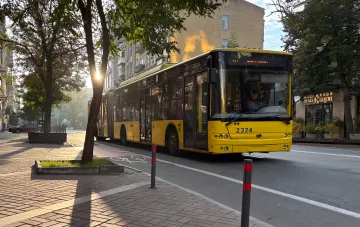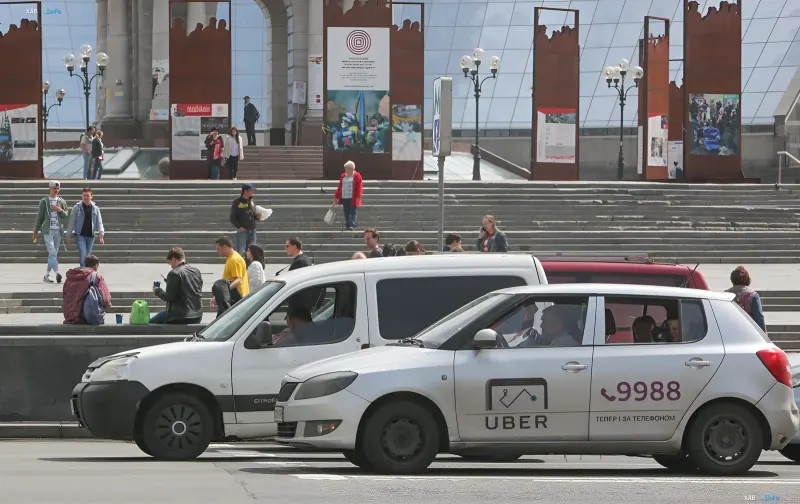
The Ukrainian government has agreed with taxi operators on new fare calculation rules amid air raids and transport disruptions in Kyiv. As Prime Minister Serhiy Koretsky announced on Telegram, the Ministry of Infrastructure and the Ministry of Economy have signed a memorandum with digital platforms introducing a price growth cap for passenger transport in the capital under critical conditions. According to the head of the Cabinet, the mechanism is designed to prevent a 'critical price surge' in situations similar to the recent attack on the South Bridge, when traffic on key routes was temporarily blocked.
Mechanics of the Ceiling: No More Than 75% Above Base Fare
According to the memorandum, under exceptional conditions, the trip price may increase by no more than 75% of the base fare applied in normal circumstances — without raids, traffic jams, or disruptions. Koretsky cited specific examples: if the base cost of a route from point A to point B is conditionally 200 hryvnias, the maximum fee will not exceed 350 hryvnias; with a base fare of 300 hryvnias, the ceiling will be 525 hryvnias. At the same time, passengers retain the ability to independently adjust the price in the app, but the established limit boundaries apply to all market participants.
Duration of the Restriction
The established price ceiling remains in effect for at least two hours after the red-level alert is lifted or until normal public transport operations and bridge traffic are restored. Thus, the restriction is tied not to a fixed time, but to the actual restoration of transport accessibility in the city, which eliminates arbitrary extension or reduction of the regulation period.
Context: Attacks, Blackouts, and Price Spikes
The regulation is introduced against the background of recurring incidents that previously led to a sharp rise in travel costs. For instance, on October 27, the South Bridge in Kyiv was temporarily blocked following an attack, and alternative routes were designated for drivers. An even more vivid example was the evening of October 8, when due to emergency power outages, the shutdown of the subway system, and disruptions in ground electric transport, taxi fares skyrocketed — reaching up to 1,300 hryvnias in certain directions. It is precisely such situations, according to the government's assessment, that require pre-agreed rules rather than spontaneous pricing.
Cabinet Position and Expectations from Operators
Serhiy Koretsky emphasized that the government counts on the responsible position of operators and on attracting other market participants to the memorandum. The wording indicates that the signed digital platforms are viewed as the core of regulation, while expanding the circle of participants is possible in the future. Thus, for the first time in Kyiv, a formalized rather than recommendatory mechanism is being introduced to limit taxi prices during air raids and transport disruptions, which should reduce the risk of speculative tariff hikes during critical hours.