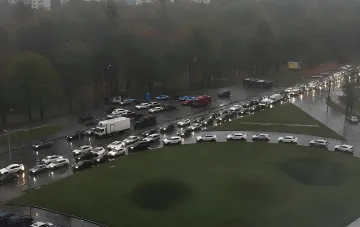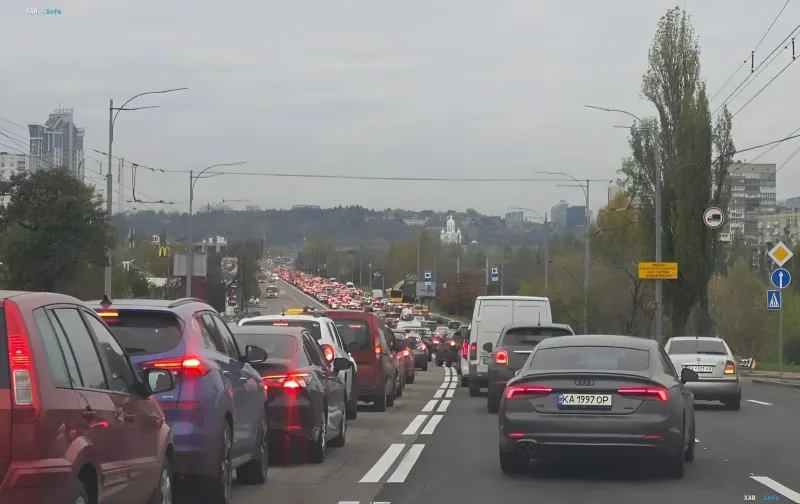
On the morning of November 9, a large-scale transport collapse hit Kyiv. Kilometre-long traffic jams formed on key city arteries and, above all, on the approaches to the crossings over the Dnipro River, with waiting times in certain sections reaching about an hour, according to traffic monitoring services. According to RBC-Ukraine, the most acute situation developed on routes from the left bank to the right bank, where traffic virtually came to a halt and a significant portion of citizens were forced to cover the distance on foot.
Northern Bridge: Traffic Practically Paralyzed
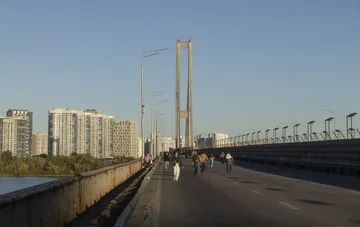
The most difficult situation was recorded at the Northern Bridge. Due to the aftermath of a Russian attack, traffic on the crossing is being carried out in only one lane, which led to a massive traffic jam. Not only private cars, but also ambulances and police vehicles were caught in the congestion. As eyewitnesses note, many residents have to cross the bridge on foot, as driving across to the other bank has been impossible for an extended period.
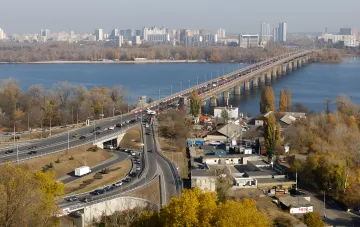
Redirecting Flows to the Paton Bridge and Podil Crossing
Restrictions on the Northern Bridge resulted in the main traffic flow being redirected to other crossings. This caused significant traffic jams on the approaches to the Paton Bridge and in the direction of the Podil Bridge Crossing. Reports have also been published online about huge queues at public transport stops on the left bank of the capital, where passengers have been waiting for routes for a long time.
Highways with Maximum Delays
According to traffic monitoring services, the highest level of delays was recorded on several key thoroughfares. Traffic difficulties are also observed on Petro Radzyn, Zhylianska, Avtozavodska, Ivan Vyhovsky, Velyka Vasylkivska, and Vasyl Stus streets, as well as on Valeriy Lobanovsky Avenue and on the approaches to Darnytsia and Bessarabska squares. It is these sections that form the "bottlenecks" through which the redirected inter-bank traffic flow passes.
Taxi Fares Between Banks Have Increased
Due to increased demand and blocked roads, the cost of trips between the banks has increased somewhat. Popular taxi services have raised prices for routes such as Osokorky to Maidan Nezalezhnosti, in particular. Specific figures depend on the chosen service and current load, but overall, trips across the crossings have become noticeably more expensive than usual.
Recommendations for Drivers and Reserve Schemes
Drivers are advised to plan their routes in advance, give preference to the subway where possible, and leave a clear lane for the movement of emergency rescue services. At the same time, reserve communication schemes between the banks are being introduced in Kyiv to reduce the load on congested crossings and ensure the passage of ambulances and special transport.