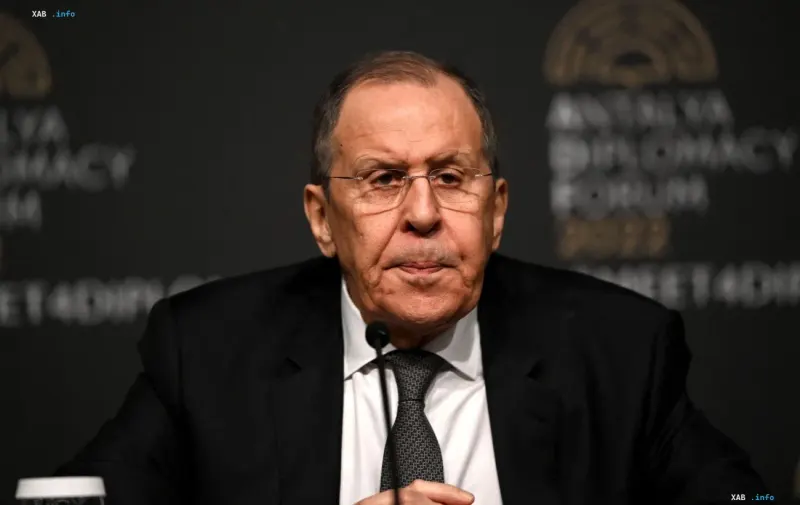
Russian Foreign Minister Sergey Lavrov, during a meeting with chief editors of African media outlets, stated that Russia's war against Ukraine 'will continue' and, in his own words, 'has a trend toward escalation.' The statement came against the backdrop of ongoing diplomatic contacts between Moscow and various international platforms, as well as in the context of discussing prospects for a peaceful settlement of the conflict, which is now in its fourth year.
Assessment of the Situation: 'Escalation' as a Working Scenario
According to RBC-Ukraine, which transmitted the statement via the Russian Foreign Ministry's Telegram channel, Lavrov directly linked the future dynamics of the conflict to what he called an 'escalation' around Ukraine. 'Therefore, this war will continue, and I would even say it has a trend toward escalation,' the head of the Russian foreign policy department said. The wording, in which the continuation of hostilities is presented as a natural and predictable development of events, has become a characteristic feature of Lavrov's public appearances in the final months of 2026.
Trump Administration: 'Open to Dialogue' While Supporting Kyiv
Lavrov placed special emphasis on the policy of U.S. President Donald Trump's administration. He claimed that Washington, 'despite all its actions in support of Ukraine, the transfer of weapons sold to Europeans, and the provision of satellite information,' is nevertheless 'open to dialogue.' The minister emphasized that, in his estimation, the American side 'openly advocates for peace negotiations and the development of dialogue in a large number of areas.' Thus, the rhetoric of the Russian Foreign Ministry maintains a line of separating the positions of the U.S. and Europe, with the former figuring as a potential negotiation partner and the latter as an obstacle.
Europe as a 'Refusenik' and Calls to Prepare for War
A significant part of Lavrov's statement was devoted to criticizing European capitals. He stated that Europe 'categorically refuses until literally the last moment to participate in any contacts with Russia,' but, according to him, European politicians 'have now come to the realization that negotiations are needed.' At the same time, Lavrov added that he 'heard nothing new' from European politicians. Separately, he commented on public calls by a number of European leaders to prepare for a possible armed confrontation with Russia, calling them a potential trigger capable of 'provoking a war.'
Context: 'Goals of the Special Military Operation' and Meeting with Berlin
Earlier, speaking at the UN General Assembly, Lavrov stated that Moscow 'will achieve its goals' in the war against Ukraine and that 'threats to Russia's security will be eliminated.' According to UNIAN, a bilateral meeting between the Russian Foreign Minister and his German counterpart Johann Wadephul took place at the same venue, which, according to Russian Foreign Ministry official spokeswoman Maria Zakharova, was initiated by Berlin. The meeting took place in the Russian delegation's negotiation room and reportedly lasted about half an hour. The combination of these events forms a picture in which Moscow simultaneously declares readiness for negotiations and emphasizes the unchanging nature of its military objectives.
Position on Ceasefire and Elections in Ukraine
In another recent statement, Lavrov rejected the possibility of a ceasefire for the purpose of holding presidential elections in Ukraine, stating that 'there will be no stoppage of the fire so that presidential elections can be held in Ukraine.' This statement reinforces the position of the Russian leadership, according to which any political settlement formats involving the legalization of the current Ukrainian authorities through the electoral process are excluded from the negotiating agenda.