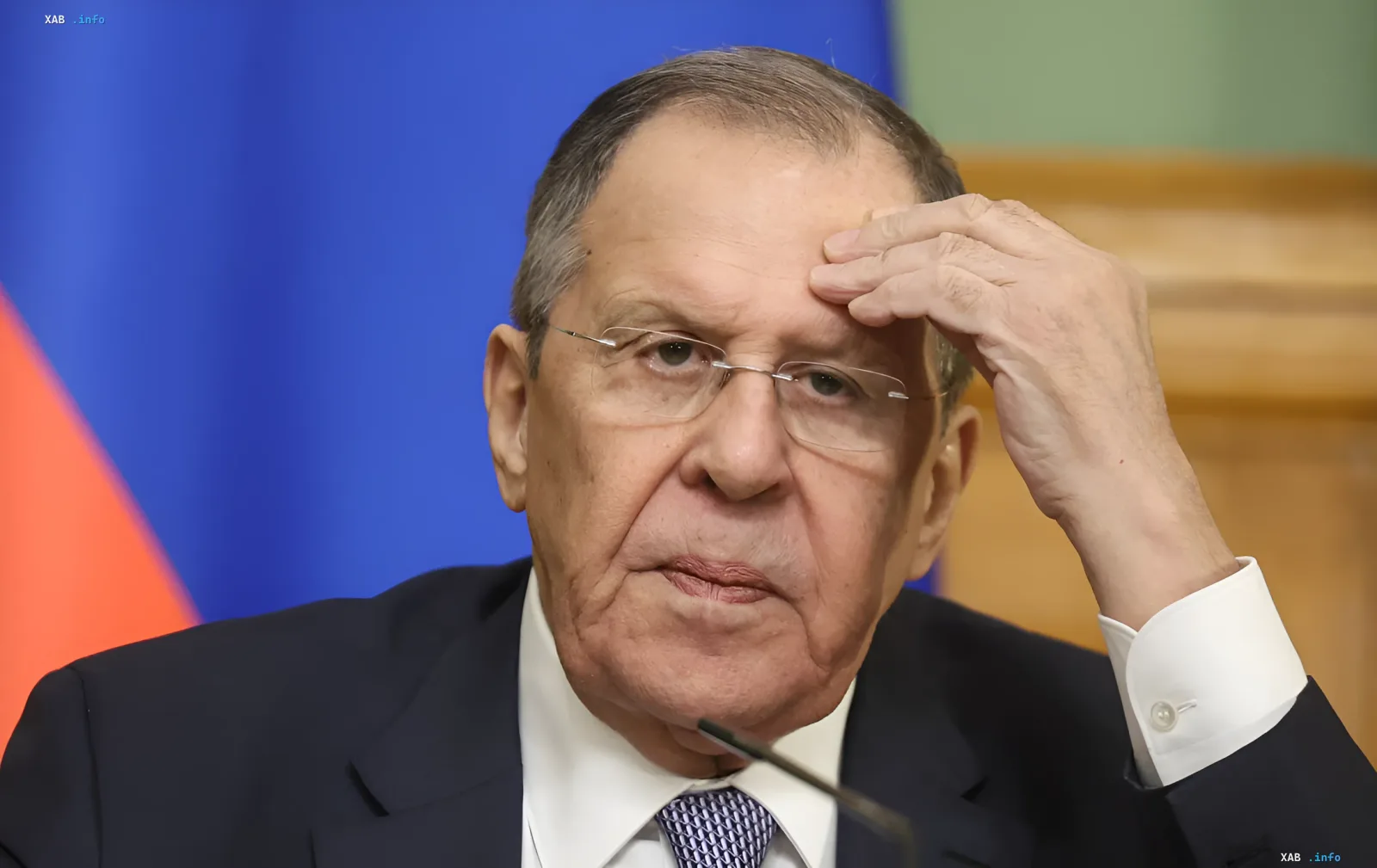
RF Foreign Minister Sergey Lavrov, in a recent public statement, described a conversation with the Vatican's Minister for External Relations, Paul Richard Gallagher, during which, according to the Russian diplomat, he "inquired" of the Holy See's representative about how the Vatican perceives the situation with human rights, including religious rights, in Ukraine. Lavrov claimed that Gallagher replied, "that is not good," and that he asked the Vatican diplomat to "pass on a signal" to Kyiv during subsequent contacts with the Ukrainian side. At the same time, as RBC-Ukraine notes, citing the Russian outlet RBC, Lavrov provided no evidence for his words.
What Lavrov said about his conversation with Gallagher
According to the Russian minister's version, he asked Gallagher whether the topics of human rights and religious freedoms had been raised during the Vatican diplomat's visit to the Ukrainian capital. Lavrov stated that Gallagher "admitted that he had not had enough time" to pass on to Moscow any complaints or signals from the Ukrainian side. Against this backdrop, the Russian diplomat recalled that Gallagher had recently visited Kyiv and suggested that the Vatican, "which keeps an eye on all the twists and turns in the world's religious community," could not have been unaware of what was happening in Ukraine.
Gallagher's public position: peace, not accusations
However, an analysis of Paul Richard Gallagher's public statements paints a different picture. The Vatican diplomat has never made a direct criticism of Ukraine in the form of statements about systematic human rights violations or the persecution of believers. In February 2025, Gallagher publicly called for an end to the war in Ukraine and emphasized the importance of dialogue and humanitarian efforts. In September 2025, speaking at the UN General Assembly, he called the war in Ukraine "one of the most painful crises" and stated the need for it to end, focusing on the protection of civilian populations and compliance with international humanitarian law. In none of these statements did Gallagher accuse the Ukrainian authorities of violating human rights.
Visit to Kyiv and Berdychiv: a mission of peace
In July 2026, Gallagher personally visited Ukraine — specifically Kyiv and Berdychiv. The Vatican News outlet described this trip as a mission during which the Vatican diplomat spoke about the suffering of the Ukrainian population and the need to establish peace. Thus, Gallagher's public narrative, as recorded by Vatican and international media, is focused on supporting peace, humanitarian aid, and the cessation of hostilities, rather than on passing on "signals" from Moscow on human rights matters.
Contradictory data
There is a notable gap between Lavrov's version and Gallagher's public rhetoric. On the one hand, the Russian minister claims that the Vatican diplomat confirmed a negative assessment of the human rights situation in Ukraine and that he asked to pass on a "signal" to Kyiv. On the other hand, neither in Gallagher's public statements, nor in Vatican News materials, nor in reports on his visit to Kyiv and Berdychiv in July 2026 is there any mention of passing on any complaints from Moscow. Moreover, according to his own words, Gallagher "did not have enough time" for such contacts — which, by Lavrov's logic, means that the "signal" was never passed on. Thus, Lavrov's claim that he "asked to pass on a signal" remains unconfirmed by the Vatican, and his assessment that Gallagher "acknowledged" a negative picture finds no reflection in the Vatican diplomat's public statements.
Broader context: Lavrov's statements on the US and Ukraine
Lavrov's statement about his conversation with Gallagher came against the backdrop of other resonant remarks by the Russian minister. Recently, Lavrov accused the US of strikes on RF territory and demanded explanations from Washington. He also made a separate demand of the States regarding Ukraine in a recent interview. Taken together with the account of the "signal" to the Vatican, these statements form a picture in which the Russian Foreign Ministry is trying to use channels of interfaith and interstate dialogue to advance its own position on Ukraine, while the public rhetoric of the Vatican diplomat remains focused on peaceful settlement and humanitarian issues, without any link to accusations against Kyiv.