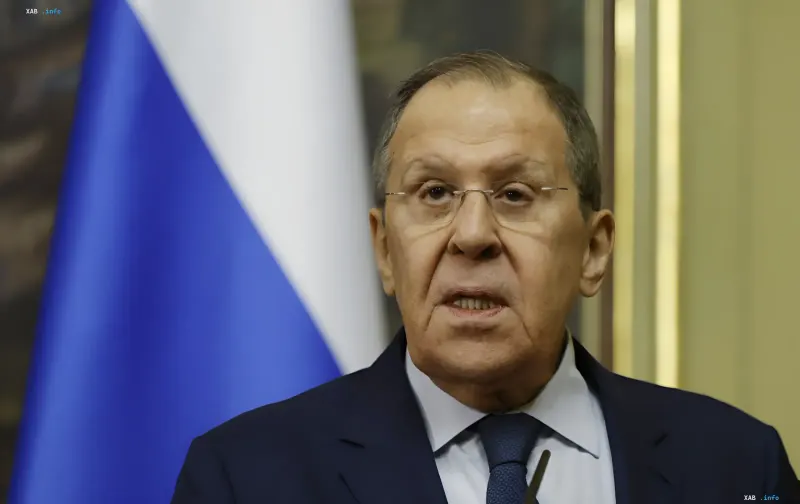
Russian Foreign Minister Sergey Lavrov, during an official address, categorically rejected the possibility of 'freezing' hostilities along the entire front line and signing a ceasefire with Ukraine. According to him, stopping the conflict at current positions is unacceptable for Moscow, as it would 'erase the feats of our grandfathers and great-grandfathers who defeated Nazism.' The statement came against the backdrop of growing pressure from Ukraine's Western allies, particularly the United States, which is urging Kyiv to reduce strikes on Russian ports and civilian objects in the Black Sea.
Threats to intensify strikes on Ukraine's infrastructure
Lavrov did not limit himself to refusing ceasefire negotiations — he directly threatened to intensify methods of destroying all infrastructure that, in Moscow's view, 'fuels Ukraine's war machine.' 'We are already doing this, and they are already starting to groan,' the diplomat stated, adding that more and more voices from various countries are calling for an immediate stop. However, according to him, 'it will not work that way.' These words can be interpreted as a signal of Russia's readiness to expand the geography and intensity of strikes on logistics hubs, energy facilities, and ports linked to Western arms supplies.
Kyiv's proposal for mutual abstention from strikes on civilian objects
According to Sky News, the team of Ukrainian President Volodymyr Zelenskyy allegedly sent the Kremlin a proposal for mutual abstention from strikes on civilian objects in the Black Sea. The initiative, if indeed put forward, could have been a step towards de-escalation and the protection of the civilian population. However, Kyiv has not yet officially confirmed or denied this information. At the same time, according to journalists, the proposal came simultaneously with US efforts to persuade Ukraine to reduce strikes on Russian ports — in particular, Vice President JD Vance personally asked Zelenskyy to stop attacks on tankers in the Black Sea.
Contradictory data
There is a clear discrepancy between the statements of the Russian side and data from Western sources. On the one hand, Lavrov claims that Russia does not plan to freeze the conflict and rejects any form of ceasefire, citing historical memory of the victory over Nazism. On the other hand, Sky News reports on a possible proposal by Kyiv for mutual abstention from strikes on civilian objects, which implies a readiness for dialogue. At the same time, neither side has provided official documents or confirmation of their assertions. Furthermore, sources point to US pressure on Ukraine, which may mean that Kyiv's proposal was made under external influence rather than on its own initiative.
Context of Ukraine's previous rejections of US plans
This is not the first time Ukraine has rejected peace initiatives proposed by the United States. Earlier, in July 2026, Lavrov characterized Kyiv's rejection of the US plan as 'arrogant and contemptuous,' pointing to Ukraine's unwillingness to compromise. According to him, Kyiv ignores proposals that could lead to a stabilization of the situation. However, the Ukrainian side insists that any agreements must be based on compliance with international law and Ukraine's territorial integrity, which makes negotiations extremely difficult.
Prospects for the development of the conflict
Russia's refusal of a ceasefire and threats to intensify strikes on Ukraine's infrastructure indicate that the conflict may enter a new phase of escalation. If Kyiv really proposed mutual abstention from strikes on civilian objects but received a refusal, this could be used by Moscow to justify further attacks. At the same time, US pressure on Ukraine could lead to internal disagreements within the Ukrainian leadership and weaken its position on the international arena. In the coming weeks, it is expected that both sides will increase rhetoric and military actions, which could lead to new humanitarian crises and a rise in tension in the region.