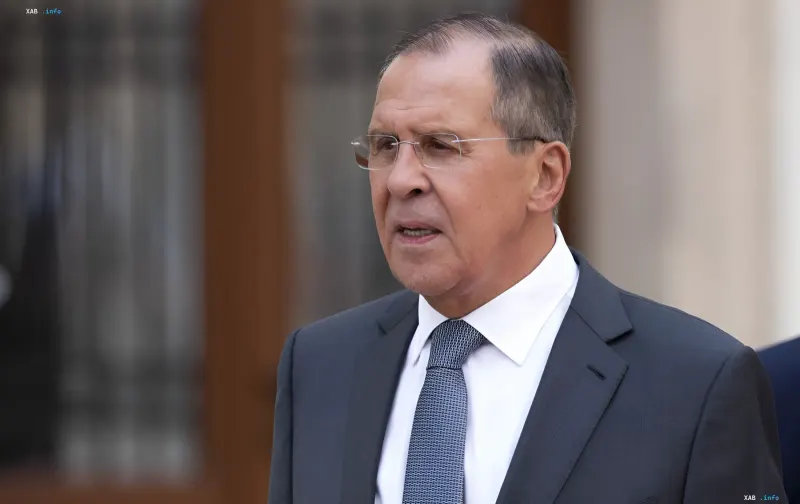
The head of the Russian Foreign Ministry, Sergey Lavrov, offered an assessment of the current state of the peace process aimed at ending Russia's war against Ukraine, stating that the American approach, in his words, takes into account the "current situation on the front" and the "realities on the ground." According to the Russian diplomat, Moscow "liked" the fact that, as he put it, Washington acknowledges these "basic things" and is trying to find a solution. Lavrov emphasized that US President Donald Trump's team is allegedly demonstrating a willingness to rely on the actual state of affairs rather than on abstract formulations, and that, in his claim, this is precisely what forms the basis for further contacts.
'Positive response' and readiness to continue talks
Commenting on signals coming from Washington, Lavrov stated that they "give us a positive response and create a readiness to continue talks with them." In this way, the Russian foreign minister publicly recorded, in his words, a positive dynamic in the dialogue with the American side and expressed Moscow's readiness to continue negotiations. He did not disclose the specific agreements that, as had been reported earlier, US envoys Steve Witkoff and Jared Kushner may have reached during their contacts with Vladimir Putin, limiting himself to general formulations about "basic things" and the search for a solution.
Accusations against European leaders
Against the backdrop of statements about contacts with the US, Lavrov reacted to new calls for peace from European leaders. In particular, he recalled the public statements by Finnish President Alexander Stubb and Italian Prime Minister Giorgia Meloni about the need to urgently stop the fighting on the front. In the assessment of the Russian minister, behind these calls "lies a desire to buy time," which, he claimed, "everyone understands perfectly well." Lavrov also quoted, in his words, Volodymyr Zelenskyy, who allegedly stated the urgent need for missiles for Patriot systems and other air defense means in order to "preserve our state," calling these statements a demonstration of Kyiv's real priorities.
Contradictory data
In the public statements of the Russian side and in the assessments recorded by various media outlets, an internal inconsistency can be traced. On the one hand, Lavrov characterizes Washington's approach as a "positive signal" and confirms the readiness to continue the dialogue, painting a picture of converging positions. On the other hand, in other speeches he acknowledges that the US has "apparently changed its approach" to the understandings on Ukraine reached in Anchorage, and also states that within the framework of the Anchorage agreements "our conscience is clear" and "a man said it — a man did it," meaning that Russia has fulfilled its obligations. Thus, the same side is simultaneously talking about a positive dynamic and about the fact that the American side has departed from previously reached agreements, creating a contradictory picture: either the agreements are being honored and produce a "positive response," or they are in fact being revised. Different sources record both of these theses, without resolving the contradiction between them.
Context: phone talks and the peace package
Lavrov's statements came against the backdrop of active diplomatic activity: it had earlier been reported that on September 8, Donald Trump and Vladimir Putin held phone talks, and the day before, Volodymyr Zelenskyy made a statement about the so-called Witkoff peace package. In addition, on September 6, Kyiv was visited, besides the American side's envoys, by other participants in the negotiations. Under these conditions, Lavrov's assessment of the US "new approach" and his criticism of European calls for a ceasefire become part of a broader information battle over the interpretation of the course of the peace process, in which each side records its own "signals" and "realities."