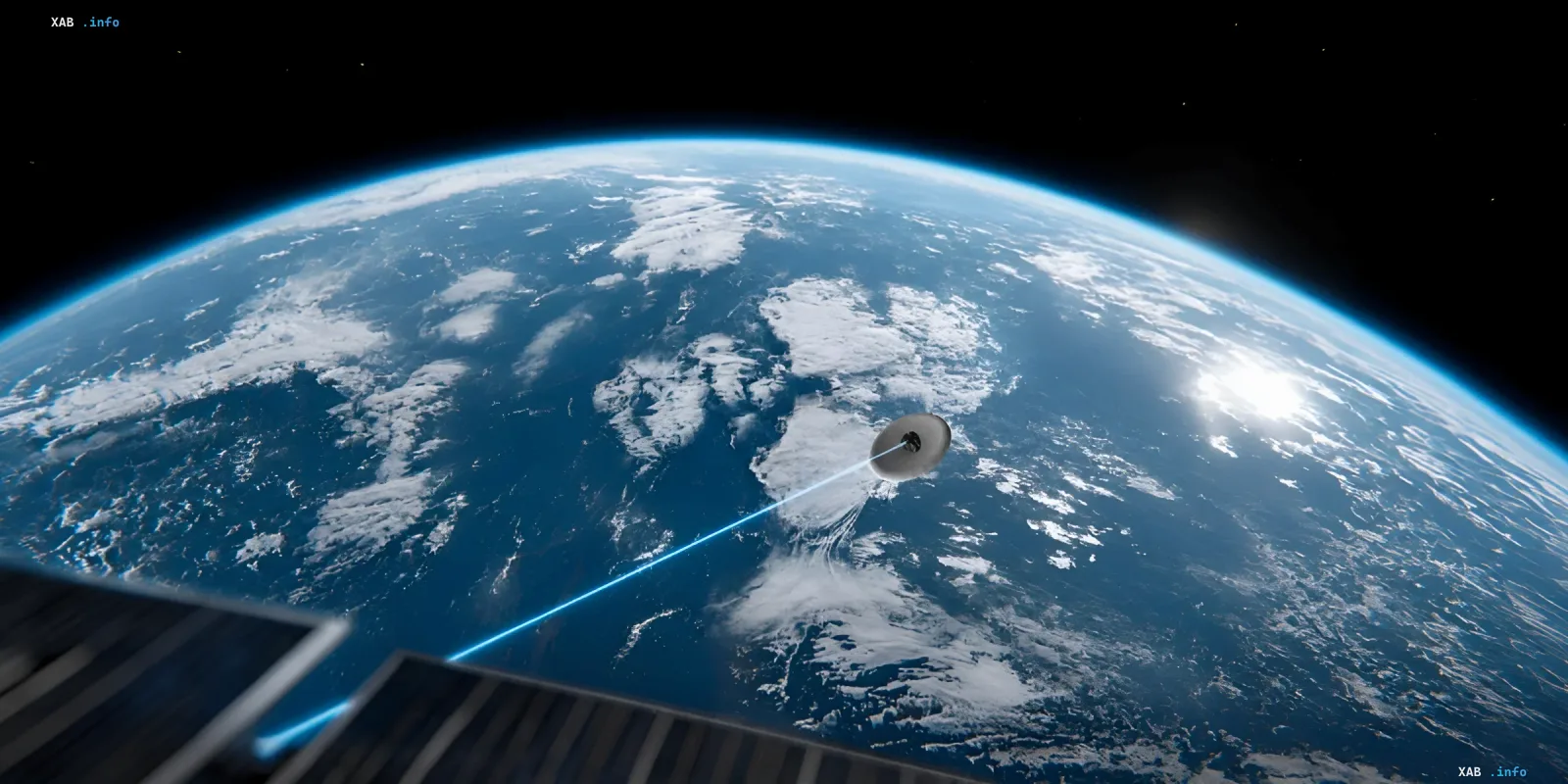
On August 12, 2026, it was announced that a Memorandum of Understanding had been signed between the Lithuanian company Astrolight and the developer of cargo space systems, ATMOS Space Cargo. The partners plan to conduct a demonstration flight in 2027, during which an optical communication channel will be established between a returnable vehicle and an orbiting satellite. This experiment will become the first direct test of data transmission in the history of real spaceflight.
Technological Breakthrough: ATLAS-X Laser Terminals
During the tests, ATLAS-X communication terminals developed by Astrolight will be installed on ATMOS's PHOENIX returnable capsule and on the accompanying orbital satellite. The systems will ensure the transmission of telemetry and scientific data in real-time at speeds of up to 2.5 Gbps, both during orbital operations and during the vehicle's descent through the atmosphere. Previously, the capabilities of optical communication lines for returnable objects were investigated only under laboratory conditions on Earth.
Advantages of Laser Communication in Space
Astrolight's Chief Executive Officer, Laurynas Mačiulis, noted that narrow-beam laser beams are capable of transmitting information at speeds 100 times higher than traditional radio communication. Furthermore, such a signal is resistant to electronic warfare (jamming), making it extremely difficult to jam, intercept, or detect, which provides an advantage in commercial and defense missions. ATMOS Space Cargo's head, Sebastian Klaus, added that with the increasing autonomy and volume of data in cargo missions, continuous communication is becoming a key requirement at all stages of flight.
Strategic Independence of Europe
Currently, Europe depends on international partners regarding the transportation of cargo from Low Earth Orbit (LEO) and its return delivery to Earth. This experiment aims to strengthen the region's technological independence within the framework of the European Space Agency's (ESA) initiative called LEO Cargo Return Services. The implementation of laser terminals will allow operators to receive maximum information in real-time and make the management and scaling of space missions more reliable.
Contradictory Data
Although the partners claim the experiment is unprecedented, some experts point out that similar tests were conducted previously under other programs, but were not completed with a successful real-time data transmission. Additionally, there are disagreements regarding the exact date of the demonstration flight: Astrolight cites 2027, while ATMOS Space Cargo mentions the possibility of postponing it to early 2028 in case of delays in equipment certification.
Prospects for Technology Development
The successful completion of the experiment will open new horizons for the use of laser communication in space missions. It is expected that the technology will be implemented in commercial projects for delivering cargo to orbit and back, as well as in military missions where high data transmission speeds and protection against interception are required. This could lead to the creation of new standards in the field of space communication and strengthen Europe's position in the international market of space technologies.