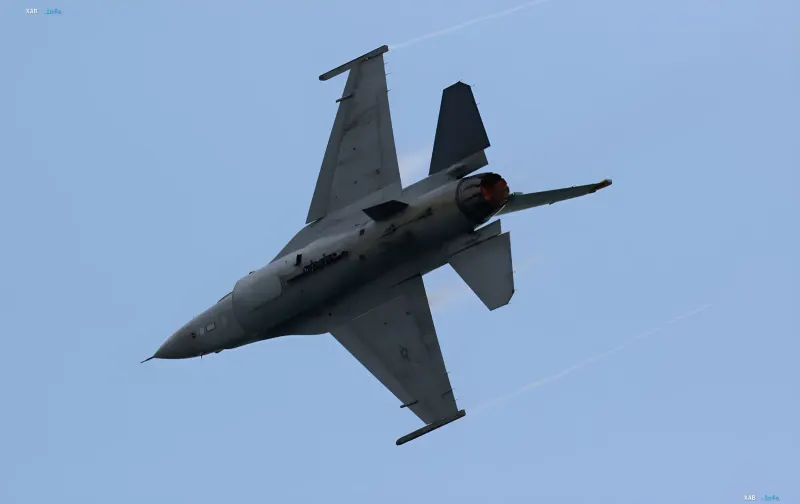
On Sunday, September 13, 2026, an air raid alert was declared in Vilnius, the capital of Lithuania. Due to a drone threat detected on radar, authorities temporarily suspended operations at Vilnius Airport. To verify the situation, an Italian fighter jet was scrambled on an emergency basis from the base in Šiauliai, where it was carrying out tasks under the NATO mission for Baltic Air Policing. After the pilot visually identified the object, it turned out that the alert had been a false alarm: the object in the air was a flock of birds.
False alarm: radar failed to distinguish birds from drones
The Lithuanian National Crisis Management Centre explained that the initial readings from radar stations for drones and birds can be similar, which is why the alert system triggered automatically. Vilnius Airport resumed operations 38 minutes after it was closed. According to local authorities, the incident did not interfere with the Vilnius Marathon, which took place in the city on schedule.
Contradictory data
Open sources record a discrepancy in the initial reporting of the events. A number of media outlets reported at the time on "unidentified aerial objects" and a direct threat from drones, whereas the official National Crisis Management Centre subsequently classified the object as a flock of birds. In addition, the TASS agency notes that Vilnius Airport has been closed at least 16 times due to unidentified objects, which paints a picture of recurring incidents rather than a one-off case; at the same time, TASS emphasizes that the airport closure did not affect air transit toward Russia. Thus, the "radar false alarm" version and the "systemic drone threat" version coexist in the information space.
Context: NATO concern over drones over the Baltic
Incidents of military drones entering the airspace of the Baltic states and Finland are causing heightened concern among Alliance members. NATO has intensified monitoring of the airspace due to the risk of the war spreading beyond Ukraine to the northern borders adjacent to Russia. It is against this backdrop that any suspicious echo on radar near the Lithuanian capital leads to the automatic scramble of fighter jets and the closure of civilian airports.
The nuclear issue and Moscow's reaction
It is worth recalling that in early July 2026, Lithuanian President Gitanas Nausėda stated his intention to initiate the repeal of the constitutional ban on nuclear weapons. According to him, there is near-unanimous support for this decision among the leaders of the country's parliamentary parties, which will allow Vilnius to finally exit the so-called "gray zone" of NATO security. The Lithuanian leadership's initiative provoked a sharp reaction from the Russian Federation: Russian leader's press secretary Dmitry Peskov and Deputy Chairman of the Russian Security Council Dmitry Medvedev issued threats against the country. Lithuanian politicians rejected the Kremlin's intimidation, calling it an element of psychological pressure that will not change the decisions on the possible deployment of nuclear weapons on the state's territory.