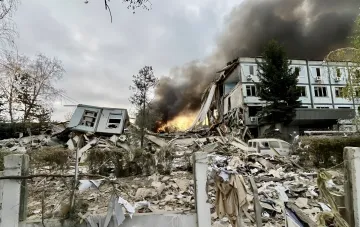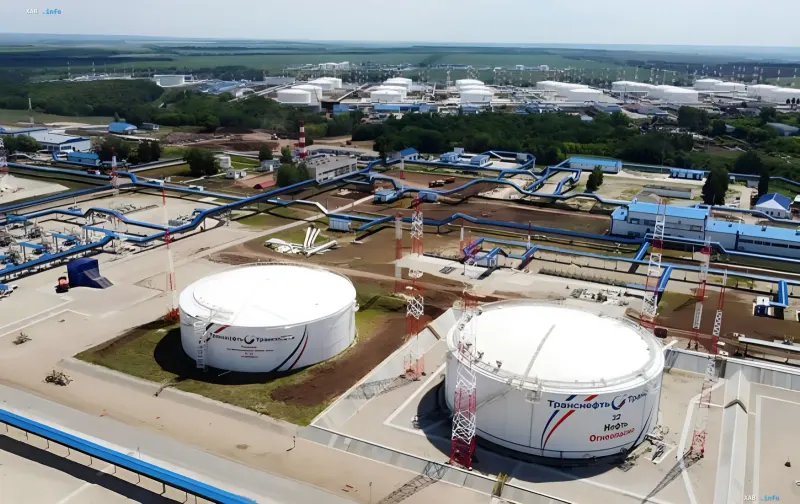
A massive fire has been burning for a second consecutive day at the Samara linear production and dispatch station (LPDS), one of Europe's largest fuel tank farms, following a drone attack on November 2. This was reported by RBC-Ukraine citing the ASTRA Telegram channel. Eyewitnesses recorded thick smoke rising over the station's territory, with fire sources remaining uncontained. As of Monday morning, November 3, the fire at the facility had not been extinguished, despite statements by local authorities in Samara Oblast about successfully 'repelling' the attack.
Facility Scale and Nature of Damage
LPDS Samara is located approximately 30 kilometers east of the city of Samara. The station comprises 71 tanks, with a total oil storage volume estimated at over 1.6 million cubic meters, making it one of the largest facilities of its kind not only in Russia but in all of Europe. This is precisely why even a localized fire at the site can generate an extensive smoke plume visible for dozens of kilometers and pose an environmental risk. According to data available as of November 3, the exact number of damaged or destroyed tanks resulting from the November 2 strikes has not been officially disclosed.
Astana's Reaction: Halting Atyrau-Samara Deliveries
The most significant external confirmation that the attack damaged infrastructure came from Kazakhstan's decision. According to the country's Ministry of Energy, the republic temporarily halted crude oil supplies to Russia via the Atyrau-Samara pipeline. In response to a Bloomberg inquiry, the ministry stated that pipeline facilities in Russia's Samara Oblast were attacked overnight. The suspension of transit along one of the key export routes indicates that the damage affected not only the tank farm but also the associated pipeline infrastructure.
Series of Strikes on the Facility in October
LPDS Samara was repeatedly targeted throughout October 2026. Large-scale fires and destruction at the station were recorded on October 2, 7, 10, and 11. Specifically, the strike on October 7 confirmed the destruction of four RVS-50000 type tanks. Another attack on the Samara oil hub was recorded on the night of November 2. The recurring nature of the strikes indicates that the facility is viewed as a resilient target, and its storage capacity and role in the oil collection and pumping system make it a priority target.
Context: Energy Infrastructure Strikes Across Multiple Regions
The attack on LPDS Samara fits into a broader context of strikes against Russian oil and gas facilities. During the same period, hits on tanks, pipelines, and units were recorded in Samara and Astrakhan Oblasts. Concurrently, in other regions of the country, reports emerged following drone raids about substation damage and the introduction of emergency states, confirming the systematic nature of attacks on energy and fuel infrastructure. For LPDS Samara, the key consequence is not only direct damage to tanks but also the impact on oil logistics, which has already affected decisions by transit countries.
Discrepancies in Damage Assessments
Assessments of the November 2 attack's consequences vary. Local authorities in Samara Oblast claimed the Ukrainian Armed Forces' attack was successfully repelled, implying no significant damage. However, eyewitnesses and data from the ASTRA Telegram channel record a fire burning for a second day and thick smoke over the station, while Kazakhstan's Ministry of Energy confirmed the attack on pipeline facilities and the suspension of supplies via Atyrau-Samara. Thus, the fact of the strike and its impact on facility operations are confirmed by sources independent of regional authorities, while the exact nature and scale of the damage remain a subject of discrepancy.