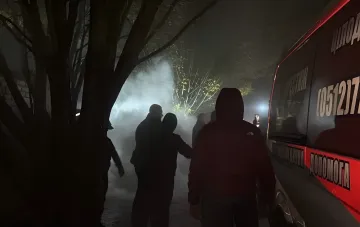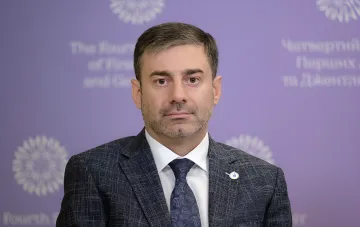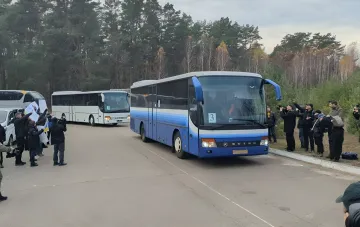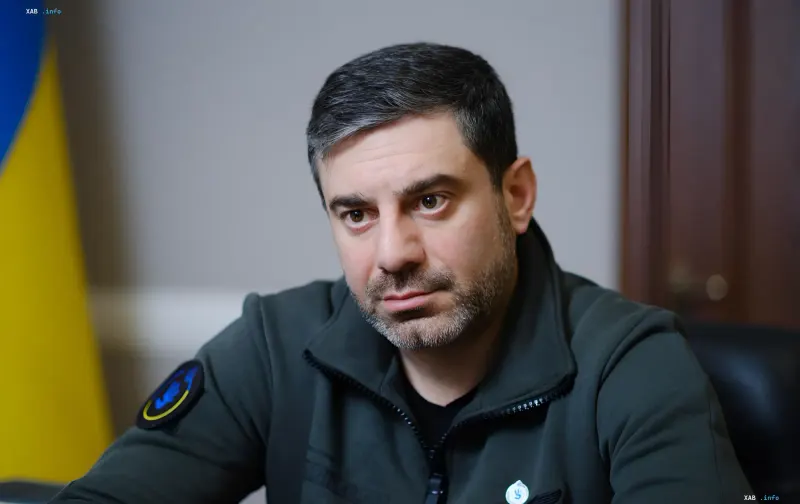
Dmytro Lubinets, the Ukrainian Parliament Commissioner for Human Rights, commented at a press conference on the incident involving the movement of Russian military equipment marked with red crosses in the territory of Oleshky during the temporary truce. According to the ombudsman, he promptly contacted the responsible official, personally reviewed the video footage, and held a meeting on the matter. "The video clearly shows Russian military equipment marked with red crosses. This military equipment was used for demining under the strict control of the Ukrainian side," Lubinets stated, emphasizing that after completing the demining work, the equipment returned to the place from which it arrived.
Ombudsman: Equipment Operated Under Kyiv's Control
Lubinets emphasized that the movement of Russian equipment in Oleshky took place within a strictly regulated process. According to him, the demining was carried out under the direct control of the Ukrainian side, which, he claims, rules out the possibility of unauthorized military use of the corridor. The ombudsman noted that upon completion of the demining work, all Russian military equipment left the territory and returned to its original positions. The statement came amid a growing number of publications and video materials capturing the activity of the Russian side in the Oleshky area during the operation of the humanitarian corridor.
Sky News Journalists Record Military Activity
Earlier, Sky News correspondent Azad Safarov reported in his coverage that before, during, and after the evacuation of the population, the Russians used the humanitarian corridor in Oleshky for military purposes. According to him, the film crew witnessed firsthand how the Russian military brought heavy equipment into Oleshky and neighboring settlements. In addition, the journalist recorded the delivery of weapons, ammunition, personnel, and food supplies. These observations contrast with the ombudsman's characterization of the equipment movement solely as demining under Ukrainian control.
Moscow Praises Operation, But Plans No Repeats
Kremlin official spokesman Dmitry Peskov commented on the humanitarian operation in Oleshky, stating that Moscow "appreciated" it. At the same time, according to Peskov, conducting similar operations in the future is not currently planned. The statement was made without detailing specific results of the operation and without mentioning incidents involving the movement of military equipment during the truce.
Humanitarian Consequences: Removal of Bodies and Plans for Civilian Return
In addition to issues related to equipment movement, Lubinets previously reported that during the truce in Oleshky, the bodies of the deceased—both military and civilian—were removed from the city morgue. This fact highlights the scale of the combat consequences for the city's population. In this regard, Ukraine plans to establish a Civilian Return Center, which will organize the return of civilians from temporarily occupied territories. The creation of such a center is viewed as a systematic mechanism to resolve problems that have accumulated during evacuation operations.
Context: Corridor Control and Transparency Issues
The incident involving the movement of Russian equipment in Oleshky once again raises the question of the degree of control over compliance with the terms of the temporary truce and the use of humanitarian corridors. The discrepancy in assessments—from "demining under Ukrainian control" according to the ombudsman to "military use of the corridor" as observed by Sky News journalists—highlights the need for independent verification of events. In conditions where video materials record both equipment marked with red crosses and the delivery of ammunition and personnel, the issue of transparency and adherence to the humanitarian regime remains open.