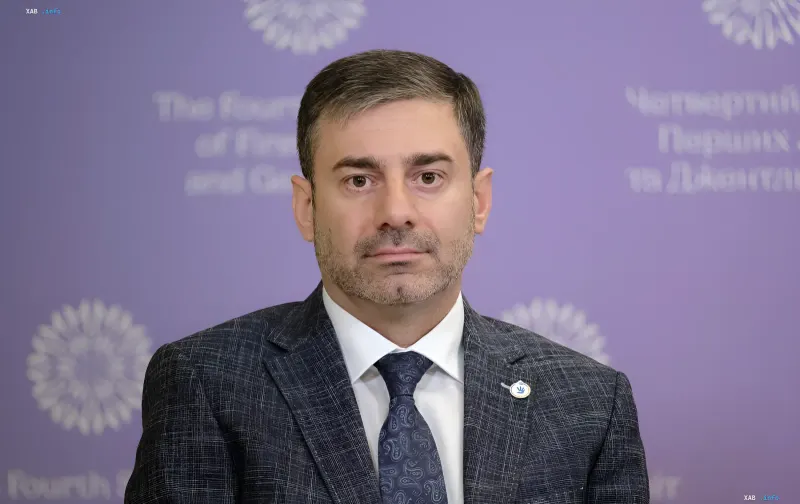
Ukrainian Parliament Commissioner for Human Rights Dmytro Lubinets revealed details of the logistical route used to evacuate residents of the temporarily occupied town of Oleshky in the Kherson region during a press conference. According to him, direct evacuation by water from Oleshky to Kherson was impossible, as confirmed by a relevant assessment conducted by Ukraine's Defense Forces. The ombudsman emphasized that the movement scheme was coordinated taking into account the military's position, intelligence data, and information from citizens who had previously managed to leave the city on their own.
The Route via Gomel, Anapa, and Crimea
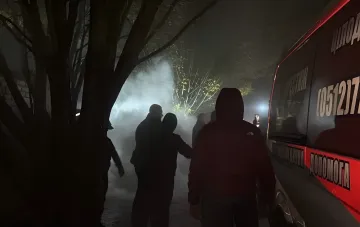
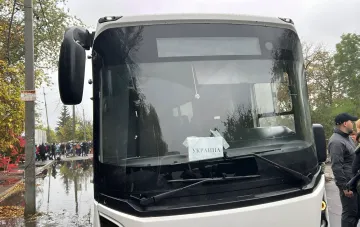
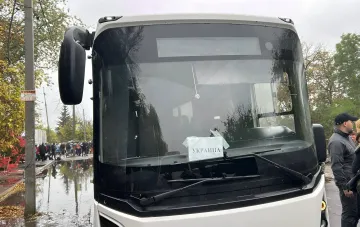
Lubinets stated that on October 29, he left Kyiv along with a Ukrainian delegation and two American journalists who had arrived in advance; the agreement was for the return trip to take place with the same group. The route passed through Gomel, Anapa, temporarily occupied Crimea, and the Kherson region. According to him, a technical meeting took place in Simferopol on the evening of October 29 to discuss the formation of the convoy and other details, and at 3:00 AM, the convoy set off for Oleshky. The delegation stayed in the city until 2:00 PM on October 31, after which they returned, picking up everyone who wanted to leave.
Why Not Across the Dnipro to Kherson
Answering a question about why such a long route was chosen instead of crossing the Dnipro toward Kherson, the ombudsman noted that he first gathered information from the Armed Forces of Ukraine and specifically thanked Commander-in-Chief Mykhailo Drapatyi and the Defense Forces for their assessments. According to him, no one proposed supporting the initiative for demining and evacuation from Oleshky to Kherson because it is the frontline, and the military warned they would not agree to anything that could weaken Ukraine's defense; therefore, such an option was never considered.
GUR, SBU Assessments, and Citizen Data
Separate assessments of the route, according to Lubinets, were prepared by the Main Directorate of Intelligence (GUR) and the Security Service of Ukraine (SBU). Information from people who had previously evacuated from Oleshky independently and could explain the best travel conditions and what to watch out for was also taken into account. The ombudsman assured that there was no filtration of evacuees by the Russians, and specifically noted that some citizens lacked documents; currently, these documents are being restored with full support.
Context: Truce and Humanitarian Operation
Earlier, according to RBC-Ukraine, Lubinets stated that Russian vehicles with red crosses were used to demine Oleshky during a temporary truce, and the bodies of fallen military personnel and civilians were removed from the city morgue. A local ceasefire in the Oleshky area reportedly lasted from October 27 to November 1 and was aimed at delivering food, water, and medicine, as well as evacuating civilians; estimates suggest about 1,700 people remained in the town. The evacuation route, as media noted, passed through Russian-controlled territories, after which residents would have the opportunity to return to Ukrainian-controlled territory.