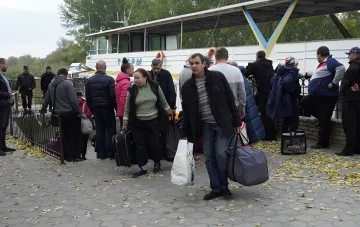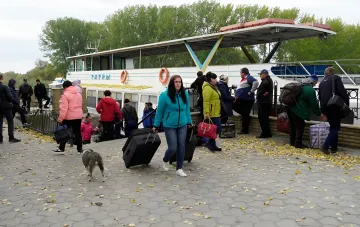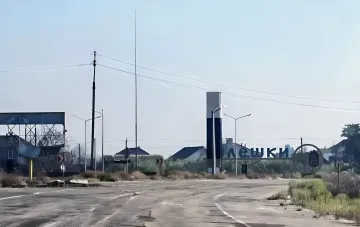
On October 30, 2026, Ukrainian Ombudsman Dmytro Lubinets, who arrived in occupied Oleshky in the Kherson region as part of a humanitarian mission, met with local residents. According to a video published by the Ukrainian Ombudsman's Office and reposted by RBC-Ukraine, people have already packed their belongings and are waiting for buses to leave for the territory controlled by Ukraine. At the beginning of the recording, one of the residents greets Lubinets with the words "Our dearest ones," and a woman who introduced herself as Anna Leonidovna recognizes the ombudsman. Residents confirm that they have prepared for the evacuation by signing their bags and indicating their last names and phone numbers on them.
Evacuation Organization: 25 Buses and Departure Routes
According to Lubinets, 25 buses with a total capacity of 750 seats have been prepared for the evacuation, along with ambulances for people with limited mobility. "We are currently setting up the buses. For everyone who will travel to Ukraine, we will specify which bus they should board," the ombudsman explained. City residents received the right to independently choose their departure direction—either to the territory controlled by Ukraine or to Russia. Special attention, as the organizers assured, will be paid to elderly people, individuals with disabilities, and those who cannot care for themselves independently.
Delegation Route and Ceasefire Regime
The Ukrainian delegation arrived in Oleshky via an agreed route: first to Gomel in Belarus, then to Anapa in Russia, and afterwards through Crimea to occupied Oleshky. The same route is planned for transporting residents who have decided to evacuate. A ceasefire regime was agreed upon for the mission with the assistance of US First Lady Melania Trump. On the eve of the operation, the ombudsmen of Ukraine and Russia, who headed the mission, announced the completion of demining on designated routes. The ceasefire in Oleshky is expected to last until 22:59 on November 1, 2026.
Humanitarian Cargo and Mission Objectives
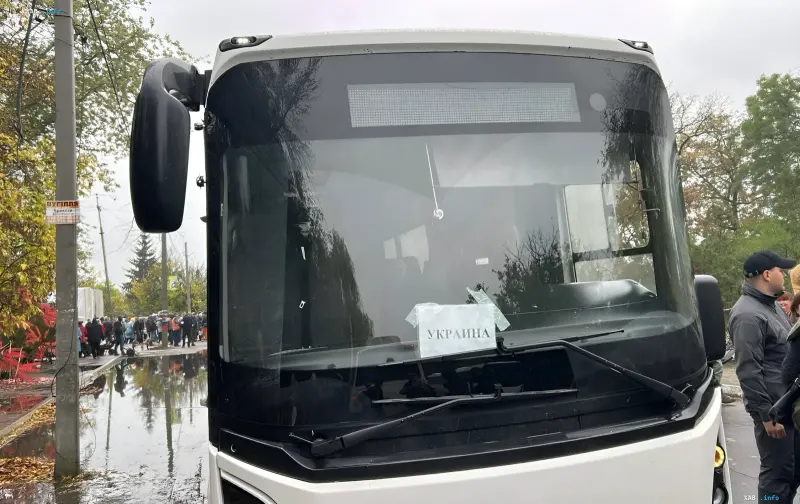
The humanitarian mission involves not only the evacuation of civilians but also the delivery of aid. According to Russian media, the cargo includes food, medicine, drinking water, hygiene products, and fuel for generators. The Ukrainian and Russian sides agreed on the route and the conditions of the operation. Footage from Oleshky shows a white bus with a sheet of paper stuck to its windshield, on which the word "UKRAINE" is written in large letters—transport intended for carrying evacuated residents to the territory controlled by Ukraine.
Context: What Is Known About Humanitarian Missions in the Kherson Region
The humanitarian mission in Oleshky became one of the few instances when a Ukrainian delegation officially crossed the frontline to interact with the population of the occupied territory. Previous similar operations, conducted in 2022–2025, also provided for agreed routes, a ceasefire, and the joint presence of ombudsmen from both countries. The current mission, according to the organizers' plan, is intended to become a model example of coordinating humanitarian efforts amidst the ongoing conflict. Details of the mission plan for October 30 were previously published by RBC-Ukraine in the article "Humanitarian Aid and Evacuation: What Is the Plan for the Oleshky Mission on October 30?"