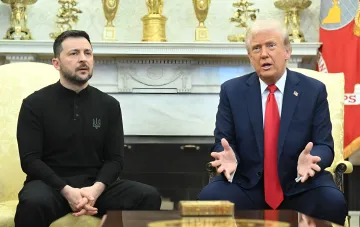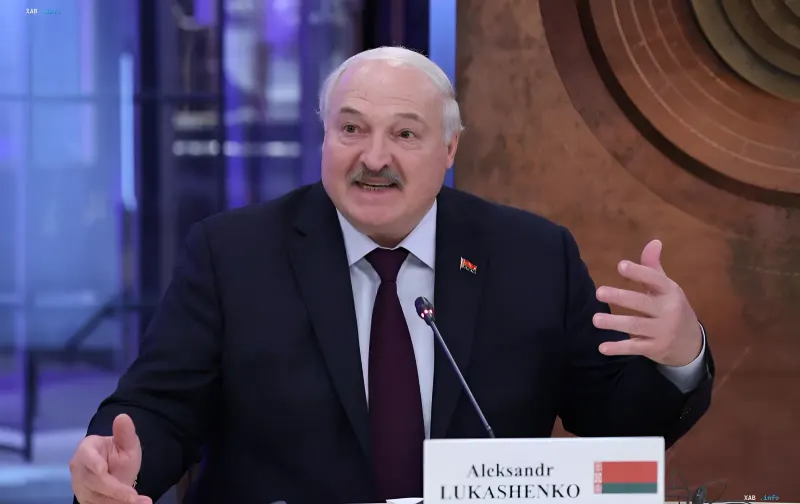
Belarusian President Alexander Lukashenko has publicly commented on recent calls by US leader Donald Trump for Ukrainians to elect a new head of state instead of Volodymyr Zelenskyy. Speaking at a public event, Lukashenko stated: "This is not Trump's question. Who will be president in Ukraine will be decided by the Ukrainian people." According to him, dictating personnel conditions to Kyiv from Washington is inappropriate, yet he considers the principle of holding elections itself to be correct.
"Promises must be kept": Lukashenko's argument regarding Zelenskyy's term
Continuing his thought, the Belarusian leader recalled that upon taking office, Volodymyr Zelenskyy publicly promised to serve only a single presidential term. "Promises must be kept, which means going to elections," Lukashenko stressed. Thus, he effectively supported Trump's logic regarding the necessity of a change of power in Kyiv, while separating this from the actual fact of external pressure: in his estimation, the right to determine when and how to hold elections belongs exclusively to Ukrainian society, rather than any external player.
Context: From Trump's appeal to Zelenskyy's condition
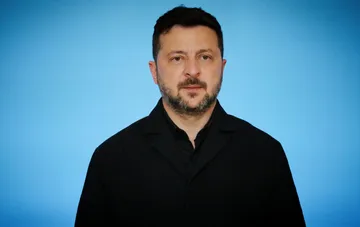
A reminder of what triggered this discussion: Donald Trump publicly urged Ukrainians to elect a new president, accusing Zelenskyy of unwillingness to end the war and systematically evading any agreements. In response, Volodymyr Zelenskyy, as reported by RBC-Ukraine, stated that Ukraine is ready to hold elections, but set a specific condition — the head of the Russian state must agree to a 60-day truce. This statement came directly after a series of appeals from Trump.
The Kremlin's position: Rejection of the 60-day truce
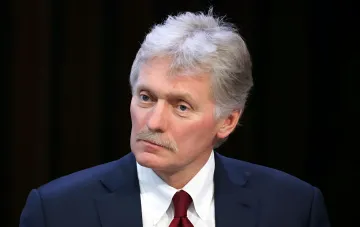
In Moscow, Zelenskyy's proposal was effectively rejected. Russian Presidential Press Secretary Dmitry Peskov stated that Russia seeks a "long-term peace" rather than a temporary ceasefire. At the same time, according to him, Vladimir Putin is only willing to refrain from striking Ukrainian territory on the actual day of the elections. Consequently, neither a 60-day truce nor any additional security guarantees for the election campaign period have been voiced by Moscow.
Three positions and one question: Who decides
The situation following these mutual statements demonstrates three different approaches to the same issue. Trump advocates for a change of Ukrainian leadership and directly points to Zelenskyy as an obstacle to a peaceful settlement. Zelenskyy agrees with the need for elections, but ties them to a specific ceasefire regime. Lukashenko, in turn, takes an intermediate position: he supports the very idea of elections, agreeing with Trump that "he is right," but insists that neither Washington nor Moscow has the right to dictate terms to Kyiv. As a result, the key question — under what circumstances and at whose initiative presidential elections will take place in Ukraine — remains open, with each side putting forward its own conditions, which currently do not align.