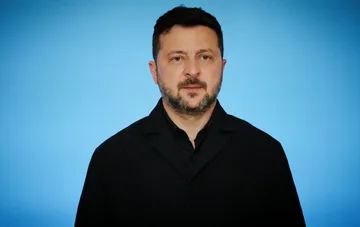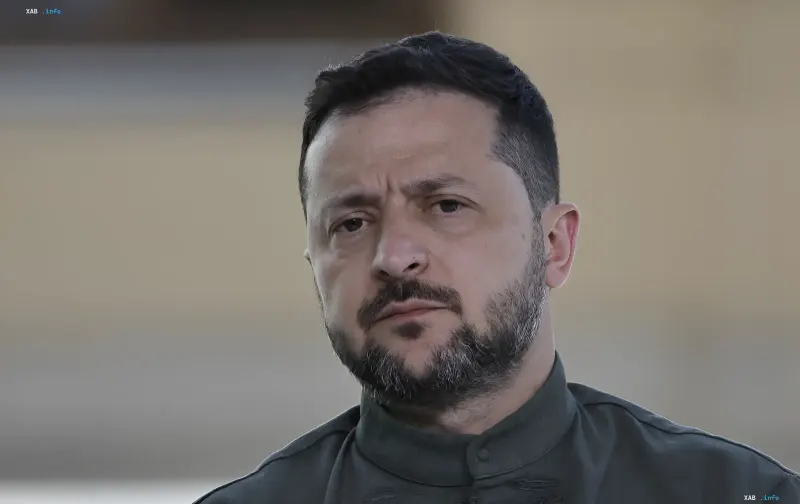
Ukrainian President Volodymyr Zelenskyy, in an interview with an American journalist, directly answered a question about whether he would participate in presidential elections if they take place under martial law. The head of state stated that he will certainly run, as he considers himself responsible for the country's fate throughout the entire war with Russia. «If this happens during the war, of course, this is my responsibility. Because I must defend my country from the very beginning to the end of this war», Zelenskyy emphasized, thereby effectively ruling out the possibility of a voluntary resignation before the end of hostilities.
The two-month condition: what Zelenskyy demands from Moscow
It is important to consider that this statement fits into Zelenskyy's broader rhetoric regarding the holding of elections. Earlier, the head of Ukraine repeatedly stated that he is ready to organize a presidential vote under one condition — Russia's fulfillment of the demand for a two-month complete ceasefire. «Tell Putin: give us two months of a complete ceasefire, and we will hold elections. And we, of course, will be ready to accept any choice of our people — precisely the Ukrainian people», he formulated. Thus, Zelenskyy links the legitimacy of any elections with the creation of safe conditions, and his personal participation in the vote is viewed by him as part of his duty, rather than a political ambition.
Moscow rejects Kyiv's argumentation
Moscow, in turn, consistently rejects the Ukrainian demand for a 60-day truce as a prerequisite for elections. Russian Presidential Press Secretary Dmitry Peskov publicly stated that the 60 days proposed by Zelenskyy are needed by him «not to hold elections, but to gather strength, lick wounds, and continue the war». In essence, the Russian side interprets Kyiv's initiative as a tactical move to restore combat capability, rather than a sincere desire for a democratic process. This divergence in the interpretation of the goals of the truce remains one of the key disagreements between the parties in public discourse.
ISW: Russia uses the impossibility of elections as leverage
Analysts from the Institute for the Study of War (ISW) in a recent review drew attention to the structural aspect of the situation: Russia, according to their assessment, deliberately exploits the fact that Ukraine under martial law cannot hold full presidential elections, and uses this to drag out the negotiation process. Experts point out that the absence of a legitimate cycle of power transfer against the backdrop of ongoing hostilities creates an additional point of tension in diplomatic contacts and limits the space for compromises. In this context, Zelenskyy's statement about his readiness to run even in wartime can be seen as an attempt to close opponents' arguments about the «undemocratic nature» of the current leadership.
The issue of resignation and further dynamics
Special attention should be paid to the fact that in recent comments Zelenskyy also clarified his position regarding a possible resignation, confirming that he does not intend to leave office until the conflict ends. The combination of his statements — on readiness to participate in elections, on linking the vote to a truce, and on refusing voluntary resignation — forms an integral position: the legitimacy of his powers, in his own words, is determined not by terms, but by the end of the war. How this rhetoric will affect negotiation tracks and internal political dynamics in Ukraine in 2026 will become clear as events unfold.