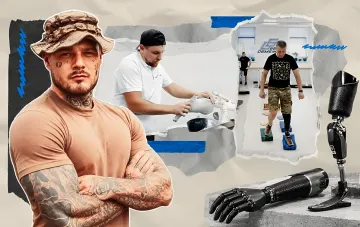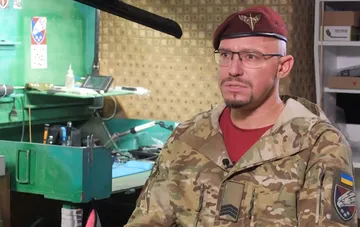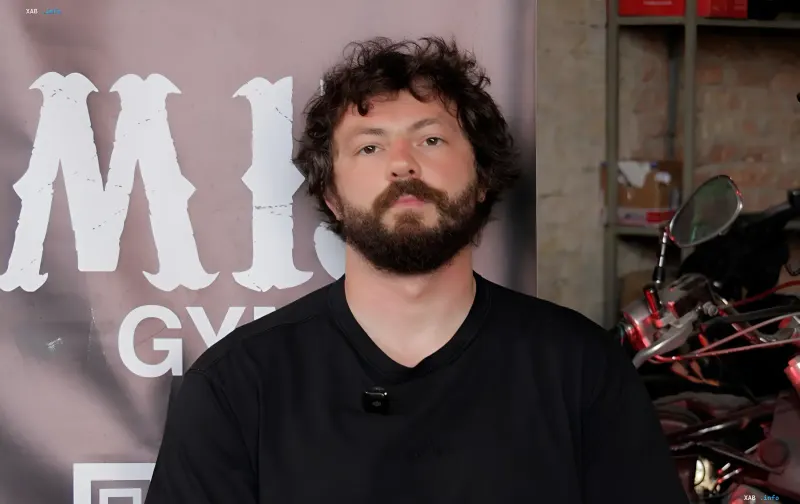
Rather than waiting for state adaptation programs, Special Operations Forces veteran Artem Grot built his own path back to civilian life for military personnel — through sport, the ring, and a sense of brotherhood. His M13 FIGHTS project grew in just a few years from a private gym into a large-scale veterans' movement that unites fighters from different units and helps them stay connected with their comrades after demobilization. Grot told RBK-Ukraine, in an interview after the league's sixth tournament, why the military need their own competitions and how sport works as a tool of rehabilitation.
The Sixth Tournament: Ten Fights in the Middle of the Dnipro
On September 5, 2026, the sixth M13 FIGHTS league tournament took place in Kyiv. This time, around ten fights across various disciplines were held right on a barge moored at the river port in the middle of the Dnipro. According to Grot, the format was realized despite difficult circumstances — shelling and restrictions: "Thanks to analytics, negotiations, the freeze and the ceasefire, we got the date right... There was no shelling in Kyiv on exactly those days... no air raid alerts, everything was calm, with perfect weather." For the participants, the ring became not just a competition venue but a way to stay in touch with like-minded people in conditions where some of them had already been discharged into the reserves.
The Barge "Perlenera" and the Piracy Metaphor
The choice of location was no accident. Grot explains that the barge idea was born a few months earlier, when he was walking in a park and saw a sand barge drifting down the Dnipro from the Glass Bridge. Having found out that it belonged to Yura Brodsky, the team reached out to him with a request to provide the vessel. The barge named "Perlenera," bought in Moldova, was styled in the league's signature look, combining the logos with the image of the "Black Pearl." "I wanted to create the most outrageous and the most unique format that Ukraine had never seen... I like the analogy with piracy. You've seen that there are a lot of guys with amputations — we are like pirates of the 21st century," Grot says, adding that there will be more events on the water.
Why the Military Need a Ring: Consolidating Leaders
In response to the question about the meaning of the tournaments, Grot distinguishes between audiences. For the military themselves, the competitions work as a tool of consolidation: the ring brings together "a cross-section of very elite military personnel," with many representatives of special units — motivated fighters who inspire others. As an example, he cites the story of a fallen warrior with the callsign "Surfer," who, according to Grot, attended the league's tournaments and sent him messages with respect, because the fights inspired him. "This is where the consolidation of such opinion leaders happens, who promote sport within the troops... We must be very strong to stand up against the enemy, because the war will last for a long time yet," Grot summarizes.
Sport as Rehabilitation and Brotherhood
For society as a whole, the M13 FIGHTS tournaments become part of the movement's positioning and the formation of a new veterans' culture. Grot emphasizes that the sense of team is critically important for those discharged into the reserves: the ring provides what is often lacking after the front — belonging to a group where a person is once again "in line," rather than alone with the consequences of war. That is precisely why, by the founder's design, the league should transform from a fighting project into an all-Ukrainian community, with sport serving as the connecting element between combat experience and civilian life.
What Comes Next
Grot does not hide that the M13 FIGHTS format continues to experiment: each tournament is held in a unique place — from a theater stage in Khmelnytskyi to a barge in Kyiv. Future plans include developing the "water" line of events and expanding the geography of the movement. Thus, the project, which began as a private gym, had by the autumn of 2026 evolved into a public platform where sport, rehabilitation, and the military's own projects are united into a single adaptation structure, independent of state decisions.