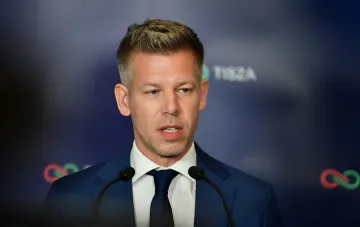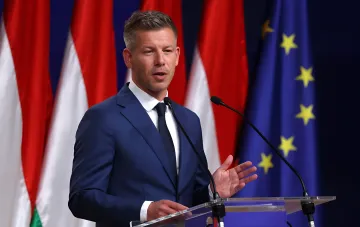
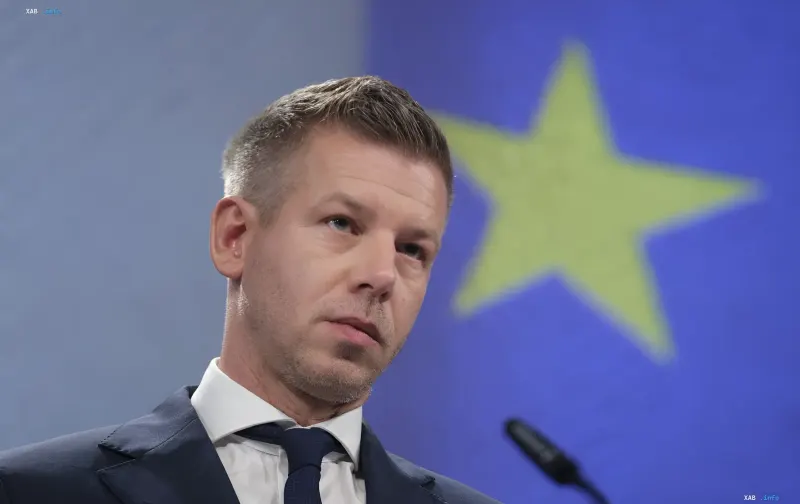
A major political scandal has erupted in Budapest concerning the implementation of one of the most ambitious projects of Viktor Orbán's administration — the construction of new blocks at the Paks Nuclear Power Plant. Hungarian Prime Minister Péter Madjar, who took office in 2026, has severely criticized the agreement signed by his predecessor with the Russian state corporation Rosatom back in 2014. According to the head of government, instead of the promised energy security, the country has received only "two large concrete pits" and massive financial losses.
Outdated Technologies and Climate Risks
One of Madjar's main grievances is the use of outdated technologies in the Paks II project. The Prime Minister pointed out that the VVER-1200 reactors being built by Rosatom are not equipped with a closed cooling system, making them critically vulnerable to climate change. This became particularly relevant in 2026, when anomalous summer heat in Europe led to a record drop in the water level of the Danube River. As a result, the existing Paks Nuclear Power Plant, which provides about a third of the country's electricity, was forced to sharply reduce its output due to the inability to ensure sufficient cooling of the reactors.
Financial Deadlock and Missed Deadlines
Madjar also emphasized that the project, which was supposed to be operational before 2024, has still not been commissioned. According to him, Hungary has already spent about 1,000 billion forints (approximately €2.8 billion) on a site that currently represents only warehouses and unfinished concrete structures. "I really do not see them (the Russians) complying with the contract terms," the Prime Minister stated, adding that he has ordered the government to conduct a total inspection of the facility and review all cooperation terms.
Contradictory Data
There are disagreements regarding the exact volume of financial investments and the current stage of construction. Proponents of the project, including representatives of Rosatom, claim that work is proceeding according to schedule and that delays are due to external factors, including sanctions pressure and logistical difficulties. However, independent experts and representatives of the new Hungarian government point out that a significant portion of the funds was spent on infrastructure not directly related to the construction of the reactors. Furthermore, there is no consensus on how many units have actually been commissioned and how many are still in the preparation stage.
Political Context and Consequences
Madjar's criticism of the Paks II project has not only an economic but also a political dimension. The new Prime Minister, known as a critic of Orbán, is using this issue to demonstrate the inefficiency of the previous policy and to strengthen his authority. At the same time, Madjar's team continues to block Ukraine's accession to the EU, raising questions about the actual direction of Hungarian foreign policy. The scandal surrounding Paks II could become a reason to review not only the energy but also the geopolitical course of Hungary in its relations with Russia and the West.