Robert “Madyar” Brovdi, the Commander of Ukraine’s Unmanned Systems Forces (USF), issued a sharp warning to NATO member states: in his assessment, Russia may gamble and attempt to occupy the Baltic states in a matter of days, replicating the scenario Moscow had previously planned for Ukraine’s capital. This is reported by RBC-Ukraine, citing the Swedish TV channel SVT.
“There Will Be No Kyiv in Three Days Anymore”
“There will never be a Kyiv in three days again, but whether there will be a Baltics in three days — I am not sure. NATO countries greatly underestimate their readiness for a war with modern technologies,” Brovdi stated. The USF Commander emphasized that he calls a drone the “plague of the third millennium,” and, in his words, this is not a metaphor but mathematics, backed by specific figures.
The Mathematics of Drone Warfare
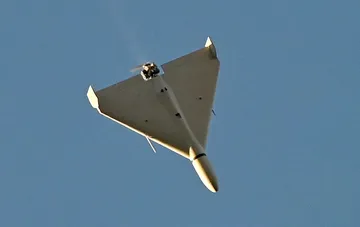
In substantiating his conclusions, Brovdi pointed out that in August Russia launched an average of about 300 “Shahed” drones at Ukraine daily. In his assessment, no army in the world is prepared for attacks on such a scale, and the use of traditional air defense systems to intercept such a large number of unmanned vehicles would place an excessive burden on any economy. At the same time, as the USF Commander notes, Russia continues to build up its military potential: this refers to the production and use of drones and missiles, the development of air defense systems, and preparations for a possible mobilization. According to Brovdi, the Kremlin sees that NATO has still not formed a clear position on countering such threats.
Contradictory Data
Statements by Ukrainian and Belarusian opponents of the Kremlin about a growing threat to the Alliance stand in sharp contrast to the position of Washington. Thus, Belarusian opposition leader Sviatlana Tsikhanouskaya recently warned NATO of a threat from Belarus, while Brovdi pointed to a possible lightning scenario regarding the Baltics. At the same time, US President Donald Trump continues to assert that Vladimir Putin has no intention of attacking the Alliance. Thus, the reader is faced with two incompatible versions: Ukraine’s military command depicts a scenario of swift aggression, while the US administration publicly denies such intentions on Moscow’s part.
Context and Significance of the Warning
Brovdi’s statement is important above all as a public demonstration of how the Ukrainian command assesses the asymmetric potential of unmanned systems and its impact on the security of the entire North Atlantic bloc. Even if the scenario of a Baltic occupation remains hypothetical, the emphasis on the “mathematics” of massive drone attacks and on the unpreparedness of traditional air defense systems underscores, in the view of the USF, a structural gap between NATO’s current capabilities and the nature of modern threats.