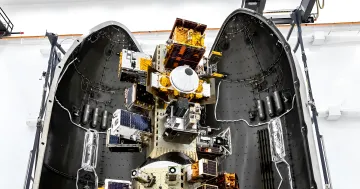

Leading telecommunications giants of the United States, AT&T, T-Mobile, and Verizon, have reached an agreement to establish a joint venture aimed at dramatically improving mobile coverage across the country and eliminating so-called dead zones in remote areas.
According to the published plans, the initial phase of the new structure will focus on a detailed analysis of the infrastructure. Utilizing advanced satellite technologies, the operators will accurately identify problem areas, map coverage gaps, and optimize the radio frequency spectrum allocation to enhance the reliability of existing terrestrial networks.
Economic and Infrastructural Context
The creation of the joint venture opens up new opportunities for cost optimization and attracting large-scale investments into the telecommunications industry. According to representatives of AT&T, the synergy of resources will not only modernize outdated data transmission standards but also significantly accelerate the deployment of innovative solutions.
Controversial Data
Despite official statements regarding large-scale cooperation, serious questions remain within the expert community regarding the technical implementation of the project. While some analysts link the initiative to the potential introduction of direct satellite connections for regular consumer smartphones, similar to advanced developments by SpaceX and Starlink, other sources emphasize the lack of specifics on timelines, launch regions, and the choice of specific technological partners among space equipment manufacturers.
Thus, the future of the joint venture currently depends on the outcome of closed-door negotiations between the operators. Users and the market will have to wait for official regulations and roadmaps to determine whether owners of standard mobile devices can rely on seamless satellite communications in areas completely lacking terrestrial coverage.