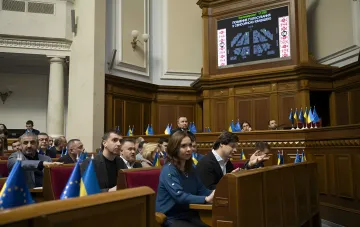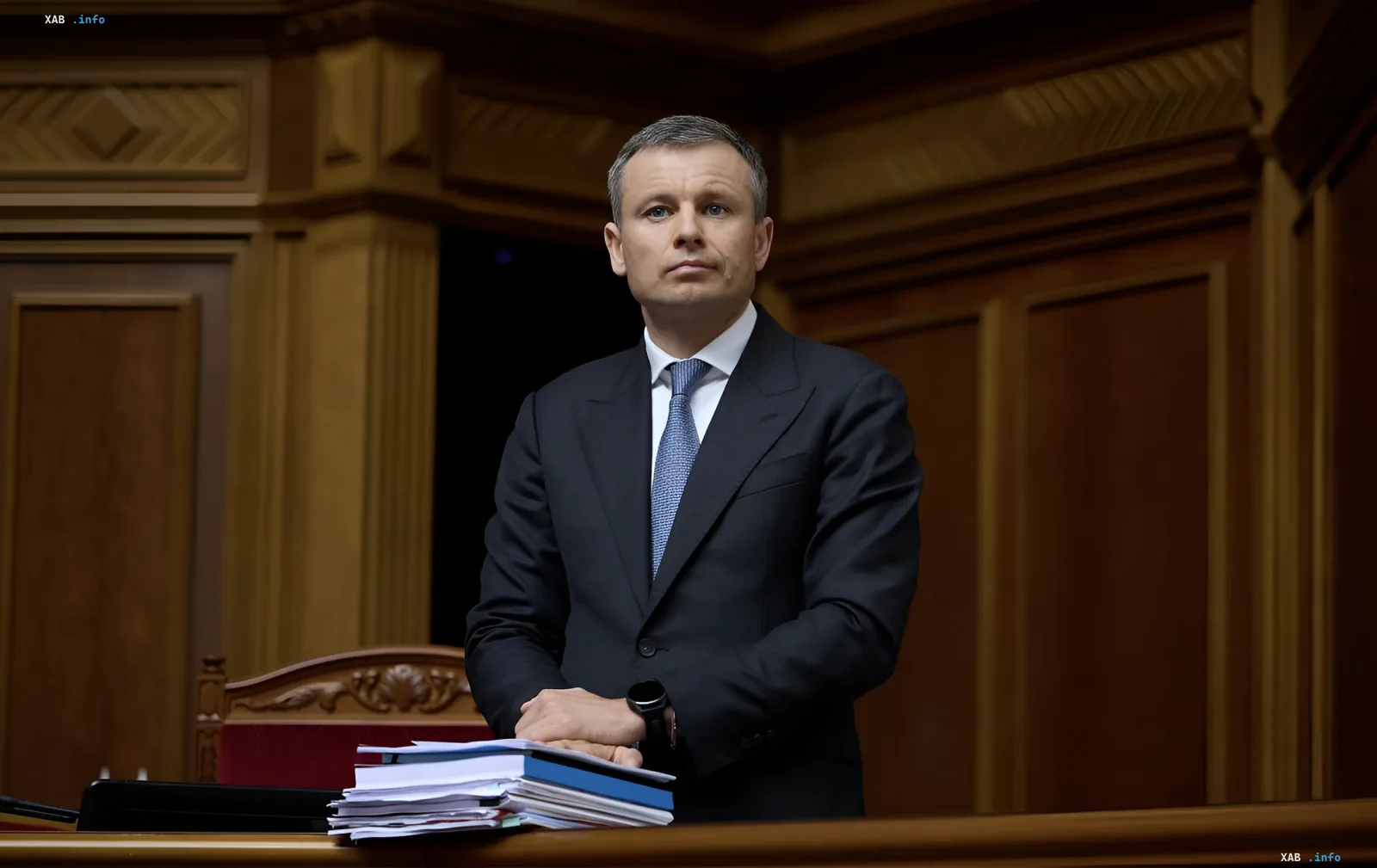
Ukrainian Finance Minister Serhiy Marchenko took the floor in the Verkhovna Rada to demand support for a bill on the taxation of international parcels, which he called “extremely important” and part of the country's international obligations. According to him, this is already the third time he has stood before parliament with this request, and “there is no more time to delay.” The initiative concerns amendments to the Tax Code and the Customs Code and, according to the relevant committee's assessment, affects some purchases made on popular marketplaces.
The Minister's Third Appeal and the “International Obligations” Argument
Speaking in parliament, Marchenko emphasized that the bill “is part of our international obligations, providing for the establishment of fair taxation conditions.” He directly addressed the deputies, asking them to “find a way to support the bill on amending the Tax Code and the Customs Code regarding the taxation of parcels,” calling it, together with the related initiatives, “extremely critical.” The minister noted that the Rada's relevant committee has already supported the corresponding amendments to the Tax Code and the Customs Code, which will affect a number of purchases made on popular online platforms.
Four Billion Euros at Stake
The minister's key argument was a specific figure: in his words, “the price of the matter right now is not receiving 4 billion euros already in September.” Marchenko explained that the bill was urgently moved up on the calculation that, if it can be supported, there is a chance to receive these funds in October. “There are no options to delay any further,” he stated, linking the timing of the vote to the possibility of not losing the funding tranche.
What Will Change for Marketplace Buyers
The essence of the initiative is the introduction of special VAT taxation rules for the distance sale of goods worth up to 150 euros through electronic platforms. The fundamental novelty is that the responsibility for calculating and paying this tax is placed directly on the marketplace, rather than on the buyer or the seller. Thus, the mechanism for collecting the tax shifts from the end consumer or an individual seller to the operators of the online platforms through which distance trade is conducted.
Contradictory Data
The sources contain a discrepancy in assessing the current procedural status of the document. At the core of the minister's speech and in the wording related to his appeal, the Verkhovna Rada is presented as the body that still “must vote” and must support the bill, i.e., the matter concerns the need for a plenary session decision. At the same time, a number of publications (including hvylia.net and obozrevatel.com) report that the tax on parcels up to 150 euros “passed the Rada on the third attempt” and that the deputies “supported the bill on the third attempt,” while biz.nv.ua previously indicated that the document had been rejected twice and is being submitted for consideration again. Thus, one version describes the minister's active appeal for a plenary-level vote, while the other describes the document's already having been adopted on the third attempt; the exact stage of passage (committee, plenary vote, final adoption) does not match across the provided materials.
Context: Liquidity Crisis and Deferral of Expenditure
Marchenko also commented on the fiscal backdrop: in his words, Ukraine has taken certain steps to defer part of its expenditure to December and is now preparing a decision that will allow it to “live under conditions of a liquidity crisis.” The minister warned that this “has a substantial impact on the ability of central executive bodies and local budgets to exercise their powers under conditions of full-scale aggression,” and added that “it is very hard to explain to anyone why we cannot fulfill these obligations.” Taken together, these statements position the parcel bill not as an isolated tax measure, but as part of a broader effort to stabilize the budget and maintain access to external financing.