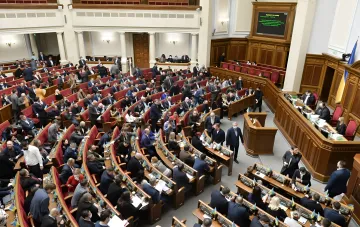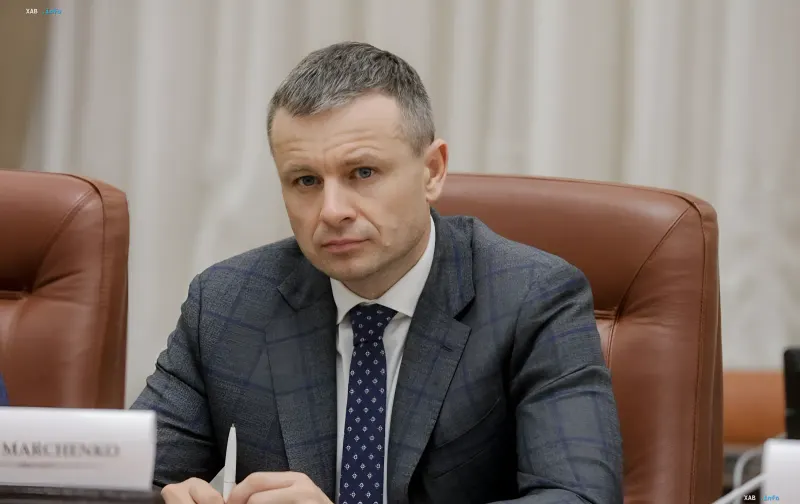
Serhiy Marchenko, Ukraine’s Minister of Finance, stated during the presentation of the draft state budget to the Verkhovna Rada that the current subsistence minimum does not correspond to the actual needs of citizens. In his words, it is practically impossible to survive on the amount baked into the figure, which is why he acknowledged it as a purely calculated parameter that does not reflect the real picture. The statement came amid discussions of social standards in the draft budget for 2027 and sparked widespread resonance in the media space.
Ministry of Finance admission: the figure does not reflect reality
The head of the Ministry of Finance emphasized that the current subsistence minimum is a “purely calculated indicator” and does not take into account the true needs of the population. “On this amount of money you can only live, survive, and even that, probably, survival is impossible. Therefore, it does not correspond to reality,” Marchenko noted. Thus, the ministry effectively admitted that the official benchmark, from which many social guarantees have traditionally been measured, has lost its connection to the real standard of living of citizens.
Government strategy: decoupling payments from the indicator
According to the minister, a key direction of the Cabinet of Ministers’ work is the consistent change of the social payment model. “The key task is to decouple payments from the size of the subsistence minimum. Then it will be easier for us to show its actual size and to orient ourselves by it,” Marchenko explained. He added that the government is constantly “reformatting” payments and creating conditions for their increase, but this process requires the support of Members of Parliament, since the government’s initiatives do not always find adequate response in parliament.
Budget-2027 figures: social standards to grow by roughly 10%
The draft state budget for 2027 provides for an increase in the main social standards of approximately 10%. In particular, from January 1, 2027, the overall subsistence minimum is planned to be set at 3,559 hryvnias, which is 10.9% more than in 2026 (3,209 hryvnias). The figure for able-bodied persons is set at 3,691 hryvnias, and for those who have lost the ability to work — 2,878 hryvnias. The base amount for calculating the benefit for people with disabilities from childhood and children with disabilities is 4,000 hryvnias.
Contradictory data
In the statements of the parties and in the very logic of the budget document, an internal contradiction can be traced. On the one hand, the Minister of Finance directly states that the subsistence minimum “does not correspond to reality” and that it is impossible to survive on it, and announces a course on decoupling social payments from it. On the other hand, it is precisely this same indicator that continues to remain the basic benchmark in the draft budget-2027, from which specific payment sizes and the planned 10.9% increase are measured. In other words, the ministry simultaneously acknowledges the indicator as unrealistic and retains it as the calculation basis, creating a mismatch between the rhetoric of “decoupling” and the actual structure of the budget. Moreover, the stated growth of “approximately 10%” in different formulations of the sources may be perceived as approximate, whereas for the overall minimum the exact figure of 10.9% is recorded.
Context and significance of the statement
The public admission by the head of the Ministry of Finance that the key social benchmark is detached from reality is significant for understanding the further trajectory of Ukraine’s social policy. The transition from tying payments to the subsistence minimum to a more flexible model is, by the government’s design, intended to allow a more accurate reflection of citizens’ actual needs and to raise the real incomes of vulnerable groups. At the same time, the success of the reform, as Marchenko himself noted, largely depends on the coordination of actions between the government and parliament, since without the support of Members of Parliament the initiatives to change the payment system risk remaining at the level of declarations.