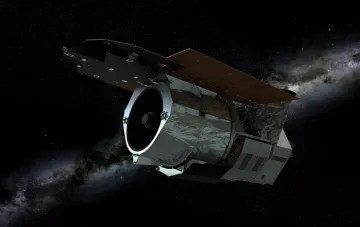
Astronomers have established the critical size of a rocky planet necessary to retain an atmosphere and support life. According to new data, a potentially habitable world must be no smaller than Mars. This discovery will help optimize the work of the most powerful telescopes, such as the James Webb Space Telescope, and focus resources on the most promising objects.
The Battle for the Atmosphere
Modern astronomy is experiencing a boom in the discovery of exoplanets. However, it is physically impossible to study the atmosphere of every new object in detail due to the shortage of time on powerful observatories. Scientists are looking for worlds in the "habitable zone" — the area around a star where temperatures allow liquid water to exist. But this zone is also the most dangerous: proximity to the star exposes planets to powerful stellar winds and radiation that strive to blow away the gaseous envelope.
To understand which worlds can withstand this struggle, a team led by Michelle Hill created the Smaller Than Earth Habitability Model simulation. The study, published in the journal The Planetary Science, showed that for life to form, an atmosphere must be retained for billions of years.
Physical Limitations
Modeling revealed clear size boundaries. In the standard scenario, a planet must have a radius of at least 80% of Earth's. If the chemical composition is changed, this threshold could drop to 60% (approximately the size of Mars). Small celestial bodies lose out for two reasons:
- Weak gravity and magnetic field: The planet cannot hold onto light gases against the stellar wind.
- Rapid cooling: In small planets, the mantle (magma layer) solidifies quickly. This stops volcanic activity, which is necessary for constantly replenishing the atmosphere with new gases.
Survival Factors
Researchers tested models with different core sizes, mantle thicknesses, and temperatures. Key parameters allowing a planet to survive were identified:
- High carbon content: Heavy carbon dioxide molecules are harder to blow into space. An excess of carbon in the mantle became a crucial factor for success.
- Core structure: A thick mantle and a relatively small core provide a larger reserve of molten material and gases.
- Radioactive elements: Their decay releases heat, keeping the mantle in a liquid state for much longer.
- "Cold start": If the mantle is initially colder, volcanic activity begins later. This allows the preservation of primary gases until the young star calms down and stops erupting aggressive plasma flares.
Second Chance and Future Research
Even if a planet completely loses its primary atmosphere, it may have a "second chance." Scientists believe that comets and asteroids rich in hydrogen, oxygen, and carbon can bring a new atmosphere. The main condition is that these collisions must occur in the later stages of the star's life, when it becomes less aggressive.
The next step for researchers will be applying the model to planets orbiting red dwarfs, which make up 75% of all stars in the Galaxy. The first object of analysis will be the TRAPPIST-1 system, where three of the seven rocky planets are in the habitable zone. New data will prevent wasting resources on observing objects that are objectively too small to retain an atmosphere.