Within the Russian political establishment, a radical scenario is being discussed: the introduction of martial law on the territory of the Russian Federation after the September elections to the State Duma. Information on this has come from sources in federal and regional authorities, as well as in the leadership of one of the opposition factions.
Mechanism and Triggers
According to current legislation, declaring martial law requires only the signing of a corresponding decree by the President, specifying the date and time of its commencement. However, experts point out that the implementation of this scenario may be limited by the fear of destroying the system, which is aimed at the maximum non-involvement of the civilian population in military affairs.
Nevertheless, among security forces and political technologists working with the Kremlin, there is support for the idea of "fighting with the whole country." According to some of them, the trigger for declaring martial law could be a failure at the front or systemic failures in the work of conscription bodies.
De Facto Restrictions Are Already in Effect
Although there is no formal decree on martial law throughout the territory of Russia yet, a number of corresponding measures have already been put into effect. In particular, strict military censorship is in force in the country. Publishing information that contradicts the official position of the Ministry of Defense threatens media employees with criminal prosecution and media resources with license revocation.
Furthermore, martial law has been officially introduced in the occupied parts of the Donetsk, Luhansk, Kherson, and Zaporizhzhia regions.
Plans for Mobilization and Army Reinforcement
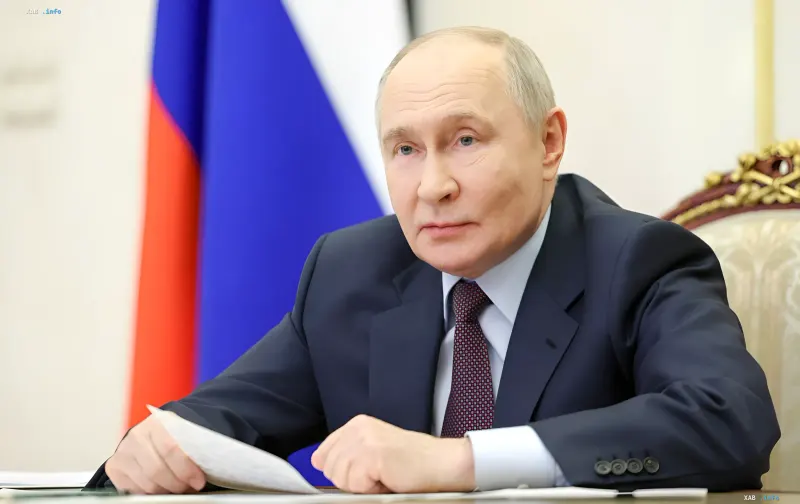
The discussion of martial law takes place against the backdrop of statements about a massive replenishment of the ranks of the Russian army. Ukrainian President Volodymyr Zelenskyy previously noted that Vladimir Putin fears conducting open mobilization but plans to call up between 300,000 and 500,000 Russians after the State Duma elections.
The Kremlin also plans to receive about 30,000 soldiers from North Korea. At the same time, the head of the State Duma Defense Committee, Andrey Kartapolov, stated that a new wave of mobilization is not required. This statement was made against the backdrop of Putin signing a decree on another increase in the size of the Russian army — already the third this year.
Parallel to this, the Russian leader has ordered the budget to be prepared for the continuation of the war for another three years, which indicates long-term plans to escalate the conflict.