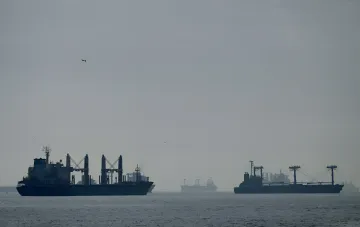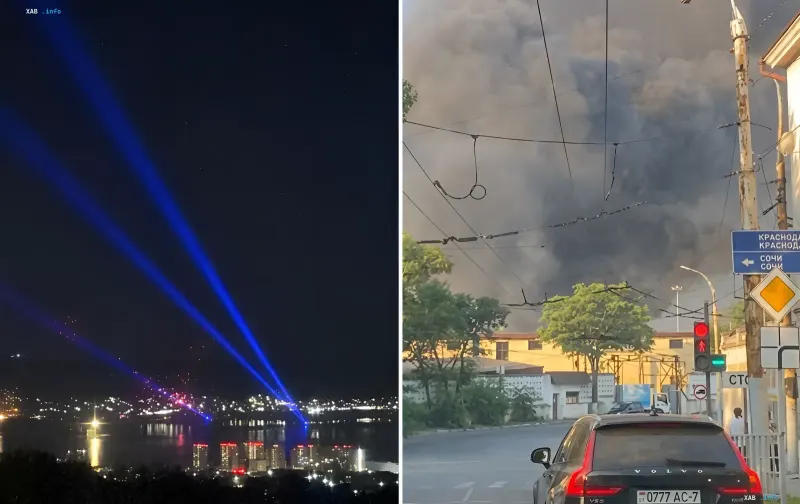
August 12, 2026, marked a day of major events in the Black Sea region. Ukrainian defense forces carried out an unprecedented large-scale attack on strategic facilities in Novorossiysk, located deep in the enemy's rear. According to OSINT analysts and satellite imagery obtained throughout the day, strikes hit a naval base, as well as grain and oil terminals. The operation, conducted at a distance of more than 300 km from the front line, resulted in significant infrastructure damage and the introduction of an emergency regime in the city.
Damage to Key Grain Export Facilities
One of the main results of the attack was damage to grain infrastructure. Satellite images recorded numerous hits on the territory of the NKHP (Novorossiysk Grain Products Combine) grain terminal. Analysts note damage to elevators and transport infrastructure objects. NKHP is one of the city's three main terminals, providing about 12% of Russia's grain exports. At the same time, two other major terminals — NZT and KSK — appear undamaged in the images. Collectively, these three facilities are responsible for 40% of Russian wheat exports, making the strike on NKHP economically significant.
Strikes on the Fleet and Russian Navy Base
The most destructive consequences were recorded on the territory of the Novorossiysk naval base. OSINT analysts identified probable hits on several warships and vessels. The list of damaged vessels includes Project 11356R frigates "Admiral Makarov" and "Admiral Essen", a Project 266M minesweeper, a Project 22160 patrol ship, and the reconnaissance ship "Pryazovia". Separate mention is made of damage to the experimental vessel "Viktor Chernikov" and a cargo ship. The images show traces of strikes in the area of "Kalibr" missile launchers and superstructures with radar systems, which could significantly reduce the fleet's combat readiness.
Disruption of Oil Logistics: "Shesharis" Terminal
Significant damage was also inflicted on the "Shesharis" oil export terminal. Satellite data indicates strikes on the main berths, in particular Berth No. 1, which serves Aframax and Suezmax class tankers. The images clearly show traces of burning, an abundance of fire foam, and oil slicks in the port waters. Analysts estimate that an Aframax-class tanker stationed there may have been hit during the attack. This event jeopardizes the logistics of Russian hydrocarbon supplies through the Black Sea.
Contradictory Data
While Ukrainian sources and OSINT analysts report massive damage and the shutdown of terminals, Russian official sources in the first hours after the attack limited themselves to reports of "air defense work" and "liquidation of consequences." In particular, data on the exact number of destroyed ships and the volume of damage to grain exports vary. The Ukrainian side claims systematic damage to infrastructure, while Russian authorities attempt to minimize the scale of losses, although the fact of introducing an emergency regime and stopping water supply in the city confirms the seriousness of the incident.
Consequences for the City and Population
The attack led to a critical situation in Novorossiysk itself. An emergency regime was introduced in the city due to damage to two water mains, which led to a temporary suspension of water supply. A thick smoke screen formed over the city, and several fires broke out in various districts. The tragic outcome of the operation was the death of an 8-year-old child, confirmed by local sources. Ukrainian President Volodymyr Zelenskyy confirmed the conduct of the operation, noting the use of "Palianytsia" cruise drones, "Neptune" missiles, and unmanned surface systems.