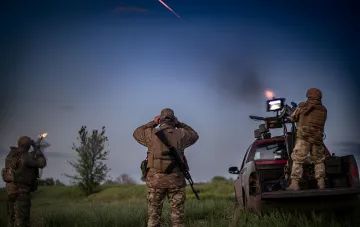
On the night of October 29, Russian forces launched a large-scale air attack across Ukraine, employing 112 strike drones of various types. According to the Air Force of the Armed Forces of Ukraine, air defense forces eliminated the vast majority of targets, though impacts and falling debris were recorded in several regions, including Kharkiv, where an educational infrastructure facility was damaged.
Directions of Strikes and Force Composition
The assault was carried out from three main directions — the Oryol and Millerovo regions in Russia, as well as the temporarily occupied territory of Donetsk region. The deployed assets included 112 Shahed-type strike drones, of which 40 units were jet-powered UAVs, alongside Gerbera devices and Parody-type decoy drones.
All components of Ukraine's Defense Forces were engaged to repel the raid. Anti-aircraft missile troops, aviation, electronic warfare units, unmanned systems, and mobile fire groups took part in combat operations, intercepting air targets on the approaches to key objects.
Results of Air Defense Combat Operations
According to preliminary monitoring data as of 08:00 AM, anti-aircraft defense forces managed to shoot down or suppress 97 enemy drones using electronic warfare. This total included 30 jet-powered Shahed drones, as well as Gerbera devices and other types of UAVs used during the nighttime raid.
Nevertheless, it was not possible to avoid consequences entirely. Impacts of enemy air attack assets were recorded at seven locations, while falling debris from intercepted apparatuses was noted in five additional areas, requiring a prompt response from specialized services.
On-Site Consequences and Regional Situation
Kharkiv became one of the most affected regions this night. As a result of drone strikes, destruction and fires were recorded in at least two districts of the city, with an enemy projectile hitting an educational institution building and causing a fire.
Emergency services promptly began cleaning up consequences at the impact and debris-falling sites. Information regarding casualties is being clarified by local military administrations and specialized agencies as primary rescue operations conclude.
Summary of the Nighttime Air Threat Repulsion
The massive nighttime attack demonstrated a heavy load on Ukraine's air defense system, which continues to operate in enhanced mode with the involvement of all available military branches. The interception rate exceeded eighty percent, preventing large-scale destruction of critical infrastructure despite the enemy's use of new types of jet drones and decoy means.