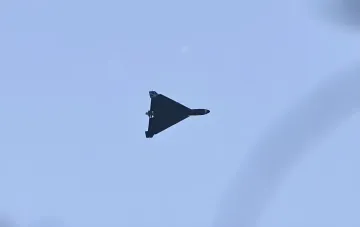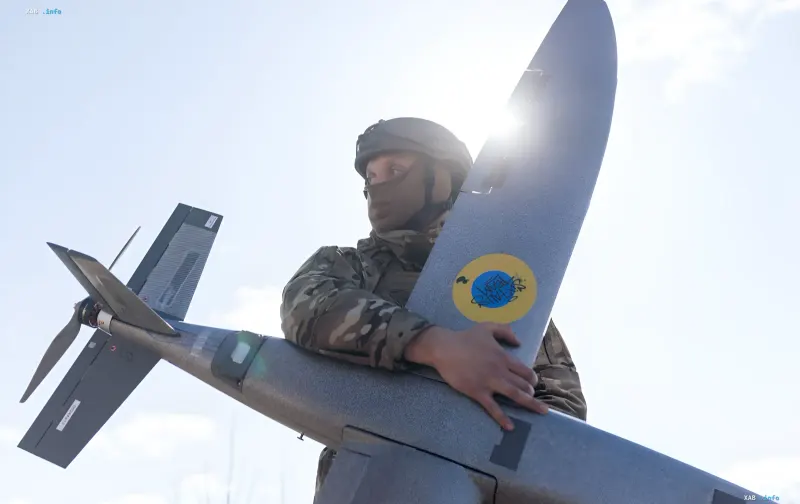
On the night of September 17–18, 2026, the Moscow region came under one of the largest drone attacks in recent years. This was announced by Moscow Mayor Sergei Sobyanin and Russian state media, according to RBC-Ukraine. According to him, between 20:00 on September 17 and 07:00 on September 18, more than 350 drones were flying toward the capital and the surrounding region. The accompanying footage shows a multirole unmanned aerial vehicle with a wing and a propeller, characteristic of the models used during the conflict, which underscores the type of equipment deployed in the raid.
Scale of the Attack and Air Defense Operations
According to statements from city authorities, the vast majority of targets were destroyed at long range, well before reaching the city. Additionally, Sobyanin reported that 64 drones were shot down directly on approach to Moscow. Thus, official data records a multi-layered interception system: a far perimeter, where the main mass of aircraft was repelled, and a near perimeter, where roughly two-tenths of the total number were shot down. This structure of losses indicates that a significant portion of the drones never reached the target objects within the capital.
Official Statements and Lack of Damage Data
At the time of writing, no official information had been published about damage caused by the falling debris of shot-down drones. Neither the mayor's office nor emergency services confirmed reports of casualties or damaged infrastructure as a result of this particular night attack. This creates an information gap: the fact of a massive raid and the operation of air defense have been confirmed, but the consequences for the city remain unofficial and unverified by independent sources.
Context: Strikes on an Airfield and Oil Refining
The attack on the Moscow region fits into a broader context of nighttime strikes. The day before, the Security Service of Ukraine (SBU) struck the "Rostov-Tsentralny" military airfield; according to President Volodymyr Zelenskyy, an An-12 aircraft, two An-26s, and three more helicopters were hit. On the same day, one of Russia's largest oil refineries — "Slavneft-YANOS" in Yaroslavl — halted oil processing after a drone attack damaged the primary distillation unit. The combination of these events demonstrates simultaneous pressure on military aviation and fuel infrastructure in different regions.
Contradictory Data
Estimates of the attack's scale vary across sources. RBC-Ukraine, citing Sobyanin, describes the raid as "one of the largest in recent years," while TASS calls the Ukrainian military's night attack "one of the most massive in a year." The difference in the time horizon ("years" versus "a year") affects the perception of the event's record nature. Moreover, the figures of 350+ drones and 64 shot down on approach are provided solely on the word of Russian authorities and are not supported by an independent count; data on the equipment hit at the airfield and the refinery shutdown are also based on statements by the parties involved and have not yet been confirmed by neutral observers.
What Is Known About the Consequences So Far
As of September 19, 2026, the following has been confirmed: the fact of a massive attack (more than 350 UAVs), the operation of air defense on two perimeters, and the shooting down of 64 drones near Moscow. The following has not been officially confirmed: damage from debris, the number of casualties, and the exact list and condition of damaged objects. The strikes on "Rostov-Tsentralny" and the Yaroslavl refinery have been declared by the parties, but their outcomes require further verification. The editorial team will continue to monitor official comments from authorities and independent data on the consequences of the raid.