The semiconductor market has experienced one of the sharpest corrections in recent months. Over five trading days, SK hynix shares lost 26%, Samsung Electronics dropped 22%, and Micron Technology, traditionally less dependent on consumer memory, fell by 11%. According to RBC and Kommersant, the main blow to chipmakers' stocks came in late July 2026, when investors began mass profit-taking and loss-fixing. Two key triggers were, first, the confirmed technological progress of China's CXMT and, second, mounting concerns over inevitable memory overproduction by 2029.
CXMT's Technological Leap: A Forced Move Interpreted by the Market as a Threat
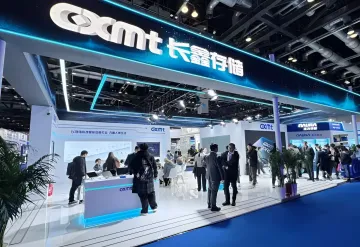
As early as late last week, it became known that China's CXMT intends to become the world's first to launch mass shipments of DDR5 memory with vertical transistors. For a company operating under US sanctions, such a leap is largely a forced measure—virtually no alternatives remain to bypass technological restrictions under traditional processes. However, the market perceived the signal differently: as confirmation that CXMT is steadily closing the technological gap with Western competitors. Investors' logic is simple—if the Chinese manufacturer continues to expand its market share, it will inevitably hit the margins and quotes of its Korean and American opponents.
Analysts' Take: A Breakthrough Does Not Equal Volume
In comments to CNBC, analysts sought to cool the panic, emphasizing that a technological breakthrough in itself does not guarantee an increase in memory output. New technology typically fails to provide a high yield of usable products in the early stages: if notionally half of the chips have to be discarded, a substantial increase in CXMT's output volumes will not occur anytime soon. Thus, the real effect of the DDR5 vertical transistor announcement will depend on how quickly CXMT brings the process to an industrial-grade yield, rather than the loudness of the statement.
Overproduction Forecast: From Broadcom to Elon Musk
Not only the heads of Broadcom and Intel, but also South Korean experts have started warning the market about the threat of overproduction. Writing in the Maeil Business Newspaper, they stated that the memory market will be literally flooded with supply by 2029, and by 2030 the current supercycle will come to an end, giving way to a downturn phase. Tesla and SpaceX CEO Elon Musk also chimed in, stating that "China will be producing a lot of memory by 2028." The combination of these signals has formed an image of an impending price collapse in investors' minds.
Medium-Term Shortage and Why the Downturn Will Be Milder
An important nuance often missed in panic headlines is temporal shifting. All major memory manufacturers are currently busy expanding production capacities, but they will only be brought online in three to five years. This means that in the medium term, the deficit will persist, keeping prices high and allowing market participants to simultaneously earn money and invest in additional lines. According to Counterpoint Research forecasts, DRAM prices will drop by 23% in 2028 compared to 2027, but will still remain approximately 230% above the 2025 level. Even if the market enters a downturn phase, it will not be as severe as in past cycles, largely thanks to the transition to long-term contracts that lock in memory volumes and prices for years ahead.