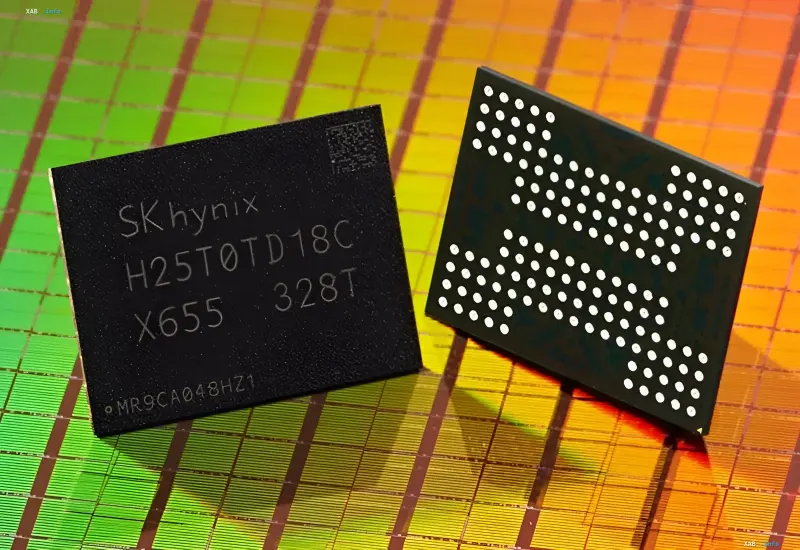
South Korean memory manufacturer SK hynix has published financial results for the third quarter of fiscal 2026 that exceeded analyst expectations across all key metrics. The company's revenue surpassed the 100 trillion won mark for the first time in history, reaching 104.6 trillion won (approximately $78.1 billion) and increasing by 327.9% year-over-year. Operating profit skyrocketed by 632.1% — more than sevenfold — to roughly $62.2 billion, while the annual operating profit margin rose from 47% to 80%, nearly catching up with American competitor Micron. Net income increased by 216% year-over-year to $29.7 billion, although it decreased by 57.7% sequentially (quarter-over-quarter).
Record Profitability and Return of Capital to Investors
The company attributes this momentum not only to rising memory prices, but also to increased sales volumes of high-value-added products, primarily High Bandwidth Memory (HBM). In the third quarter, SK hynix directed more than $25 billion toward dividend payouts and share buybacks, and for the full fiscal year 2026, nearly $75 billion will be returned to investors. By the end of November, proceeds from investments in Japan's Kioxia capital will be distributed as special dividends. The proportion of accumulated free cash flow returned to shareholders will be increased to over 50% for the period from 2025 to 2027.
Memory Shortage to Persist Until 2030
In its press release, the company separately addressed market forecasts. According to SK hynix's estimates, the memory shortage in the global market will persist at least until 2030. In the near term, demand will be driven by the corporate segment and "personal AI," while in the long term, it will be propelled by "physical AI," including autonomous driving systems and robotics. This forecast aligns with industry analyst estimates: according to TechInsights Semiconductor Senior Vice President Jeon Tong-chyo, new fabs will not eliminate the shortage, and prices will remain high for another 3 to 4 years.
HBM4 Takes Center Stage
SK hynix intends to accelerate the expansion of its manufacturing capacity: increasing the share of sixth-generation 10nm-class products, as well as sales volumes of server DDR5 and LPDDR5 modules in SOCAMM form factor. Server DDR5 shipments grew by more than 40% sequentially in the past quarter. By the end of the current year, the M15X plant producing HBM4 will reach peak capacity, and already this quarter, HBM4 will surpass HBM3E in both production volume and revenue, becoming the dominant product in the segment, according to the company. In the NAND sector, the share of 321-layer memory produced in South Korea will grow to over 50% of local volumes this quarter, improving the availability of high-performance, high-capacity SSDs for the enterprise segment; in the medium term, the company will focus on integrating HBF-type memory into AI service infrastructure.
Long-Term Contracts and 2027 Investments
The portfolio of long-term contracts continues to expand: currently, such agreements have been signed with 14 major clients, including leading cloud providers, and some are negotiating to extend contract terms, which are typically signed for five years. More than 50% of planned production volumes for 2027–2028 have already been allocated under long-term contracts. To support these plans, investments will increase significantly next year: in 2027, the first phase of the Yongin complex will commence mass memory production, while investments will simultaneously flow into facilities both in South Korea and abroad. Specific figures, according to the company, may vary depending on demand, profitability, and investment efficiency.
Context: Critically Low Inventories and Talks with Intel
SK hynix's financial report comes against the backdrop of an historic shortage in the memory market. According to a Business Korea report citing KB Securities, memory chip inventories at Samsung and SK hynix dropped to less than ten days by the third quarter, and the situation could worsen in 2027 following the rollout of HBM4, the production of which requires more capacity than previous generations. Concurrently, Reuters reports that SK hynix is in preliminary talks with Intel regarding the possibility of manufacturing memory chips in the United States — including through leasing part of an Ohio plant or forming a joint venture with cloud companies; sources emphasize, however, that no decisions have been made yet, and potential disapproval from Seoul could pose an obstacle.