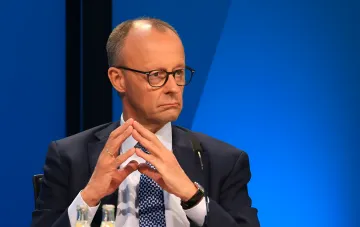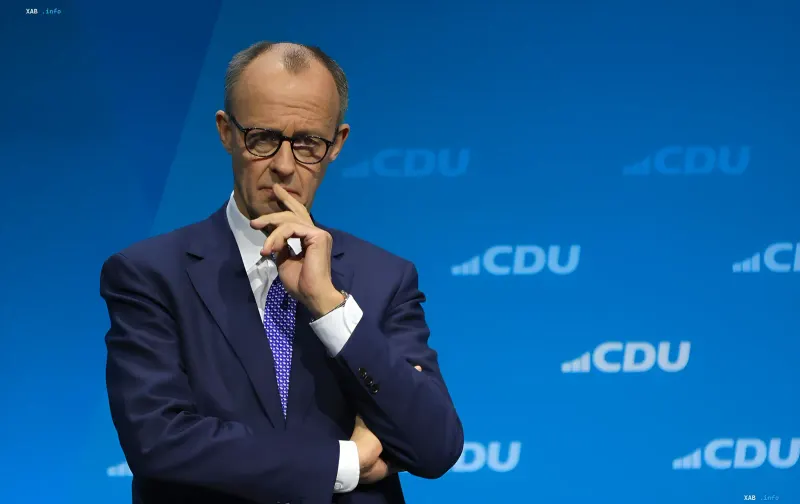
Official Berlin is openly linking the far-right Alternative for Germany (AfD) party to the Kremlin, declaring targeted attempts by Moscow to destabilize the situation in the country. German Chancellor Friedrich Merz leveled sharp accusations during his speech in Münster on October 1, 2026, emphasizing existential threats to democratic institutions. Such statements reflect the growing concern of the German leadership regarding hybrid challenges.
Context and Chancellor's Statements
The speech by the head of the German government took place at the solemn ceremony of awarding the International Westphalian Peace Prize, whose laureate this year was recognized as NATO. Friedrich Merz characterized Russia as a destabilizing force that actively uses information manipulations and bot farms to split German society. The chancellor particularly noted that the Kremlin's main task is to reduce large-scale financial and military support for Ukraine from Berlin, as well as to stop investments in the European deterrence system.
Political Crisis and Far-Right Successes
Tension within Germany's political system reached a peak amid a series of successful electoral campaigns for the AfD. The first major far-right victory in state elections took place on September 6, 2026, in Saxony-Anhalt, followed by the party's leadership in Mecklenburg-Western Pomerania on September 20, where the Christian Democratic Union led by Merz suffered a serious defeat. Despite threats to his own political career and calls for resignation, the chancellor flatly refused to step down.
Controversial Data
Despite Berlin's uncompromising rhetoric, officials have not yet provided comprehensive material evidence of direct financial or legal sponsorship of the AfD by the Russian authorities. Party representatives consistently advocate for ending military assistance to Kyiv and resuming imports of Russian energy resources, which creates the basis for accusations of a pro-Russian orientation. However, out of fear of secret data leaks, the German government intends to restrict AfD members' access to a thousand-page plan to repel potential Russian aggression.
Consequences for Security and Aid to Ukraine
Experts and analysts agree that the strengthening of far-right forces in Germany directly projects onto the geopolitical stability of all of Europe. AfD successes call into question not only the internal stability of the ruling coalition, but also Berlin's long-term commitments to Kyiv. The German authorities are forced to take unprecedented security measures to protect strategic documentation and counter foreign interference in electoral processes.