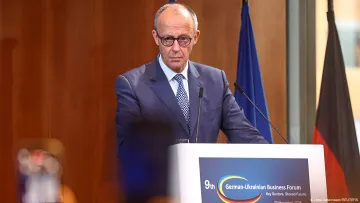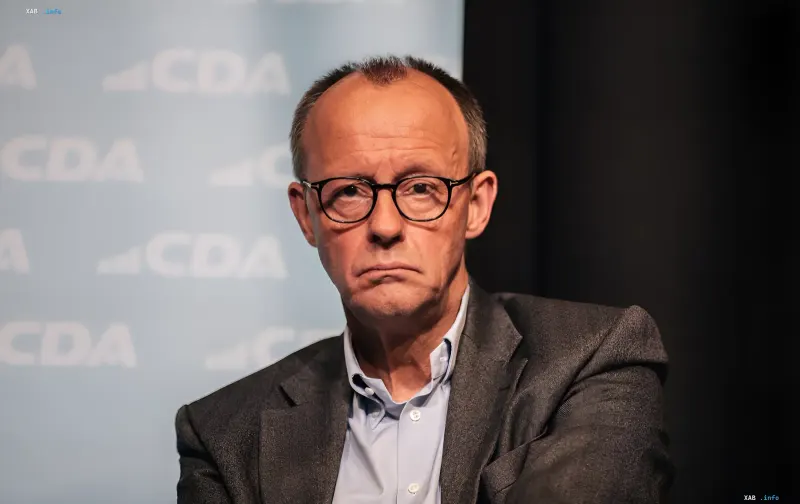
German Chancellor Friedrich Merz has issued a direct call to the governments of both countries to remove regulatory obstacles that he says are hindering the scaling of defense cooperation between Ukraine and the Federal Republic of Germany. Speaking at the 9th German-Ukrainian Economic Forum in Berlin, the head of the German government pointed to specific mechanisms—export levies and legislative restrictions on the transfer of intellectual property rights—which he believes are holding back joint work on innovations in the military-industrial sector.
Partnership as mutual benefit, not unilateral aid
Merz emphasized that defense cooperation between Ukraine and Germany should not be viewed as unilateral assistance from Berlin. According to him, such a partnership provides direct benefits to Germany itself, strengthening its technological potential and the reliability of supplies to the Bundeswehr. "Our technological and innovation strength in Germany is growing thanks to this cooperation on a scale that we could not have even imagined a few years ago. We are also seeing a growth in the number of German-Ukrainian joint ventures," the Chancellor stated. Thus, Berlin has publicly solidified the economic logic of the cooperation: integrating Ukrainian defense production into European supply chains works both ways.
Regulatory barriers: what exactly is slowing down cooperation
Having acknowledged the positive momentum, Merz turned to the challenges. The Chancellor emphasized that for the further development of defense cooperation, governments must improve the "framework conditions" right now. In particular, he named two specific factors: export levies and legislative bans on the transfer of intellectual property rights. "Export levies or legislative bans on the transfer of intellectual property rights hinder joint work on innovations," Merz said, adding that Berlin intends to "follow this path together with Ukraine." The Chancellor's phrasing is effectively addressed not only to the Ukrainian but also to the German regulator, as restrictions on IP transfer can exist at the national legislative level in both countries.
Ukrainian regulatory context: Resolution No. 875 and tax rates
On the Ukrainian side, the mechanism for exporting defense products is regulated by Cabinet of Ministers Resolution No. 875 of July 1, 2026. The document provides for a fee for processing export permits for military goods and dual-use products: 20% of their value is charged for finished products and technologies, and 30% for components and parts. These rates, which came into effect about five months ago, have become a subject of intense discussion in the industry. According to defense business representatives, the current parameters make the export of some Ukrainian products economically unviable, which contradicts the import substitution and localization goals that Kyiv has set for its defense industry.
Industry response: Association demands and the sensor example
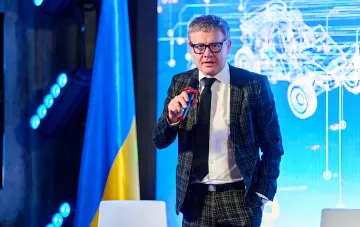
In September 2026, the National Association of Defense Industry (NAUDI), the Ukrainian Council of Arms Manufacturers, and four other specialized associations submitted a proposal to revise export rules. Among the key demands are the cancellation of permit fees, the elimination of advance payments, and the simplification of conditions for test and demonstration shipments. Anastasiia Mishkina, Executive Director of the "Tech Forces of Ukraine" association, provided a concrete calculation in an interview: if a Chinese sensor costs $150 and the cost of the Ukrainian equivalent is $120, then after selling it at the same price and paying a 30% levy, the manufacturer is left with $105—less than the cost of production. In her assessment, the additional payment negates the price advantage of Ukrainian products and reduces incentives to localize the production of critical components, which in the long term also complicates cooperation with partners from the EU and the USA. Mishkina believes that at the initial stage, the levy rate should be set to zero, and in the future, its size should be determined taking into account the impact on the competitiveness of domestic manufacturers.
Economic presence and future support
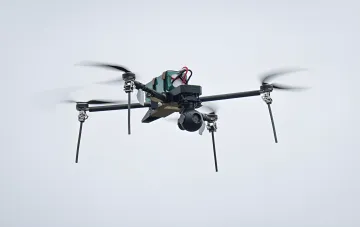
Beyond the defense sector, Merz noted the growth of broader economic cooperation. According to him, since the start of the full-scale war, no German company has left the Ukrainian market, and the number of German enterprises operating in Ukraine has nearly tripled. The Chancellor also assured that Berlin would continue to provide Ukraine with military and financial assistance in 2027 and beyond, listing specific categories: air defense systems, unmanned aerial vehicles, long-range weapons, artillery, ammunition, and satellite data. Collectively, these statements form a picture in which the political will to cooperate is set at the highest level, yet its implementation runs into technical regulatory details that, as Merz himself said, must be changed "right now."