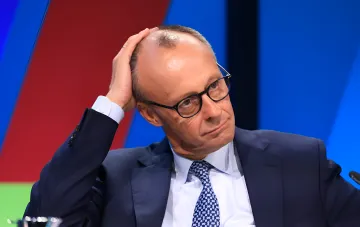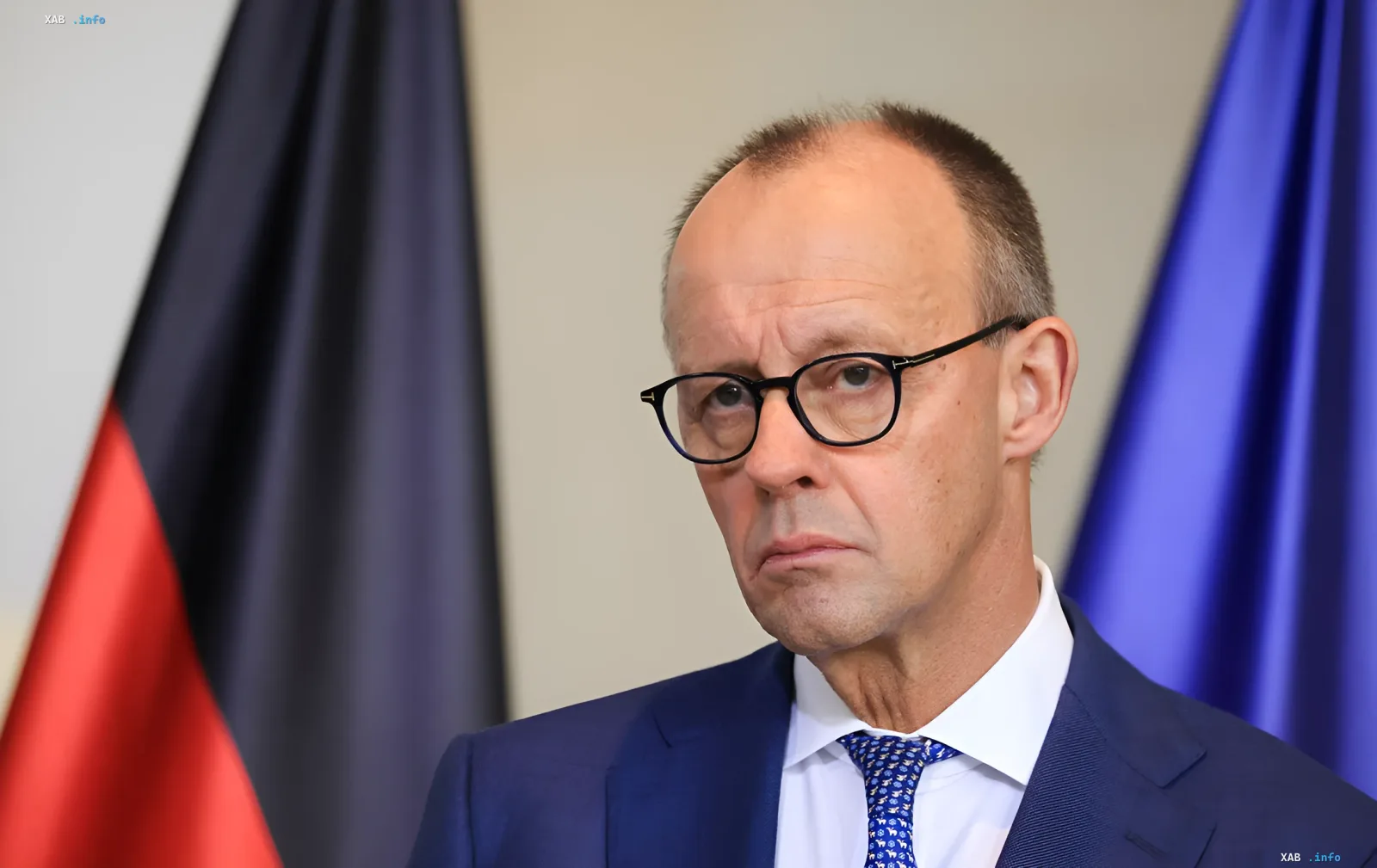
German Chancellor Friedrich Merz is preparing to officially attribute responsibility to Russia for the drone attack attempt at Leipzig/Halle Airport and to announce 'broad' direct sanctions against Russian entities. This was reported on condition of anonymity by three officials to Politico and Welt am Sonntag. According to them, the government's plan goes far beyond diplomatic notes: it involves tightening sanctions pressure and, possibly, larger-scale weapons deliveries to Ukraine. The announcement is scheduled for the beginning of next week and is expected to coincide with the meeting of EU foreign ministers in Ireland, although Merz may bring it forward.
Berlin's Plan: From Expelling Diplomats to Direct Sanctions
According to one of Politico's sources, in response to the Leipzig incident it is no longer enough to expel individual diplomats or shut down the Russian House in Berlin — steps Germany had taken after previous hybrid attacks. Officials now argue that 'stronger measures' are needed. The specific list of sanctions is not disclosed, but sources emphasize that this concerns direct strikes against Russian entities, not just parallel European packages. How far Berlin is prepared to go — to the point of holding individual Russian figures or the entire Russian government accountable — remains unclear. At the same time, according to the same sources, the Chancellery is prepared for a sharp response from Moscow and is considering scenarios of retaliatory punitive measures by Russia.
Brussels Package: 1,600 Items and the Frozen Assets Question
In parallel with national measures, Germany is preparing a new comprehensive sanctions package at the EU level. Its discussion is scheduled for the informal meeting of EU foreign ministers on Tuesday and Wednesday in the Wicklow county (Ireland). According to one diplomat, 1,600 sanctions items are currently under consideration — 800 individuals and 800 companies from Russia. Adoption of the package is expected in mid-October. Separately, according to another diplomat, the question of using frozen assets of Russian state banks is being raised again. This is a long-term process requiring the consent of Belgium, where Bart De Wever's government has consistently opposed such an initiative, fearing retaliatory steps by Moscow. The largest part of the frozen reserves of the Russian Central Bank in the EU is held at Euroclear in Brussels.
Chronicle of the Incident: From the An-124 to the GRU Link
Recall that a drone carrying explosives was detected in early August 2026 at Leipzig/Halle Airport near a Ukrainian cargo An-124 aircraft. US intelligence linked the incident to the Russian GRU. Chancellor Merz had previously promised to name all those involved. CIA Director John Ratcliffe, during his visit to Moscow, warned the Russian side against further escalation within NATO. On Tuesday, Merz stated that the Leipzig incident 'will have serious consequences,' although he did not name a specific party responsible for the attack.
Official Position: 'We Do Not Engage in Speculation'
In response to a Politico request, a representative of the German federal government emphasized that the Chancellery 'does not engage in speculation' and that only the official attribution of blame made as a result of the investigation matters. Meanwhile, Merz himself stated in a public address: 'The drone attack in Leipzig, among other things, shows that we are facing very real threats. The federal government is making those responsible for hybrid attacks pay the price. They will pay for it.' Thus, between the official rhetoric of 'until the investigation is complete' and the de facto preparation of a sanctions response, a time gap is forming which, according to observers, may amount to several days.