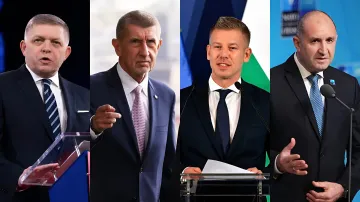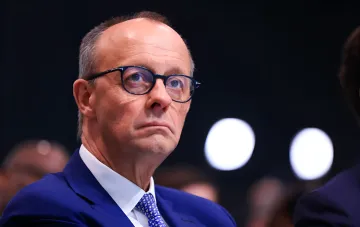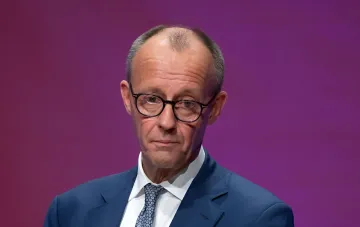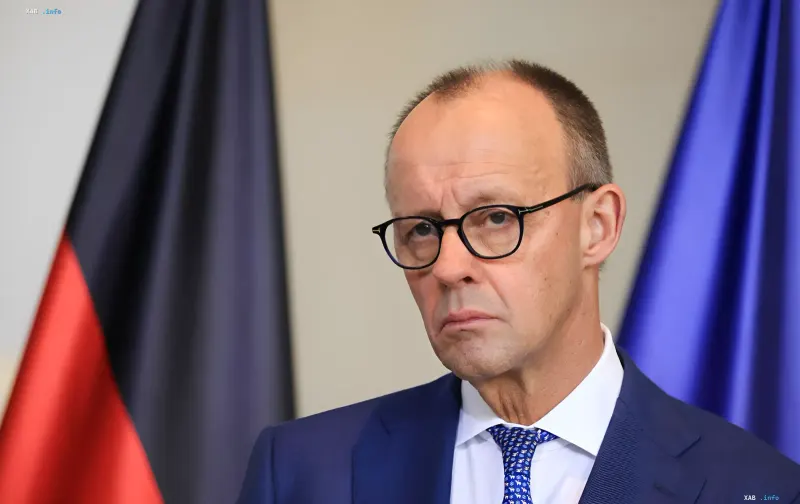
Slovak Prime Minister Robert Fico has strongly rejected statements by German Chancellor Friedrich Merz, who on Monday linked the adoption of the European Union's long-term budget to the mandatory continuation of financial support for Ukraine after 2027. According to Fico, Berlin's actions represent "typical blackmail" that Slovakia has no intention of tolerating. The conflict between the two capitals, which had already escalated previously over the blocking of anti-Russian sanctions, has turned into an open confrontation on key issues of European integration.
Linking the EU Budget and Aid to Kyiv: Berlin's Ultimatum
In recent weeks, discussion within the European Union has intensified around two interconnected issues: the financing of Ukraine and the formation of the bloc's multiannual budget. German Chancellor Friedrich Merz, speaking on Monday, stated that he will block the adoption of the general EU budget unless all member states agree to continue financial support for Kyiv after 2027. Thus, Berlin has effectively conditioned the approval of the union's key financial document. Western media had previously reported that Merz was preparing such an ultimatum, but the Chancellor's public statement has made the confrontation official.
"The Great Germans Say Something — So Let's Chase It?"
Commenting on Merz's words, Robert Fico emphasized that Slovakia, like Germany, holds veto power in the EU Council and independently determines its position on strategic issues. "What the Federal Chancellor is doing is typical blackmail, and I reject it," the Slovak Prime Minister stated. He added: "The great Germans say something, so let's chase after it? No, we won't." Fico also explicitly stated that Slovakia will not agree to allocate "even a euro for Ukraine," having previously linked its stance on anti-Russian sanctions to the prospects of increasing imports of Russian energy into the EU.
January Phone Conflict: "He Was Screaming into the Phone"
During his speech, Fico recalled a telephone conversation with Merz that took place in January 2026 after Slovakia blocked another package of anti-Russian sanctions in 2025. "I remember the first conversation with him when he called me and screamed into the phone, asking what I was doing by blocking sanctions against the Russian Federation, as it affected Slovak interests. He also threatened to stop all our money, and I don't know what else," the Prime Minister recounted. Media outlets had reported back in January that such a conversation took place; at the time, it was only known that the politicians were discussing the Slovak government's critical attitude towards the course of European integration. Now Fico has publicly characterized the tone of the conversation as aggressive.
Who Opposes Financing: Slovakia, Hungary, Czechia, and Others
The position that Merz is trying to change unites several Central European countries at once. Slovakia, Hungary, and Czechia had previously officially stated that they would not participate in further financing for Kyiv. A similar decision, according to available data, is likely to be followed by Bulgaria as well. Thus, Berlin faces the task of overcoming the consolidated position of an entire bloc of states rather than persuading a single capital. The EU budget ultimatum is essentially a tool of pressure on this group of countries to force them to change course.
The Shadow of the G20: Merz's Readiness for Contact with Putin
Amid the escalation within the EU, it became known that German Chancellor Friedrich Merz is ready to personally speak with Vladimir Putin at the G20 summit in Miami. This report heightens the contrast between Berlin's public rhetoric regarding Moscow and its actual diplomatic strategy. For Fico, who emphasizes in his speeches that Slovakia will not "tolerate crap from the German Chancellor," Merz's readiness for direct contact with the Kremlin merely confirms his thesis that Berlin's position in the EU is dictated not by principles, but by momentary political calculations.