Czech Prime Minister Andrej Babis has called the multi-year budget proposed by the European Union "unacceptable" for the Czech Republic, placing special emphasis on the allocation of €100 billion in aid to Ukraine. According to the head of the Czech government, Prague does not intend to fund Kyiv from the general EU budget and is ready to defend its position during negotiations, which are expected to conclude by the end of 2026. The statement came against the backdrop of the presentation of updated budget negotiation frameworks by European Council President Antonio Costa on November 21.
What the Irish Presidency proposes
On November 21, Antonio Costa, representing the 27 EU member states, presented an updated framework for negotiations on the EU's multi-year budget for 2028–2034. According to the document, the total funding is proposed to be reduced by €204 billion compared to the European Commission's initial draft, which several member states deemed overly burdensome. At the same time, according to Babis, the Irish presidency, which is coordinating the negotiations, suggests reducing the budget by €32 billion. The discrepancy in figures mentioned in different contexts highlights the difficulty of reconciling the positions of such a large number of countries.
Prague's criticism: contributions, institutions, and Ukraine
Babis pointed out that the Czech Republic is consistently increasing its contributions to the EU budget, while the new proposal provides for a reduction in the country's funding by 7.5 billion Czech korunas. The Prime Minister expressed separate dissatisfaction with the amount of funds planned for the maintenance of European institutions: according to his estimates, €100 billion has been earmarked for the European Parliament, the European Commission, and the staff of officials over seven years. The sharpest reaction in Prague was caused by the allocation of €100 billion to support Ukraine. "Why should we give money to Ukraine from the European budget? Ukraine should receive money outside the European budget," said Babis, effectively questioning the very model of financing Kyiv through the general EU budget mechanism.
Berlin criticizes, but differently
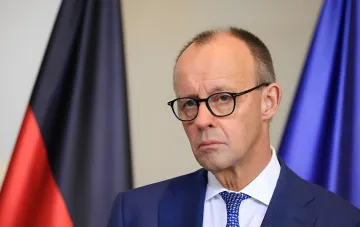
The Czech Prime Minister's position was not supported by German Chancellor Friedrich Merz, although he also criticized Costa's latest budget proposal. Unlike the Czech Republic, Germany is a net contributor to the EU budget, and its interests in the negotiations are different. Merz advocates for reducing the overall size of the budget but simultaneously insists on ensuring stable long-term financial support for Ukraine. According to RBC-Ukraine, the Chancellor previously threatened privately to block the adoption of the EU budget if the issue of aid to Kyiv was not resolved in favor of Ukraine. Thus, Prague and Berlin, being allies in the alliance, hold opposing positions on the key issue—the source of funding for Ukraine.
How much does Ukraine need and what's next
President Volodymyr Zelensky recently clarified that Ukraine needs €70 billion for defense from EU funds in 2027. This request is significantly lower than the €100 billion proposed in the budget framework; however, for recipient countries like the Czech Republic, even discussing such sums within the general budget remains unacceptable. Antonio Costa aims to reach a compromise on the budget by the end of 2026: this involves coordinating member state contributions and finding new sources of revenue to finance the common needs of the union. Against this background, Prague's threat to block the document gains practical significance—a unanimous decision is required to pass the budget, and the position of one country can stall the entire process.