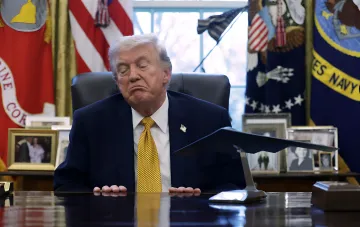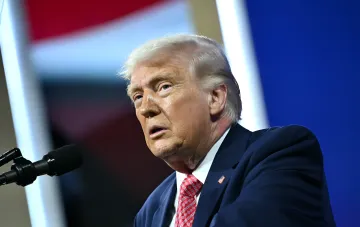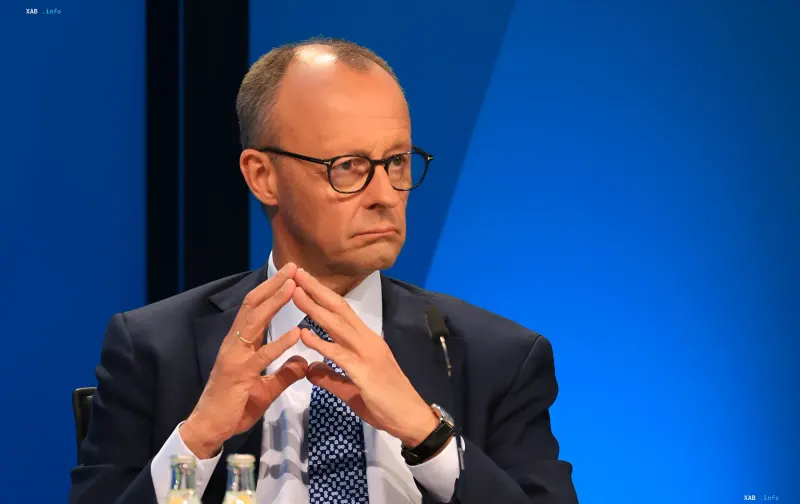
German Chancellor Friedrich Merz has predicted that US President Donald Trump will continue to govern the country during the remaining two years of his term by issuing executive orders that bypass Congress. The statement was made at an economic forum of the center-left SPD party and immediately became one of the most discussed topics in European political circles.
"Why should it be any different now?"
"Over the past two years, Trump has mostly governed the country without consulting Congress. Why should it be any different now?" Merz stated. The Chancellor also made it clear that the Democrats' victory in the midterm elections will, in his view, change very little in Washington's governing style. He bluntly said he was not "thrilled" with the outcome achieved by the Democrats and limited himself to stating that changes would primarily affect budget planning and, "of course, defense planning."
What the new mandates give to Democrats
Midterm congressional elections were held in the US on November 3. According to preliminary results, the Democrats have taken control of both the Senate and the House of Representatives; the new parliament members will officially take office in January. As Deutsche Welle explains, under the US Constitution, Congress holds the power to allocate budget funds and influence military parameters, including the number of troops stationed in Europe. Thus, formally, the change in majority gives Democrats leverage to pressure the Trump administration, although, according to Merz's assessment, this does not promise a real breakthrough.
Washington prepared for a "no Congress" scenario
Ahead of the vote, media reports emerged that the Trump administration had preemptively prepared for a likely defeat and explored ways to govern the country bypassing Congress if the latter came under Democratic control. Trump himself previously acknowledged the election results and expressed readiness to cooperate with Democrats, while simultaneously warning that he would veto their initiatives. This dual stance—stated readiness for dialogue while maintaining the threat of a veto—precisely confirms Merz's thesis that the executive branch intends to act independently.
Impact on support for Ukraine
According to Reuters, holding the majority in both chambers will allow Democrats to determine themselves which issues are brought to a vote, and one of their priorities could be the allocation of new aid to Ukraine. For Kyiv and European capitals, this is a potentially important signal: a significant portion of financial and military support passes through Congressional budgetary decisions. However, as Merz emphasizes, without a change of approach in the White House, these levers can be neutralized by presidential vetoes and a stream of executive orders.
Context: Berlin's position on pressure against Moscow
Merz's speech on Trump's governing style came against the backdrop of his recent sharp reaction to the agreement between Washington and Moscow on the export of Russian diesel fuel. The Chancellor called this decision "unacceptable" for Germany and Europe, pointing out that Russia is only ready for serious negotiations when pressure is increased, and confirmed that Berlin has no plans to lift sanctions. Against this backdrop, his words that Trump will continue to rule bypassing Congress sound like a warning to European partners: one should not count on an automatic shift in US policy after the midterms.