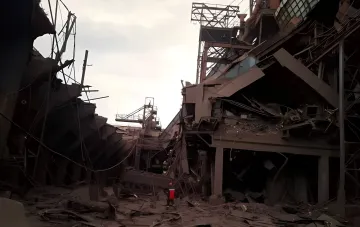
At the III Lviv Human Capital Forum 2026, Tetyana Petruk, Director of Sustainable Development and Personnel Interaction at Metinvest Group, stated that the company is going through one of the most challenging periods since the start of Russia's full-scale invasion. According to her, infrastructure strikes have caused the suspension of two of the group's metallurgical plants, employing nearly 15,000 people, as well as two out of four mining and processing plants in Kryvyi Rih. The situation is further aggravated by the blockade of Black Sea ports, reduced European Union import quotas for steel, and the implementation of the Carbon Border Adjustment Mechanism (CBAM), which significantly limit the export potential of Ukrainian metal products.
Wages without downtime: What is happening at the stopped enterprises
Despite the complete cessation of production lines, Metinvest is not putting employees on administrative leave and continues to pay salaries. According to Petruk, staff are being involved in clearing debris, inventorying equipment, and preparing enterprises for future recovery. "Today, our main task is to preserve human potential. We cannot afford to export experience, skills, and knowledge. That is why it is so important for us to preserve the core of the collective and technological expertise," the manager emphasized. She added that losing qualified specialists poses a separate risk for the industry's future recovery: even with funding and modern equipment available, launching production will depend on people possessing the necessary competencies.
Accelerated retraining: From nine months to four
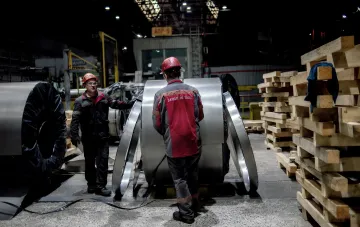
To minimize the personnel shortage, the company is shortening training periods for new specialists and expanding retraining programs. Specifically, training for a steelmaker's assistant has been reduced from 9–12 months to 4–6 months by combining an online theoretical block with practical sessions directly on the production floor. "In wartime, arguably the most important thing is the ability of companies to quickly retrain people," Petruk noted. Metinvest is also cooperating with young people, vocational education institutions, and its own university, Metinvest Polytechnic, to build a personnel reserve for the industry's recovery.
8,500 employees in the Armed Forces and over a thousand returning veterans
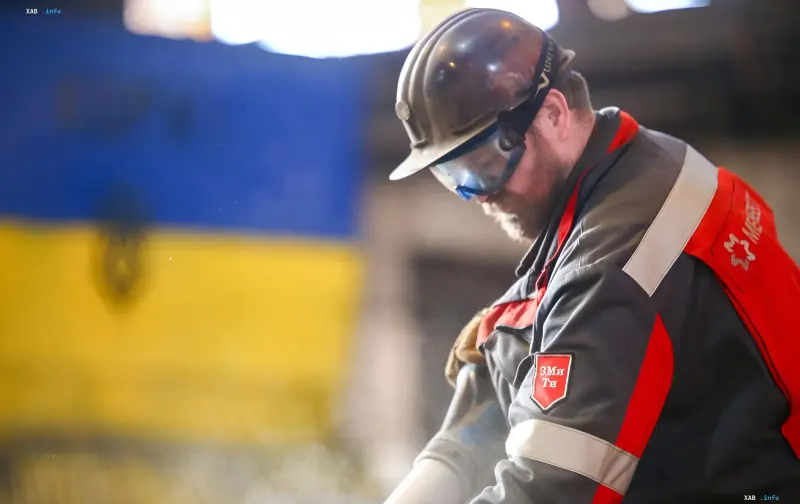
The company identifies veterans as a significant reserve of human potential. As of November 2026, about 8,500 Metinvest employees are serving in the Armed Forces of Ukraine, and over a thousand veterans have already returned to the enterprises or have been engaged in work. Since 2023, the group has been developing an integration system that includes retraining, support for returning to civilian work, and preparing teams to work with veterans. The company's university, Metinvest Polytechnic, offers veterans preferential admission to promising engineering specialties—admission is granted without exams, based solely on an interview. According to the publication, Metinvest accounts for about a third of all veterans who have returned to work in the large-scale Ukrainian business sector.
Preserving human capital as a condition for recovery
Petruk emphasized that preserving human capital today is just as important as restoring production capacities. "Only through the joint efforts of business and the state will we be able to create a system that will work for the benefit of the country both during the war and after it ends," she summarized. The statement came against the backdrop of the ongoing crisis in Ukraine's mining and metallurgical complex, where, according to industry estimates, recovery requires not only financial resources but also systematic work to retain and train the core staff.