Moscow's Position: Rejection of "Freezing" the Conflict
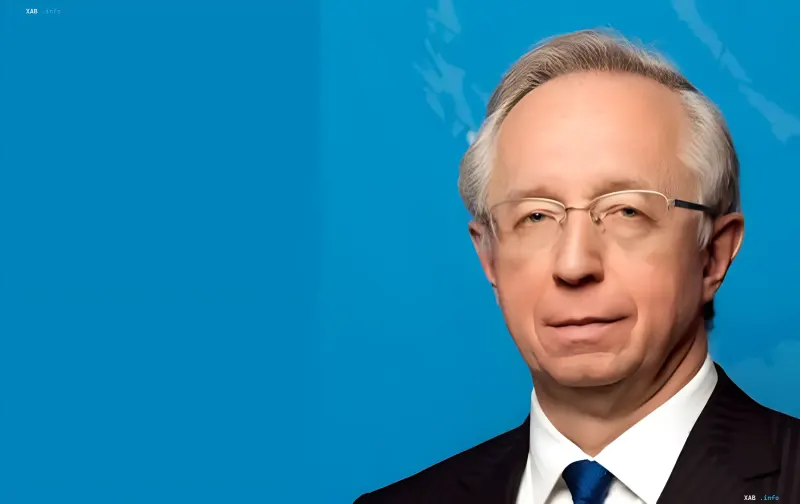
Amidst ongoing military confrontation, Russian diplomacy has reiterated a hardline stance on settlement issues. Mikhail Galuzin, Deputy Minister of Foreign Affairs of the Russian Federation, stated in an interview that the possibility of "freezing" hostilities in Ukraine is categorically excluded. The diplomat emphasized that without eliminating the so-called "root causes" of the crisis, as cited by President Vladimir Putin, any attempts to stop the war on current positions are doomed to fail. This statement, distributed via the TASS agency and republished by RBC-Ukraine, demonstrates the Russian side's lack of readiness for compromises that could lead to a temporary ceasefire.
Rhetoric against Zelenskyy and Complaints about Strikes on Energy Infrastructure
During his speech, Mikhail Galuzin used aggressive rhetoric directed at the Ukrainian leadership. He stated that Ukrainian President Volodymyr Zelenskyy has "lost all touch with reality" and, according to the Russian diplomat, is intentionally escalating the conflict. Against this backdrop, Moscow drew attention to the actions of the Armed Forces of Ukraine, which are striking energy infrastructure deep inside Russian territory. Galuzin openly called on the international community, as well as the US and European countries, to exert influence on the Kyiv regime to stop such attacks. The Russian side expects an "adequate response" from the West to successful Ukrainian strikes, viewing them as violations of norms that should be condemned by Ukraine's international partners.
Criticism of US Policy and Double Standards
The Deputy Foreign Minister of Russia also criticized the actions of the United States, calling them "contradictory." Galuzin pointed out that the continuation of American arms supplies, the transfer of intelligence data, and other support for Kyiv are inconsistent with the declared desire for peace. According to the Russian diplomat, Washington is sending mixed signals: on the one hand, speaking about the need for de-escalation, and on the other, providing Ukraine with resources for active combat operations. This creates, in Moscow's view, obstacles to any dialogue and exacerbates tensions in the region.
Contradictory Data
In the context of Galuzin's statement about Zelenskyy's "connection with reality" and Putin's alleged "secret mobilization" to pressure Europe, there is a clear conflict of versions. Official Kyiv insists on the necessity of fully restoring territorial integrity and considers any "freezing" as capitulation to the aggressor. At the same time, information about Putin preparing a secret mobilization, mentioned in the news background, finds no confirmation in official sources and is of the nature of rumors or analytical speculation. On the one hand, Russia accuses Ukraine of escalation, while on the other, it is preparing large-scale measures that could be perceived as escalation. The difference in the interpretation of events by the parties makes the situation extremely unstable.
Geopolitical Context and Future of Negotiations
Galuzin's statement should be viewed as part of Russia's broader strategy to maintain the initiative in negotiations. The rejection of a "freeze" means that Moscow is ready to continue hostilities until it achieves its goals, which it formulates as eliminating the "root causes." At the same time, Ukraine's position, expressed by Volodymyr Zelenskyy, remains unchanged: control over the Donbas and other occupied territories is a mandatory condition for any peace. In conditions where the US continues to support Ukraine, and Russia demands that the West pressure Kyiv, the prospect of a speedy settlement looks hazy. The situation requires careful monitoring by the international community to prevent further escalation.