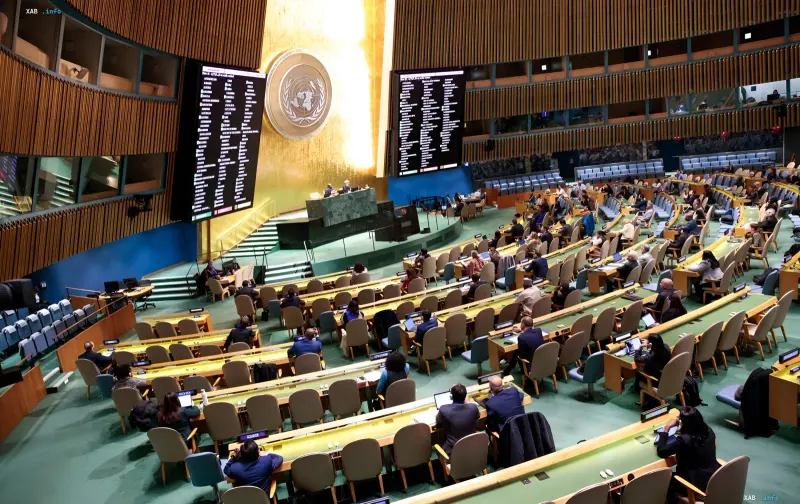
This week's United Nations General Assembly clearly demonstrated deep tectonic shifts in modern geopolitics. A number of influential states made noticeable attempts to build new international coalitions and diplomatic formats without the central coordinating role of the United States. World leaders sought to find a balance of power amidst changing American foreign policy, aiming to reduce dependence on Washington in key matters of regional and global security.
The New Role of Middle Powers and Leader Demarches
The meeting of world leaders became a serious stress test for the so-called middle powers, which are striving to more actively coordinate their policies among themselves. In particular, Canadian and Spanish Prime Ministers Mark Carney and Pedro Sánchez, who openly criticized US President Donald Trump, made it clear that they do not intend to hold official meetings with the American leader. Such demarches underscore the growing desire of several Western capitals to pursue a more autonomous foreign policy without looking back at directives from the White House.
Strengthening European Support for Ukraine
Against the backdrop of these diplomatic maneuvers, European countries and their partners have begun to significantly strengthen their mutual cooperation, especially regarding long-term support for Ukraine. For instance, Finland signed an important drone cooperation agreement with Kyiv, France officially announced a major new contract for the supply of modern radars and interceptors, and Canada deepened its partnership with European states. In addition, intelligence sharing within NATO has reportedly intensified in response to growing hybrid threats.
Contradictory Data
Despite the middle powers' desire for independence, events at the General Assembly showed that completely bypassing Washington remains extremely difficult for allies. Following President Volodymyr Zelenskyy's meeting with Donald Trump, where the Ukrainian leader announced he had received final approval to license the production of Patriot systems, US Secretary of State Marco Rubio unexpectedly announced the invitation of Russian dictator Vladimir Putin to the upcoming G20 meeting in Miami. While some experts view this as a pragmatic diplomatic move, influential publications such as The Wall Street Journal sharply criticized the administration's decision, calling it a dangerous signal of impunity for aggression in Europe.
Global Consequences and Expert Conclusions
As noted by Allison Minor, who previously held high-ranking positions related to US policy in the Persian Gulf, the attempt to create a world not organized around Washington is still a work in progress. The reality is that the United States remains the central player. The UN General Assembly reflected two parallel trends: the desire of some states for independence and the preservation of global security's critical dependence on Washington.