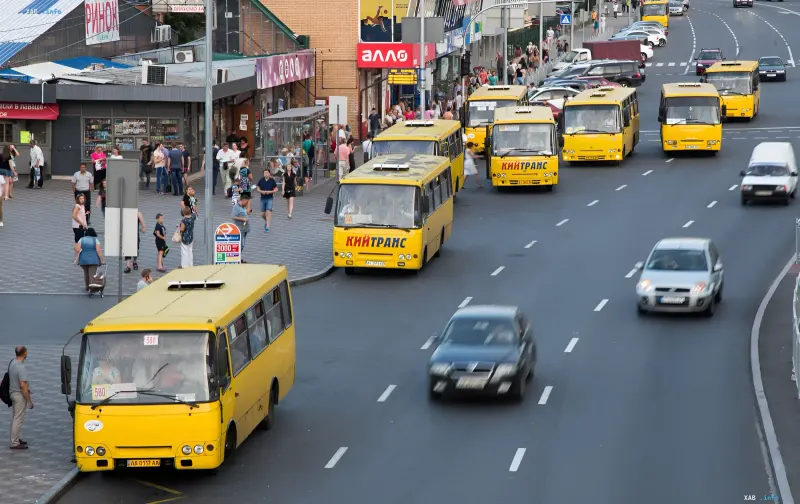
Kyiv passengers are preparing for another change in the structure of urban mobility: starting August 1, the city expects an increase in the fare for marshrutkas (minibuses). Carriers call this a forced measure dictated by a sharp rise in operating costs and staffing problems.
New tariffs and reasons for the price increase
Igor Moiseenko, head of the "Association of Carriers of Kyiv and Kyiv Region," reported that the final decision on raising prices will be made on July 30. If approved, the fare will change as follows from the beginning of next month:
- Routes where the fare previously cost 20 hryvnias will increase to 25 hryvnias.
- Routes with a fare of 10 hryvnias will increase to 20 hryvnias.
According to Moiseenko, carriers planned to raise prices on July 15, but refrained from this step to avoid a shock effect against the backdrop of simultaneous price increases in public transport. However, over the last two weeks, the situation in the fuel market has changed critically: fuel costs have risen by 15 hryvnias, making it economically impossible to maintain old tariffs.
Staff shortage and legislative barriers
Rising prices are just the tip of the iceberg of problems facing private transport in Kyiv. Igor Moiseenko emphasizes that the key issue has become an acute shortage of drivers. A lack of personnel is felt on almost all routes, threatening the continuity of transport services.
The situation was exacerbated by legislative changes that came into force on June 1. New rules have complicated the procedure for reserving drivers from mobilization, reducing the available workforce. Furthermore, some employees refuse to work on routes passing through checkpoints, fearing delays and unpredictable difficulties with passage. This creates additional risks for organizing sustainable public transport operations.
Impact of exchange rates and rising costs
In addition to fuel and staff, carriers are facing increased costs for their material base. Due to the rise in the dollar exchange rate, spare parts, lubricants, and other consumables have become significantly more expensive. This has led to a substantial increase in the cost of passenger transport, forcing businesses to review their pricing policy.
Recall that on July 15, the fare for public transport in Kyiv (metro, buses, trolleybuses, trams, funicular) was already raised to 30 hryvnias. Passengers who managed to purchase rides at the old rate of 8 hryvnias can use them until mid-September. The system of benefits remains unchanged.