
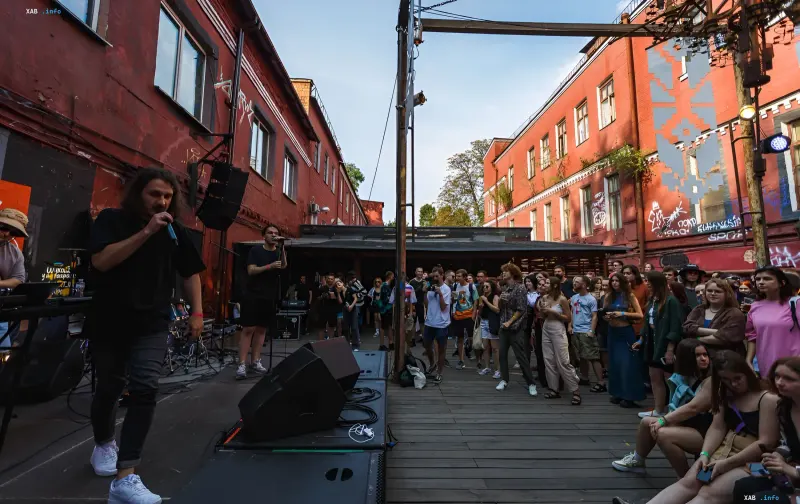
Ukraine's Ministry of Culture has updated its recommendations for organizers of large-scale cultural and entertainment events held under conditions of air threat. According to RBC-Ukraine, citing a statement from the ministry, the key change is the permission to continue concerts, festivals, exhibitions, and fairs while the 'yellow' threat level is in effect — but only under strict compliance with safety requirements. The decision effectively legalizes the holding of live events during a period when the practice of halting them was previously more stringent, and it shifts the primary responsibility for safety onto the organizers.
'Yellow' level: when a concert does not have to be stopped
Under the approved recommendations, an event is permitted to continue when the 'yellow' level of air threat is declared. The main and mandatory condition for this is the availability of a shelter capable of accommodating absolutely everyone present — visitors, participants, and staff alike. If there is no such spare capacity, continuing the event loses its legal basis. Thus, the criterion is not the fact of the alert itself, but the actual ability to provide refuge for every person on the site.
'Red' level: immediate stop and evacuation
A fundamentally different procedure is prescribed for critical threats. During the 'red' level, starting an event is prohibited altogether. If an event is already underway at the moment such a level is declared, organizers are obliged to stop it immediately and organize a rapid transition of all present persons into a shelter. This means that no concert or festival may 'play it out' to the end under a red alert — evacuation becomes the priority.
Organizers' obligations and audience rights
The ministry has established a number of procedural requirements. Organizers must notify guests in advance of the location of the nearest shelter and explain the procedure of action in case the threat level changes. At the same time, visitors themselves retain the right to decide for themselves whether to remain at the event or to move to a safe place immediately. In other words, the decision about personal movement cannot be imposed on the audience, but the organizer is obliged to provide full information and infrastructure for this purpose.
Special requirements for open-air events
Additional restrictions are set for concerts, festivals, exhibitions, and fairs held outdoors. The organizer is required to assess in advance the distance to shelters, their capacity, and the possibility of moving people quickly without dangerous crowding or a stampede. If it is impossible to organize fast and unobstructed access of all participants to a shelter, holding such events outdoors during the 'yellow' threat level is not recommended. This directly indicates that open-air sites located far from protective structures remain the most vulnerable segment.
Contradictory data
Here it is worth honestly pointing out a discrepancy in approaches between sectors, which may be perceived as a contradiction. On the one hand, a flexible model has been introduced for culture: under the 'yellow' level, a concert may continue if there is a shelter for everyone. On the other hand, a stricter rule applies to education: during the 'yellow' level, students cannot continue learning in classrooms, the educational process is interrupted, and all participants must move to a shelter; if it is not sized for all students, the school is obliged to organize a mixed or shift-based form of learning. Additionally, RBC-Ukraine noted that cinemas in Ukraine will operate during the 'yellow' level, although specific rules may differ depending on the chain. Thus, no single universal standard for a 'yellow' alert exists: in education, evacuation from classrooms is mandatory, in cinemas — operations continue with variable chain rules, and in live music — events continue provided there is a shelter with sufficient capacity. The difference in strictness between sectors is precisely the source of the apparent inconsistencies in the rules.
In conclusion, the updated recommendations of the Ministry of Culture form a differentiated system: the safety of large-scale cultural events now depends directly on the preparedness of the venue and the availability of a shelter, rather than on the mere fact of an alert being declared. For the audience, this means that before attending a concert or festival during a period of air threat, it is advisable to check with the organizer in advance about the location of shelters and the procedure of action when the threat level changes.