Laminate has long been one of the most popular flooring options due to its practicality and affordable price. However, as noted by the Styler project from RBC-Ukraine, even everyday household habits can gradually worsen its condition: scratches appear, joints swell, and the color changes. Most often, the problem lies not in the material itself, but in improper care, and it is these mistakes that destroy the coating the fastest.
Moisture: The Main Enemy of Standard Laminate
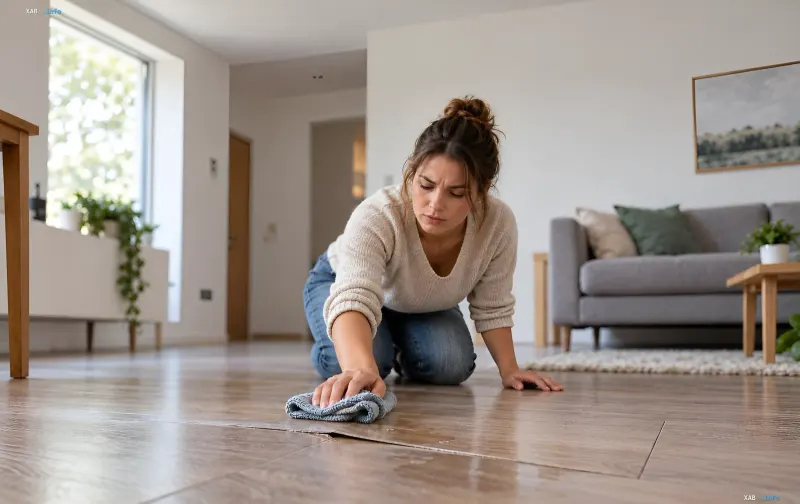
Excess water is especially dangerous for standard laminate. Moisture penetrates through the joints into the inner core of the boards, causing them to swell and deform. The manufacturer EGGER recommends using a well-wringed microfiber mop for cleaning, and wiping the surface dry after washing if necessary. Areas near the kitchen sink and entrance door require special attention: spilled water should be cleaned up immediately, even if the coating is claimed to be water-resistant.
Steam and Abrasive Products
High-pressure hot steam can get into the joints between planks, and frequent moisture can lead to swelling, discoloration, or deformation. Pergo's recommendations emphasize that the risk depends on temperature, steam intensity, and the characteristics of the specific floor. At the same time, some manufacturers allow steam cleaning for certain collections, but the "water-resistant" label alone does not guarantee that laminate can be steam-cleaned — check the manual before using the device. Abrasive powders and hard sponges scratch the surface, and unsuitable cleaning agents leave a dull film: Mannington warns against their use and advises choosing products recommended by the manufacturer of the specific coating.
Outdoor Sand and Dragged Furniture
Sand particles brought into the apartment from the street act as an abrasive: when walking, they scratch the protective layer. According to Quick-Step, even scratch-resistant coatings are damaged by sand and hard particles on shoe soles. To reduce the risk, a dirt-trap mat is placed at the entrance, and the floor is regularly cleaned with a soft brush or a vacuum cleaner with a hard-floor attachment. Furniture that is regularly dragged also leaves scratches, especially with hard legs under which sand accumulates; Floor & Decor recommends using protective pads and not dragging heavy items without floor protection.
Microclimate and Sunlight
The condition of laminate is affected not only by water during washing, but also by the indoor climate. Significant humidity fluctuations can lead to changes in board dimensions, gaps, and deformations. The Shaw Floors instructions advise maintaining relative indoor humidity within 35–65%, although acceptable figures may vary among different manufacturers. Experts also warn against the harmful effects of prolonged direct sunlight, which fades the coating over time; curtains or blinds are used to protect the floor.
What to Do If Laminate Is Already Damaged
The restoration method depends on the nature of the damage. Minor defects can be masked with a special laminate repair kit. If the boards are severely deformed, swollen from moisture, or damaged at the joints, cosmetic repairs may not be enough: first, the source of moisture must be eliminated, and if water gets under the coating, a specialist should be contacted to assess the condition. Severely damaged boards sometimes have to be replaced.