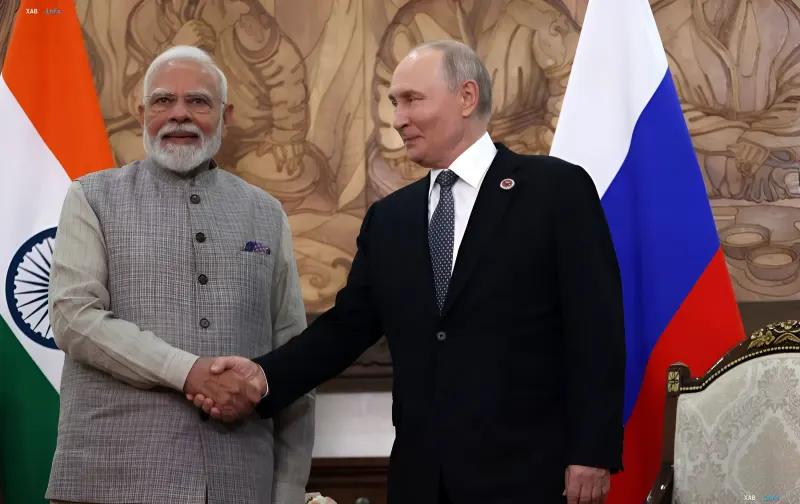
On the sidelines of the Shanghai Cooperation Organisation (SCO) summit in Bishkek, Indian Prime Minister Narendra Modi made a resonant statement during a bilateral meeting with Russian President Vladimir Putin, calling on the international community to “move from endless war to ending war.” According to the Indian leader, every day spent in a state of armed conflict “pushes humanity back,” while every step toward peace fills it with “new hope and new enthusiasm.” Modi emphasized that all disputed issues must be resolved peacefully as soon as possible, calling this a “call of humanity.”
Context of the meeting: SCO summit in Bishkek
The bilateral contact between Modi and Putin took place during the first day of the SCO sessions in the capital of Kyrgyzstan. According to reports from Russian and Ukrainian media, on the same day the Russian leader also held meetings with Chinese President Xi Jinping and Azerbaijani President Ilham Aliyev. The SCO summit format traditionally involves a series of bilateral talks on the sidelines of the main session, allowing the parties to discuss both multilateral and bilateral issues. The meeting between the Indian and Russian leaders took place against the backdrop of growing diplomatic pressure on Moscow from several states.
India against the backdrop of diplomatic moves
Modi’s statement came in the context of a series of diplomatic incidents that, over the past ten days, have led Russia to face official protests from three countries at once. In particular, New Delhi expressed a firm protest over a Russian missile strike on the cargo ship MV Golden Leo near the port of Odesa, which killed four Indian citizens. In addition, the Indian side had earlier sent an official diplomatic request to the Ukrainian side regarding the death of an Indian citizen aboard the merchant vessel MV OMORFI. These events significantly affected the tone of India’s diplomatic rhetoric toward Moscow.
Economic factor: reduced imports of Russian oil
In parallel with the diplomatic moves, Indian refineries have been forced to cut imports of Russian oil from previously elevated levels. According to RBC-Ukraine, the main reason was Ukraine’s successful strikes on Russian infrastructure, which significantly disrupted export supplies. This creates additional economic pressure on Indo-Russian trade relations and forms an additional context for Modi’s statements on the international stage.
Contradictory data
The provided materials mention two merchant vessels — MV OMORFI and MV Golden Leo — in connection with which the Indian side took diplomatic steps. In one episode (MV OMORFI), New Delhi made an official demand to the Ukrainian side, while in the second (MV Golden Leo) the protest was directed at Russia over a missile strike near Odesa. The sources do not clarify whether these are two separate incidents or a single event described with different vessel names. Clarifying the details remains an open question, as the original source contains no additional explanations regarding this discrepancy.
Significance of the statement for Indian foreign policy
Modi’s rhetoric at the SCO summit reflects India’s attempt to take the position of a “mediator” and moral arbiter on the international stage, drawing on the historical legacy of non-violence — the reference to “the land of Gandhi and the land of the Buddha” in the Indian Prime Minister’s public speeches carries precisely this character. However, in practice, New Delhi continues to maintain economic ties with Moscow, including in the energy sector, which creates a certain dissonance between the declared position and the actual steps. The statement, against the backdrop of reduced oil imports and a series of diplomatic protests, may indicate a gradual reassessment of India’s course toward a harder stance toward the Russian leadership.